Auto Dealership Roofing in New Haven, CT
Auto Dealership Roofing
Plan dealership roof repair in New Haven around showroom light, service operations, vehicle protection, drainage, and phased access.
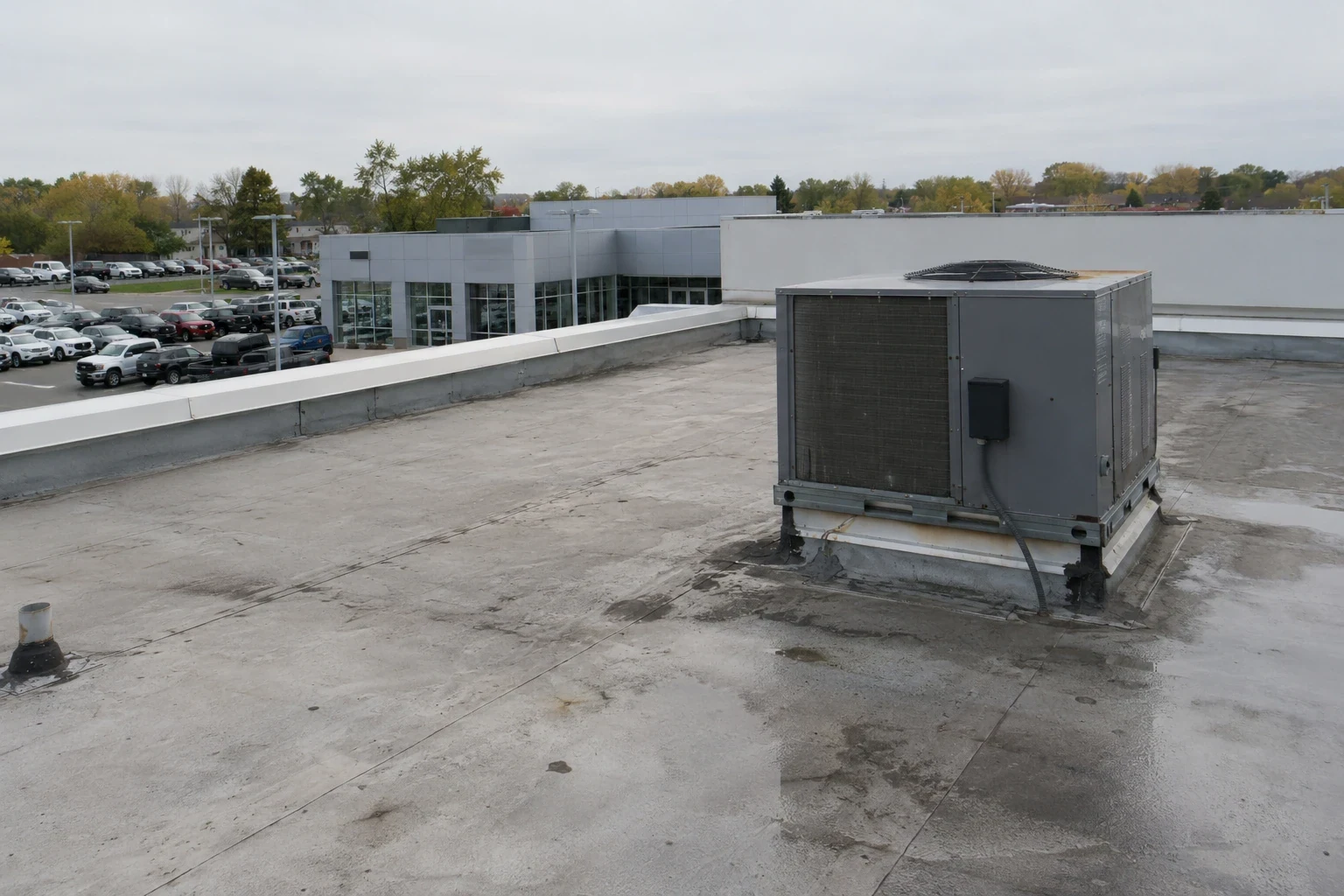
A dealership roof supports two very different spaces: a customer-facing showroom and a service operation with equipment, exhaust, and frequent vehicle movement. In New Haven, repeated winter freezing makes drainage and perimeter checks useful before a leak reaches either space. We document the roof condition and build a work sequence that protects display areas, service lanes, and customer access.
Nearby Stratford has aircraft, machinery, electrical, and plastics manufacturing in its commercial mix, while Branford includes manufacturing, healthcare, bioscience, and retail. New Haven's health, education, manufacturing, and business-service mix brings varied operating schedules to commercial properties, so we set roof access with the property's operator. We verify the assembly, operating schedule, clearances, and access routes at each property.
Daylight, glazing, and showroom transitions
Showroom roofs may include skylights, translucent panels, rooftop units, and long glass-to-roof transitions. We inspect flashing laps, sealant joints, panel edges, curb connections, and the interior signs associated with reported leaks. A cloudy lens or water mark near glass can have several causes, so the roof scope should connect the observed detail with a confirmed entry path.
Natural-light assemblies also affect staging and protection. We identify fragile surfaces, floor displays, and routes where tools or debris must not pass. If a roof opening is necessary, the estimate should state the protection plan and the condition that prompts the opening. A skylight and penetration review can isolate these details from general membrane work.
We also confirm the relationship between showroom glazing and the roof drainage route. A low curb or transition can hold debris, while a blocked gutter may send water back toward an entry. The walk should record both the component and how water leaves the area, then separate a roofing detail from glass replacement or interior finish work assigned to another trade.
Where the building has a sales display under a skylight, we plan interior protection and define the drop zone before opening the assembly. The proposal should state whether removal and resetting of a lens or frame is included. That clarity lets the owner compare repair options without assuming the roofing crew is responsible for every glazing component.
Service-bay coordination
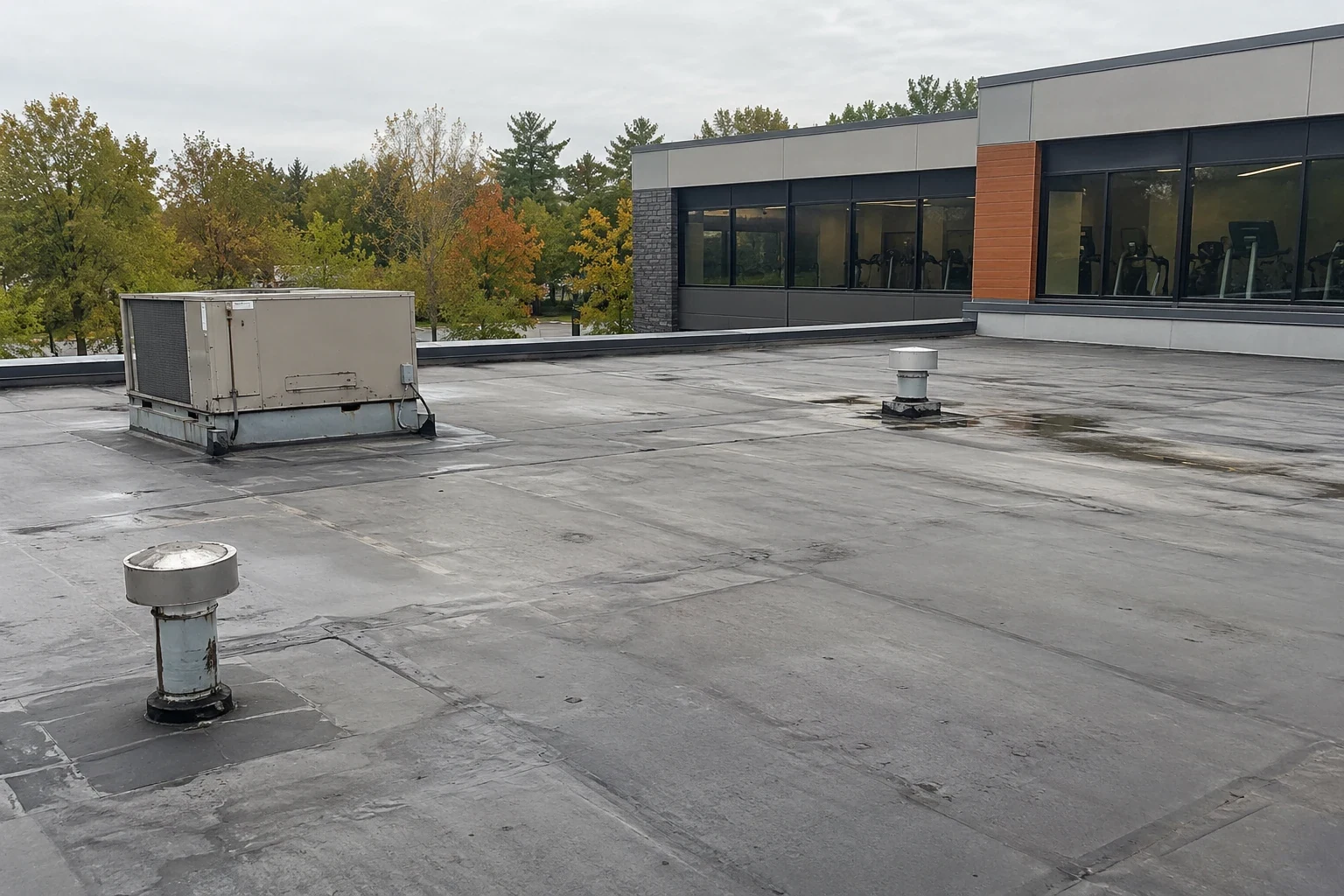
Repair bays introduce exhaust lines, rooftop ventilation, compressed-air equipment, and scheduled vehicle service. Before roof work, we identify equipment that must remain operating, shutdown windows, and any trade visit needed to move or reconnect a component. The roofer's scope should state who protects an opening and who confirms equipment is back in service.
We plan access so materials and lifts do not block customer parking or service lanes longer than the work requires. A phased project can move across roof zones while the facility keeps a defined route open. For a larger job, occupied-building reroofing can align installation with business hours, and a flex-industrial roof sequence provides a useful contrast where production and warehouse access govern the schedule.
The service manager can identify lifts, exhausts, piping, and other equipment that affect the roof surface. We note the perimeter around each item, check nearby flashing, and state whether a trade must disconnect or temporarily move it. This matters when a repair is planned after hours, because the crew needs a confirmed point of contact before any system affecting vehicle service is touched.
Drainage and leak investigation
Standing water near drains, a loose curb flashing, or a split seam can send moisture into different parts of a large dealership. We map reported interior locations against roof slope and construction, then photograph each confirmed defect. When the ceiling symptom sits away from the roof opening, we trace the likely route and identify any test needed to resolve concealed moisture.
New Haven's freezing periods put outlets and low areas on the winter inspection list; we check their actual condition before setting repair scope. Our Diligence Notes distinguish clear drainage from a slow outlet or damaged membrane. A leak tracing review can support a defined seam repair, while drain work can be priced separately where the outlet is the issue.
For each leak, we record whether the report is active, intermittent, or tied to a particular weather condition. The roof walk then looks for an opening, failed lap, displaced flashing, or surface water route that could explain it. If the route remains uncertain, we name the test needed rather than extending a patch across an arbitrary area. That gives the owner a clear next decision.
Interior protection may include moving vehicles, covering equipment, or keeping a service bay clear. We identify that need in the scope only when the observed work requires it. Where the repair can stay outside, the facility may not need to close the entire area. The written sequence makes the choice visible and lets management notify only affected departments.
Repair, restoration, or full replacement
A limited puncture in stable material may be repaired without disturbing the entire dealership. Repeated seam problems, widespread moisture, loose attachment, or aged flashings can change the repair threshold. We compare roof history and current findings, then explain which testing would show whether a larger section is involved.
Alternatives should include the same details at curbs, skylights, gutters, and edges. A replacement proposal can be compared with a restoration review when the existing assembly is a candidate. The project plan should also identify vehicle protection, debris routes, signage, and the sequence for returning each area to normal business. We state which costs follow roof condition and which follow access or operating restrictions.
A roof file that supports future bids
Dealer facilities often have work orders for equipment and interior improvements alongside roof repairs. We help the general contractor connect each roof observation to a marked location, photo, and repair history. That gives a later estimator a chance to distinguish a new leak from a previously addressed detail and to identify any rooftop change made after the last inspection.
A condition report can track priorities and deferrals across budget periods. Stratford's manufacturing activity offers regional context for equipment-heavy properties, while the property's own layout determines staging. A self-storage roof scope provides a contrasting example where tenant-unit access drives the sequence. Bring roof plans, repair invoices, access limits, and operating hours to a scope review. We will align the bid with the roof condition and the facility's active customer and service areas.
At closeout, we include photographs of completed skylight, curb, and edge details, along with any item held for another trade. The owner can match the record with service work orders and keep a clear chronology for the next survey. If a replacement phase is deferred, the open conditions are listed separately from the finished scope.
Questions Owners Ask
How do you protect cars and showroom displays during roof work?
We identify staging, lift placement, drop zones, skylights, and interior protection before setting a work area. The sequence should show which parking or display zones are affected and when they reopen. The facility can then coordinate vehicle moves and customer notices around a defined roof phase.
Can a leak over the service department be repaired overnight?
For a reported leak, the first step is to limit interior exposure and record what is visible, then set permanent work around equipment and access. The closeout distinguishes temporary measures from a completed repair.
Do skylights need to be part of a roof replacement bid?
Their condition and connection to the roof should be identified whether they remain or are replaced. We record lens, curb, flashing, and adjacent membrane observations, then state which items belong in the roofing scope. That avoids pricing a new field membrane while leaving a failed transition unaddressed.
What makes a dealership roof scope different from a warehouse?
Showroom presentation, customer access, service-bay exhaust, and vehicle circulation can affect protection and work hours. A warehouse may prioritize loading operations and storage rows instead. We document the actual site constraints and price the sequence that keeps the facility's required functions available.
What records should accompany a replacement decision?
Provide roof plans, leak logs, prior repair invoices, skylight records, equipment schedules, and any current bid. We compare the documents with field conditions and identify missing assembly information. The resulting scope can show which detail changes cost, timing, and the repair-versus-replacement choice.