
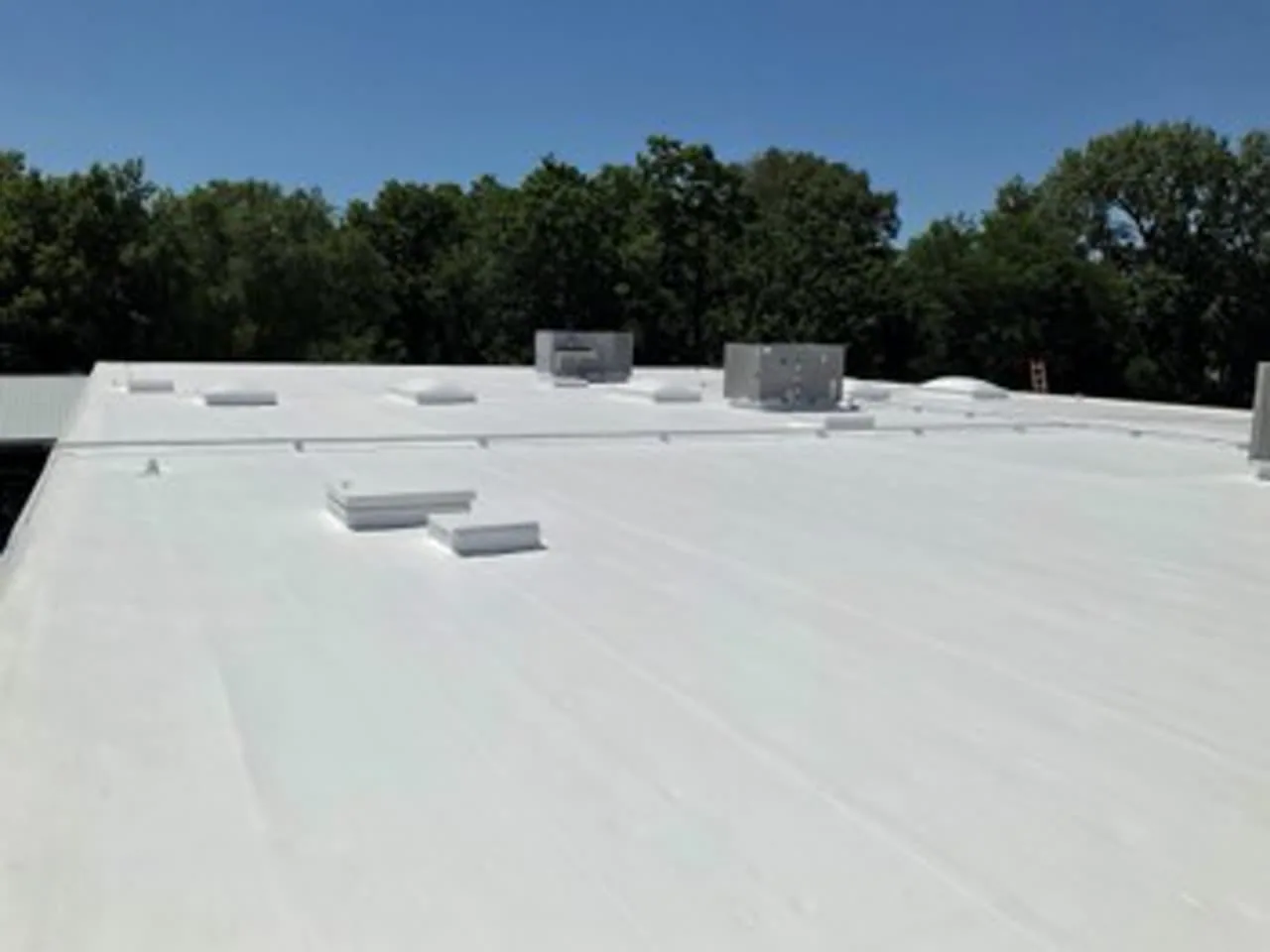
Commercial Roof Coating Restoration in New Haven, CT
Commercial Roof Coating Restoration
Evaluate coating restoration for New Haven roofs by checking membrane condition, moisture, drainage, preparation needs, and edge details before pricing.
Coastal weather and winter freeze-thaw exposure make a coating decision depend on the roof below it. In New Haven, a liquid-applied system can renew a suitable surface, but it cannot correct wet insulation, failed attachment, or a drainage defect. We examine the existing assembly, repair needs, and access plan before deciding whether restoration belongs in the bid comparison.
Health, education, business services, and manufacturing shape the city’s commercial building mix. Work may need to fit around occupied areas, rooftop equipment, or production schedules. A coating scope should therefore define preparation, repairs, detail work, and curing conditions alongside the material selection, giving the general contractor a package that can be sequenced and priced.
A roof that can accept restoration
Coating is a candidate when the underlying roof remains serviceable and the surface can be prepared consistently. We inspect for blisters, open seams, surface erosion, ponding, loose edges, and failed penetrations. Moisture survey findings and repair records help distinguish a worn surface from an assembly that needs more extensive work beneath it.
Existing membrane type affects preparation and adhesion. TPO, PVC, EPDM, modified bitumen, built-up roofing, and metal do not share a single primer or application method. We identify the assembly, test product compatibility as appropriate, and define any repairs needed before coating begins. A roof condition examination or infrared moisture survey can support that decision when the visible surface does not answer what is happening below.
Branford combines manufacturing, bioscience, healthcare, and retail uses. Before setting a work window, we confirm each property's operating hours, roof access, and preparation limits.
Preparation and repair limits
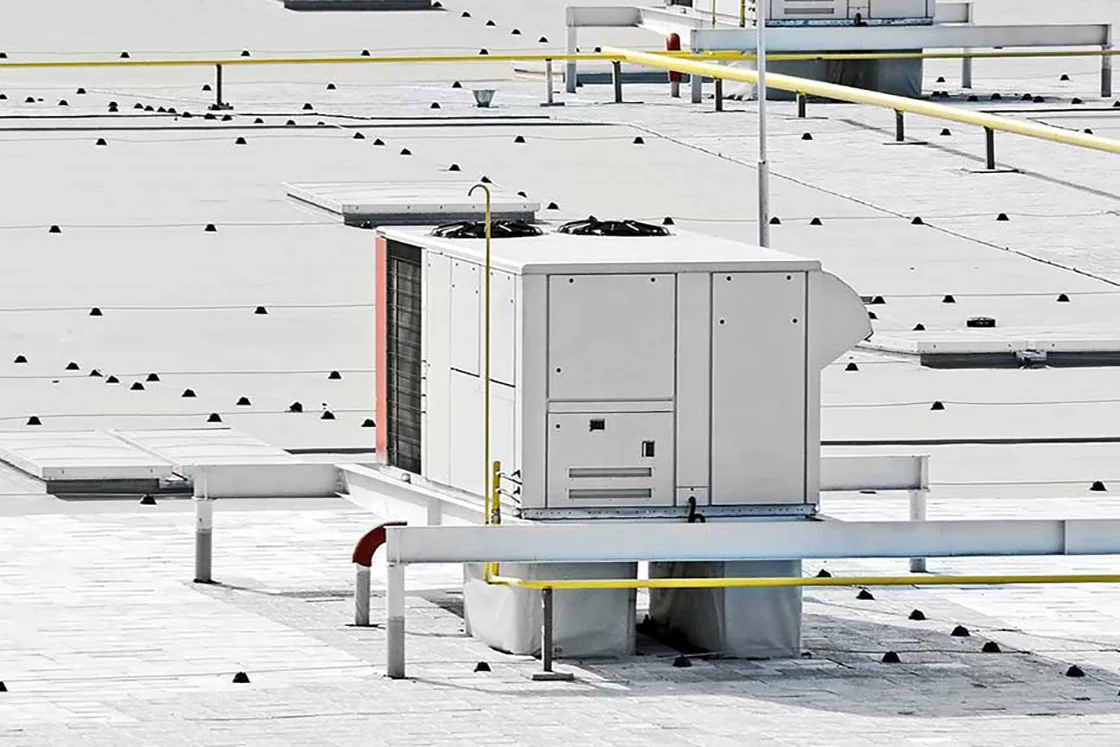
Preparation determines whether the coating can bond across the intended area. Dirt, loose coating, oxidation, incompatible sealant, or moisture can interrupt adhesion. We specify cleaning, surface treatment, primer where required, and repairs by location. The bid should state whether drains, equipment curbs, wall transitions, and perimeter edges receive separate detail work.
Seams and penetrations often need reinforcement before field coating. We check existing lap condition, flashing attachment, fasteners, and changes in plane, then determine whether fabric or a liquid detail is appropriate for the system. Repair boundaries should reach sound material. A coating is not a substitute for correcting an active leak path, unstable substrate, or damaged roof drain.
Drainage changes matter because coating adds material to the surface. We review low spots, scuppers, sumps, and the route water takes across the roof. Where the current path needs correction, a drainage correction scope can be compared with the coating package. For worn perimeter components, edge and coping repairs should be coordinated before the final coating tie-in is established.
Selecting the coating assembly
Silicone and acrylic systems have different strengths and limitations. Selection depends on the existing substrate, expected water exposure, slope, maintenance access, and the required surface finish. We compare system requirements and compatible primers with the documented roof condition rather than choosing by a single feature. The final scope should include the specified product type and any reinforcement at seams or transitions.
New Haven's winter normal includes repeated overnight freezing and periods when daytime temperatures remain below freezing, putting adhesion and sealed transitions on the restoration checklist. Sandy's measured 85 mph gust in Madison adds a regional reason to inspect edge restraint. We document current attachment and flashing conditions before including repair work in the scope.
A silicone coating system or acrylic coating system may fit when substrate and drainage conditions support the choice. Neither option should obscure the existing roof history. We note the preparation, repairs, coverage areas, and limitations so future maintenance can distinguish original roof components from the restoration layer.
Weather windows and access
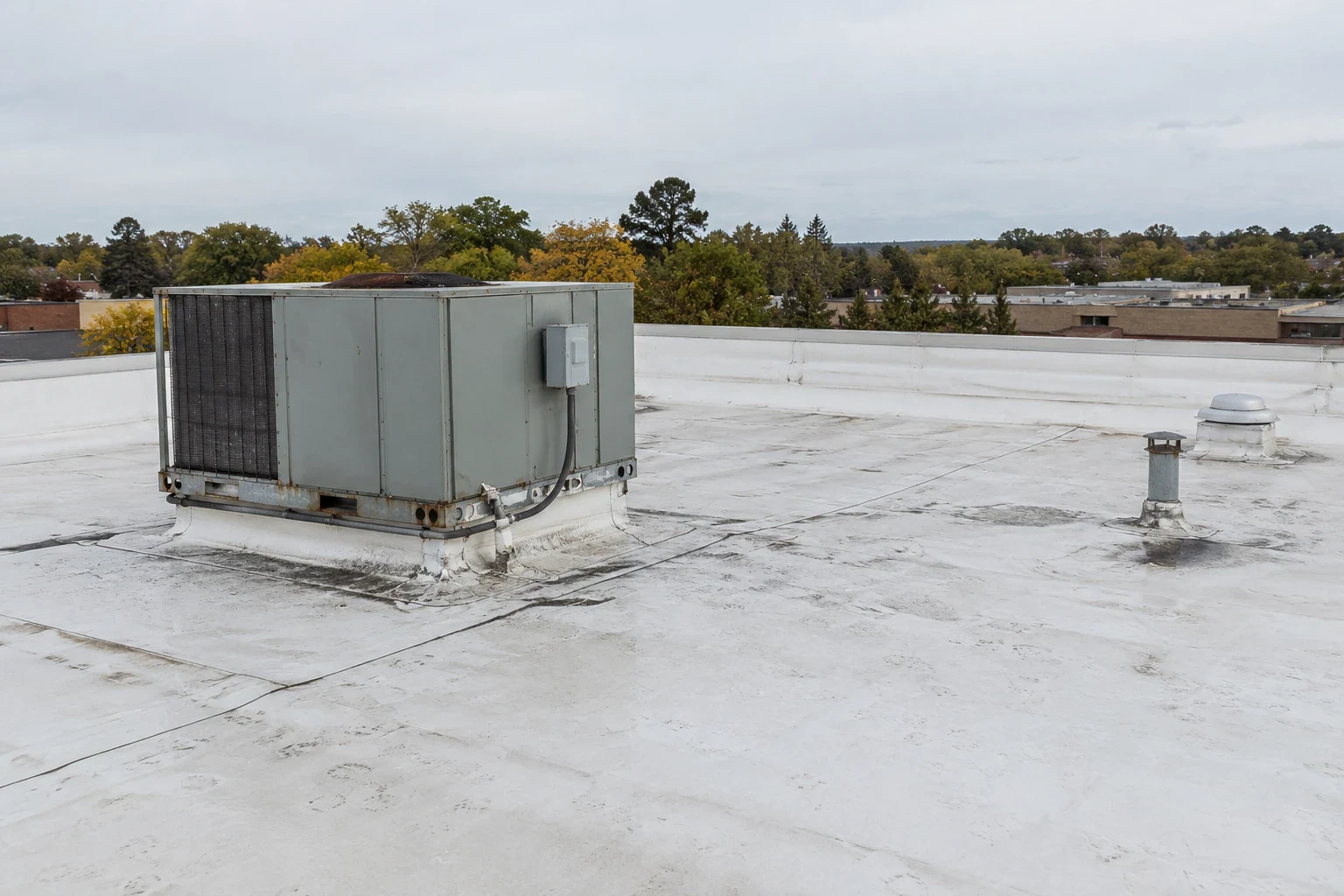
Application timing follows surface temperature, forecast conditions, moisture, and the product’s cure requirements. A rain event or cold surface can interrupt the sequence, so the work area must be planned with a secure stopping point. We define the daily limit, material staging, and temporary protection before work starts. That helps the project team respond if conditions shift during application.
Occupied buildings need clear controls for access, odor-sensitive areas, deliveries, and rooftop equipment. We coordinate with the general contractor and building contact on staging, safety boundaries, and work periods. In West Haven, manufacturing is part of the local building-use mix; each property’s operating requirements set its access plan. Before setting the work sequence, we confirm delivery routes, occupied areas, equipment limits, and daily closure points with the property contact.
When restoration is approved, we sequence cleaning, repairs, detail reinforcement, field application, and final review. If a concealed condition changes the repair boundary, we photograph it and seek direction before extending the work. Emergency response remains available around the clock, including holidays, when an active leak requires temporary protection before the planned coating window.
Restoration beside other options
Coating should be compared with repair, recover, and replacement using the same roof areas and assumptions. We identify what each option leaves in place, which details need correction, and how the work affects future access. If insulation is wet, the deck is unstable, or drainage cannot be corrected within the coating scope, another approach may better fit the condition.
A localized repair evaluation can be enough where a limited defect has a sound boundary. A recover assessment may suit a stable assembly when code and moisture conditions allow. More extensive deterioration may warrant replacement planning. The comparison should include preparation, disposal, tie-ins, access, and the building’s operating schedule, not only the visible surface material.
A Branford project should keep its access limits and roof findings in its own work plan, even when the same team manages New Haven properties. Bring existing reports and bids to a coating scope review. We can align the proposed system with the roof record, repair limits, and the next capital decision.
Questions Owners Ask
What must be true before a roof coating is priced?
The existing assembly needs a stable, compatible surface, with moisture and repair concerns understood. We inspect adhesion conditions, drainage, seams, penetrations, and edges, then write the preparation and detail work into the scope. A price that omits those steps may not describe the same restoration package.
Will coating correct a roof that holds water?
Ponding requires a drainage review before coating proceeds. Added material does not create slope or reopen a blocked outlet, so we map the low area and correction options first. The general contractor can then compare drainage work with the coating sequence and protect intended flow paths.
How do New Haven winters affect restoration timing?
Cold surfaces, moisture, and freeze-thaw exposure affect preparation and application windows. We schedule around the system requirements and establish secure daily stopping points. The regional history of coastal wind adds an edge-detail review, while the roof examination determines what needs correction.
Can coating work be phased over an operating building?
A phased plan can work when access, staging, cure conditions, and protection are coordinated by roof area. We align each phase with tenant or production hours and identify how the crew will secure transitions overnight. Any change to the open area is recorded before the sequence moves forward.
What records help compare coating and replacement bids?
Prior inspection photos, repair invoices, moisture findings, roof-system details, and current access restrictions help establish a shared basis. We list the preparation assumptions and repairs separately from the field coating. The owner can then see which costs follow the chosen system and which address underlying conditions.