
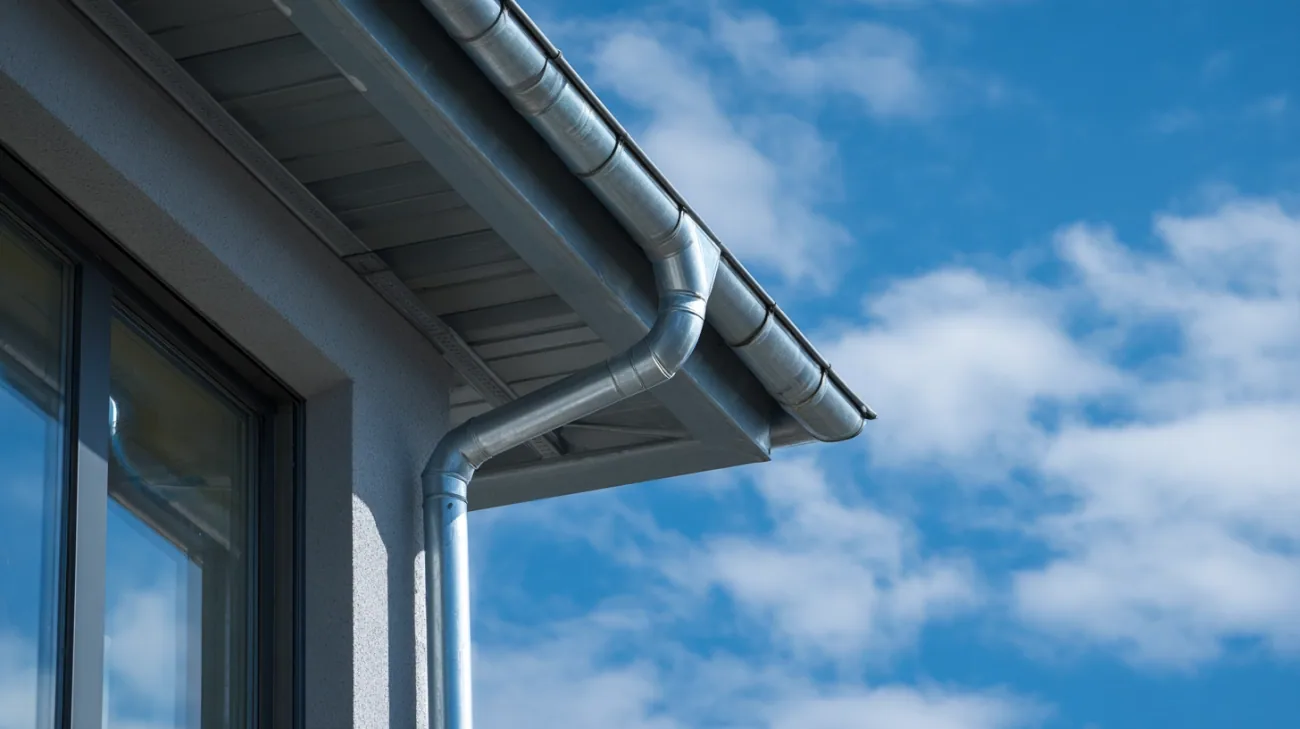
Commercial Edge Metal and Gutters in New Haven, CT
Commercial Edge Metal and Gutters
Review New Haven commercial roof edges, coping, gutters, and downspouts for attachment, drainage, and tie-in conditions before repair work is priced.
Coastal wind places a roof edge and its water path on the same inspection list. In New Haven, coping, edge metal, gutters, and downspouts must work with the membrane termination and the building wall. We inspect attachment, laps, corners, and discharge, then document whether a repair can stay local or needs a broader perimeter scope.
Health, education, business services, and manufacturing are part of New Haven’s commercial mix. A project may involve roof access above occupied space, equipment near the edge, or a limited staging area. We coordinate those operating constraints with the general contractor so metal removal, membrane tie-ins, and drainage adjustments can be sequenced safely.
A perimeter that holds its line
Perimeter metal restrains and protects the roof edge where membrane, wall, and exterior weather meet. We check cleats, fasteners, seams, corners, terminations, and transitions to determine whether components remain attached. A lifted corner may be isolated, or it may point to a longer section with loose attachment. The inspection records that boundary before the bid assigns quantities.
A recorded gust in Madison reached 85 mph during Sandy on October 29, 2012, placing edge attachment on New Haven County's regional inspection checklist. We photograph each edge from context and close range, note visible movement or corrosion, and identify any area that could not be reached safely.
Metal details must also match the roof assembly. A membrane termination beneath a coping cap may need repair before new metal is installed. We coordinate flashing height, attachment, sealant, and end conditions, then specify how the tie-in will protect the assembly. If wind exposure is part of the concern, a wind-related edge review can help organize the observed conditions.

Gutters and downspout discharge
Gutters manage water after it leaves the roof edge. We look for blocked outlets, open joints, sagging sections, failed hangers, corrosion, and discharge points that return water toward the wall or foundation. A roof-side scupper can send flow into the gutter, so that transition also needs review. Cleaning and minor adjustment differ from replacement or a membrane repair around the scupper.
Drainage planning starts with the route water takes, not only the metal component that appears damaged. We check gutter alignment, outlet size, downspout connections, and the path away from the building where observable. If runoff begins at a low-slope roof drain rather than the edge, a separate drain and scupper scope may be needed. We document which part of the route is included and which part remains outside the roof contract.
Branford’s commercial activity includes manufacturing, bioscience, healthcare, and retail. Those varied uses can bring different delivery access, pedestrian routes, and hours of operation beneath roof edges. The work plan should identify lift placement, debris controls, and protected entrances before old metal is removed or a downspout is disconnected.
Replacement, repair, or tie-in
A sound run of metal may need a localized fastening or seam correction. Widespread corrosion, repeated separation, or a poor membrane termination can change the repair threshold. We identify components to keep, remove, or replace and write the transition details into the scope. That allows a general contractor to compare bids without treating a small patch and a full perimeter replacement as equivalent work.
We also check how the edge interfaces with roof drainage and wall construction. New coping can change height and fastening requirements; replacement gutters can alter the discharge line or access needs. A scope should note corners, end dams, splice plates, outlets, and any return detail needed to keep the water path continuous. The roof condition examination can document connected membrane or flashing conditions before metal quantities are finalized.
Where a storm event has displaced sections, we separate immediate temporary protection from permanent fabrication and attachment. Temporary protection can stabilize an open edge or active leak while a permanent repair is scoped. A permanent repair should still include the underlying termination and the neighboring section where attachment remains uncertain.
Access, staging, and sequencing
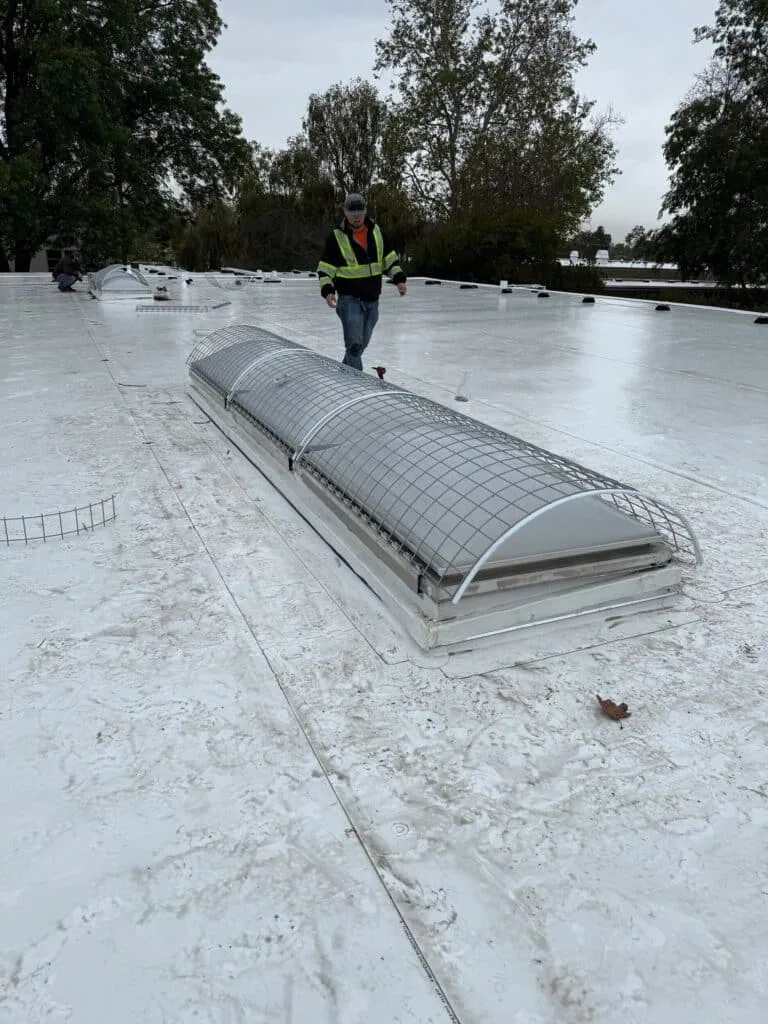
Perimeter work can affect entrances, loading areas, sidewalks, or roof equipment. We confirm site controls, delivery points, lift access, and safety boundaries with the general contractor. When a building is occupied, we schedule noisy or obstructive work around the operating window and identify how temporary water control will remain in place after the crew leaves.
Work may proceed by elevation or roof segment, depending on weather and access. We limit open membrane transitions to areas that can be closed and protected within the shift. If a hidden condition changes the work line, photographs and quantities are shared before the scope expands. The owner can approve the additional metal and membrane work with the reason visible in the field record.
A photo-based condition record can capture completed corners, laps, and discharge points for the next maintenance visit. It also distinguishes roof work from repairs to exterior walls or site drainage, which may require other trades and separate approvals.
Keeping the perimeter in the roof history
Closeout photographs should include the repaired metal, adjacent membrane, and the finished water route. We record what was replaced, what was reused, and any nearby condition that remains under observation. That history helps the next reviewer identify a repeated separation or drainage issue without guessing whether the section was included in the earlier scope.
For properties in West Haven and New Haven, the same report structure can support portfolio review while keeping each building’s actual findings separate. Maintenance can then compare gutter debris, fastener condition, and edge movement at a planned visit rather than waiting for interior water to identify a problem.
Bring prior roof reports, perimeter photographs, repair notes, bid scopes, and access requirements to a edge and drainage scope review. We can identify the membrane tie-in, metal quantities, and water discharge items that belong in the next decision. If the roof continues behind a parapet or changes material at an elevation break, mark that transition on the plan. The foreman can confirm the metal return and membrane closure before removing the adjacent run.
Questions Owners Ask
What signs point to a coping or edge-metal repair?
Loose attachment, open laps, corrosion, displaced corners, or a failing membrane termination may justify a defined repair. We photograph the condition and inspect nearby sections before setting the boundary. A single visible movement does not determine whether adjacent metal should be replaced.
Can new gutters solve water entering at the roof edge?
The leak path needs to be traced first. A gutter may handle runoff while the membrane termination or coping joint remains open. We inspect both the roof-side transition and the discharge route, then separate gutter work from repairs to the roof assembly.
How does coastal wind affect New Haven roof edges?
Regional storm history supports checking attachment, corners, and laps, while the current roof examination determines the repair. We record present conditions at the property and note which edge and attachment details can be verified.
What should a perimeter replacement bid include?
It should identify metal type, removal limits, fastening, corners, end conditions, membrane tie-ins, gutters, and downspout connections. Access, staging, temporary protection, and disposal also affect the sequence. We make those assumptions visible so the owner can compare scopes on the same basis.
How do you keep water controlled during edge work?
We plan removal in sections that can be closed and protected within the work period. The sequence identifies temporary membrane protection and which outlets remain active. If weather or concealed conditions changes the day’s boundary, we document the adjustment before leaving the area exposed.