Commercial Wind Damage Roof Repair in New Haven, CT
Commercial Wind Damage Roof Repair
Document wind-related roof damage in New Haven, then define temporary protection, edge repairs, drainage checks, and permanent scope options.
After a coastal wind event, a roof needs a careful perimeter review before the repair boundary is priced. During post-tropical Sandy in 2012, Madison in New Haven County recorded a severe 85 mph gust, and coastal Connecticut also faced storm-surge exposure. The regional record puts edges, flashings, and drainage on the review list.
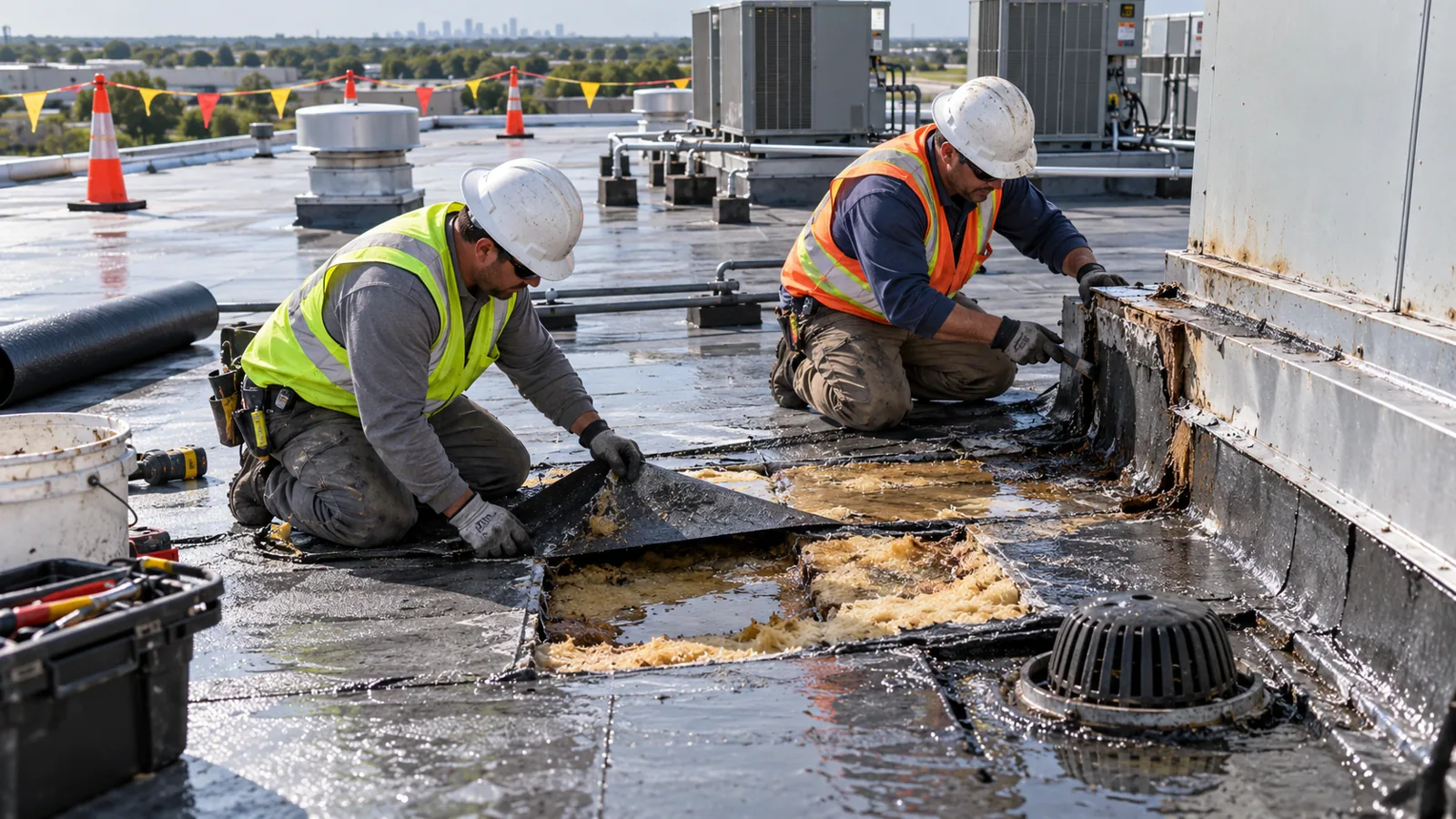
We inspect the membrane or metal system, photograph visible changes, and separate temporary protection from a permanent repair. The general contractor receives a condition record that identifies confirmed openings, areas needing closer review, and access conditions that could affect the next work window.
Secure the roof before setting a final scope
Loose metal, lifted membrane, displaced coping, open laps, and damaged penetrations should be documented before materials or debris are moved. We identify active water entry and protect exposed areas where safe access permits. Temporary cover limits additional exposure, but the closeout must say what remains provisional and when permanent work can proceed.
Inside, the facility team can note rooms, equipment, and contents affected by water, then keep the roof route clear for inspection. We compare those reports with roof geometry instead of assuming a ceiling stain marks the opening. An emergency response can stabilize the condition, while a separate repair scope defines material, preparation, and tie-in requirements.
Check edges, corners, and transitions
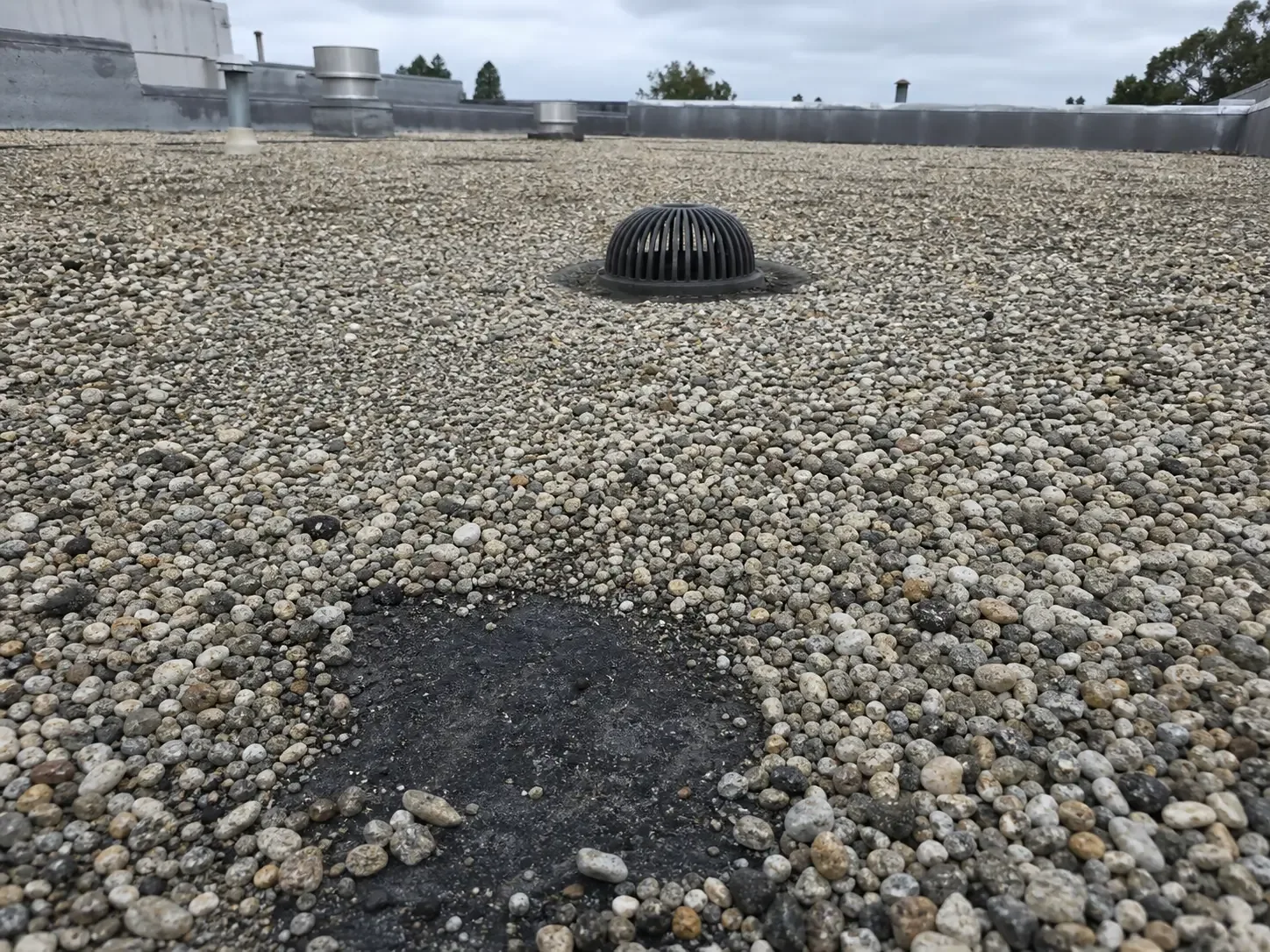
Wind pressure changes at corners, parapets, eaves, and changes in roof height. We examine coping joints, cleats, fasteners, edge metal, and membrane attachment, then look for a continuous path where water could enter. An edge that appears intact from the ground may still need a close review of its termination and adjoining flashing.
At walls and rooftop curbs, we check counterflashing, sealant, membrane laps, and attachment to the substrate. We note whether the component moved, broke, or simply lost an exposed cover. A flashing repair may be appropriate at one transition, while seam repair addresses an opening along the field of the membrane. The report distinguishes those details so the estimate does not bundle separate causes.
Parapet caps, corner joints, and fascia returns can separate in short sections while adjacent runs remain secure. We mark each break and check whether water can reach the wall assembly below. The repair detail needs to restore attachment as well as shed water, with its length and tie-in stated in the bid. A single allowance for “wind repairs” does not show whether that edge work is included.
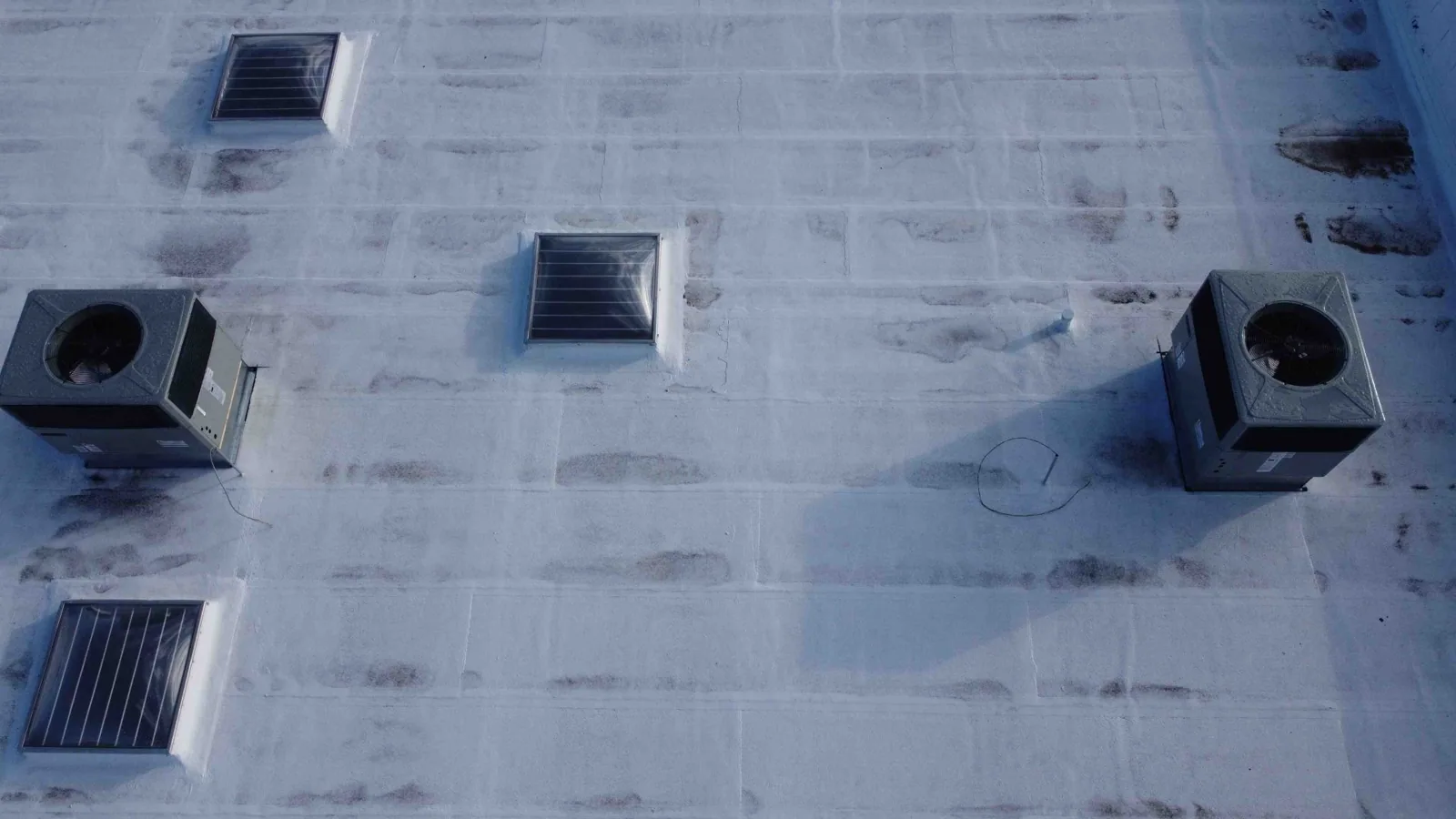
Rooftop equipment can also shift or lose a cover during high winds. We inspect nearby curbs, service supports, conduit, and duct transitions, then identify equipment issues that belong to another trade. The roof scope covers membrane and metal interfaces without implying that a roofer will repair the mechanical unit itself.
Trace water through the roof assembly
Water can travel under a membrane or along a deck before reaching the interior. We compare reported leaks with seams, drains, curbs, walls, and previous patches, then mark each confirmed defect. If the route remains concealed, the report identifies the survey or opening that can resolve it before a broad replacement allowance is considered.
Storm surge is a regional concern for low coastal roof sites, but an individual site's exposure depends on its location and assembly. We note visible water lines, salt residue, displaced rooftop components, or drain blockage only when observed. Leak tracing can narrow the entry point, and a moisture survey can help identify areas for confirmation where the assembly conceals wet insulation.
Match the repair to the roof system
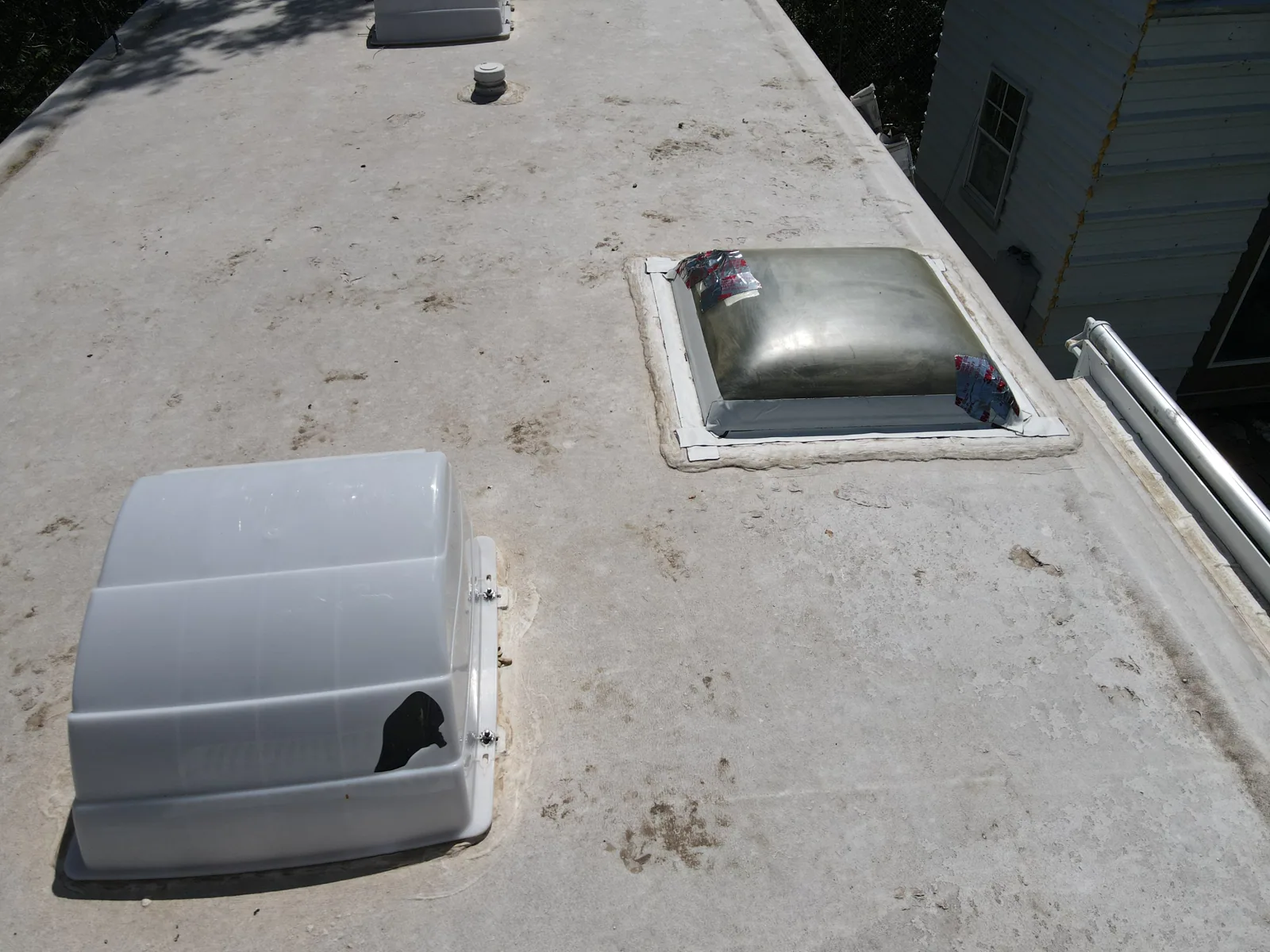
Wind-damaged TPO, PVC, EPDM, modified bitumen, built-up, and metal roofs require different preparation and repair materials. We verify the existing system and the condition of the surrounding area before specifying a patch, fastener correction, metal replacement, or broader tie-in. A method that bonds to one membrane may not adhere to another.
Where the roof has several layers or previous repairs, we record those conditions and identify whether the substrate needs testing. Standing-seam roof evaluation can help define panel and clip concerns, while TPO repair work depends on compatible membrane preparation and welds. The estimate states exactly which roof zone, edge, and penetration are included.
Metal panels need inspection for fastener withdrawal, elongated holes, distorted laps, and loss of attachment at clips. Replacing one exposed fastener may not correct a row of movement. We look along the panel and support line, record the affected run, and state whether a local repair, panel replacement, or engineering review is appropriate.
For membrane systems, a patch should extend to sound material and be prepared for the roof's surface condition. We check whether an older coating, prior patch, or wet area affects adhesion. If the damaged area meets a seam or curb, the scope describes the tie-in so the repair does not stop at a convenient outline instead of a durable boundary.
Compare temporary, repair, and capital work
A defined opening on otherwise stable material may call for a focused repair. Several failed edges, widespread attachment concerns, or moisture across a larger area may justify a restoration or replacement review. We compare current observations with repair history and state what testing would change the recommendation.
For ownership review, we can present temporary protection, permanent repair, and larger capital alternatives separately. Each option includes access, staging, weather limits, and any trade coordination. A photo condition report supports bid comparison, while Madison-area roof work may require its own delivery and access plan. Branford's commercial mix includes manufacturing, bioscience, healthcare, and retail activity, with site access and roof scope confirmed at the property. Bring storm notes, photographs, repair records, and bid scopes for a records-first review.
A repair proposal should list the labor and material boundary, any fastener replacement, edge metal tie-in, and method for protecting the building during work. If interior ceiling or equipment repairs fall outside roofing, we identify that split. The owner can then compare bids on the work each includes rather than an undefined event allowance.
Timing depends on safe access, weather, material lead time, and coordination with rooftop equipment or occupied spaces. We state those dependencies in the sequence and provide an interim protection plan when permanent work cannot begin immediately. The follow-up visit is assigned before temporary measures are left in place, so the condition remains visible to the project team.
Questions Owners Ask
What should happen before a wind repair is priced?
We first document the roof system, visible movement, active water entry, and areas that could not be accessed. Temporary protection is recorded separately from permanent work. That gives the general contractor a clear repair boundary and identifies testing that could change the estimate.
Does the Madison gust record mean my New Haven roof has damage?
No. The event provides regional context for checking edges and attachment, but the condition at your property must be inspected. We photograph actual movement, openings, or drainage concerns and do not infer a defect from the storm record alone.
Can you repair metal and membrane roofs after the same storm?
Yes, but the method follows the material. Metal work may involve panels, clips, fasteners, or edge details, while membrane work requires compatible patching and tie-ins. We identify each assembly and scope the confirmed damage by roof area.
When should wind damage lead to replacement planning?
Repeated failures across several roof zones, widespread attachment problems, or moisture throughout the assembly can broaden the decision. We compare repair history with field findings and show what remains serviceable. Testing can help determine whether a limited repair is still defensible.
How do you document temporary cover?
We record its location, materials, weather exposure, and what permanent work remains. The closeout states who should monitor it and when the next access visit is needed. A temporary measure is not described as completed roof repair.