Commercial Roofing for Real Estate Investors in New Haven, CT
Real Estate Investors
Evaluate commercial roofs in New Haven for acquisitions, portfolio budgets, tenant continuity, and capital planning with documented condition findings.
An acquisition schedule can leave little room for an undocumented roof assumption. New Haven's winter freezing makes drainage, edge conditions, and prior repairs useful items to establish before a capital plan is finalized. We inspect the assembly and prepare a photo-backed condition record that separates documented work from items needing further review. Investors can compare repair exposure, replacement timing, and access constraints before carrying a roof allowance into a transaction or annual budget.
Branford spans manufacturing, bioscience, healthcare, and retail; Hamden combines computer-related work, fabricated metals, construction, and business services. Those nearby markets have different building and operating patterns. None provides a shortcut for estimating a specific asset. We document each property and connect the findings to lease obligations, financing milestones, and the owner's decision calendar.
Roof diligence before the close
A useful diligence review identifies the assembly, apparent repair history, drainage layout, penetrations, edge details, and access limits. We compare available reports with field observations and note where a test opening or moisture survey is needed before a quantity can be supported. Photos and roof-plan references help investors communicate the same findings to ownership, lenders, and the property team. If the seller's record stops at a prior invoice, we list the work details that document leaves open.
Health, education, business services, and manufacturing all appear in the New Haven market, so a roof portfolio can include institutional, office, and industrial assets. Branford's mix includes bioscience and manufacturing, while Hamden's includes industrial and service uses. A real estate portfolio can therefore include different tenant schedules, equipment, and interior exposure. The diligence scope should preserve those differences rather than apply one roof-year assumption to every asset.
For transaction work, the report can distinguish active openings, localized repairs, broader moisture questions, and conditions with no current finding. That separation supports a negotiation or capital reserve discussion without promising that concealed conditions are absent. If a purchase timeline is compressed, we can identify the inspections possible before the decision date and which questions should remain explicit in the closing file.
Capital priorities by roof zone
A portfolio owner needs a way to compare roof work without turning dissimilar buildings into a single score. We organize observations by property and roof area, noting severity, interior consequence, test status, and access needed to complete the work. A photo-based condition report gives the asset manager a record that can be updated after repairs. Each line should state the decision it supports rather than imply a broader condition than was inspected.
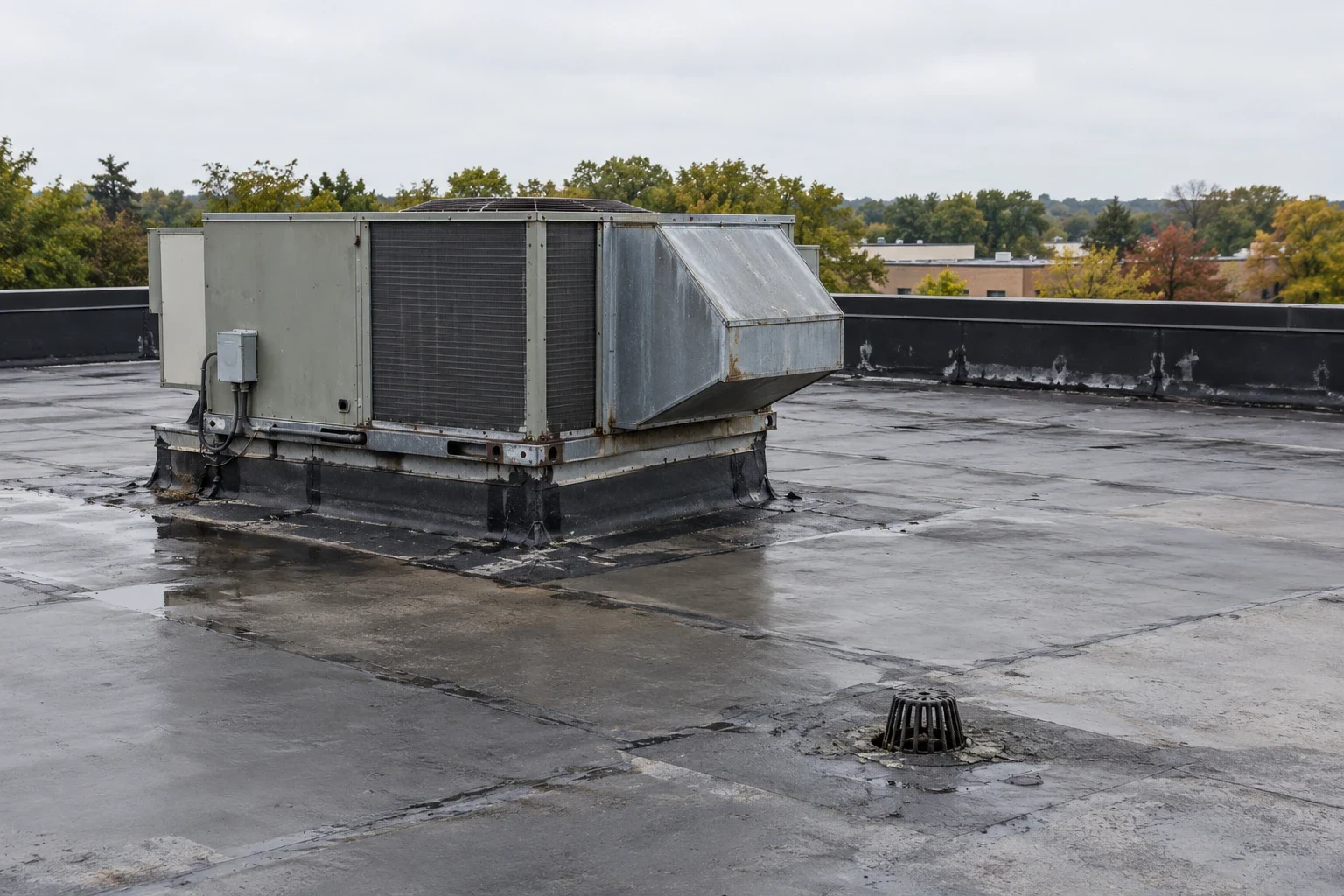
New Haven's below-freezing winter days make outlets and low areas practical maintenance priorities. Coastal wind history also gives reason to include corners, coping, and membrane terminations in a post-storm review. We inspect those details and record what is visible; regional climate informs the checklist, not the repair quantity. A drain correction can fit a maintenance cycle when the surrounding assembly is sound, while widespread wet insulation may require a capital alternative.
We can help compare a near-term repair with replacement by listing removal limits, substrate assumptions, insulation, drainage changes, equipment interfaces, and temporary tie-ins. If a second layer is proposed, existing plies, moisture, attachment, deck, outlet height, and code require review. A roof capital plan can place documented repair items and open testing questions in separate budget lines.
Lease duties and tenant continuity
Lease language may assign maintenance, access, or repair duties differently across a portfolio. We review the relevant responsibility with the owner or manager before writing a work boundary, especially where a tenant controls rooftop equipment or an interior area. The proposal should make notice, protection, and after-hours assumptions visible. That gives the asset team a basis to coordinate obligations without treating a roof repair as a tenant improvement by default.
Occupied work can be divided into zones based on access, leak exposure, and available notice periods. We identify the active area, daily closure, delivery path, and approval contact for concealed conditions. A phased reroof sequence can keep selected operations in service while giving the property manager clear boundaries to share with tenants. If a tenant window changes, the scope remains separate from the schedule change.
Branford combines retail and healthcare, while Hamden's building economy includes construction and business services. These uses demonstrate why tenant and service hours may vary between nearby assets. We record the actual operating limits for each building and price the required protection, lifts, and mobilization rather than assuming one access pattern fits all.
Bid comparison and scope control
Two roof bids should be compared on the same removals, test assumptions, insulation, drains, perimeter work, equipment details, disposal, and temporary protection. We name what is included, what remains, and what condition would require a change. A replacement proposal can identify alternate approaches without hiding different assumptions inside one total. That makes the capital decision easier to present to an investment committee.
For repairs, we mark the defect, materials, limits, and follow-up inspection. A scoped repair visit may address several nearby items when roof access and tenant notice align. If the work relies on an opening or moisture test, the estimate should identify the allowance and approval threshold before crews proceed. That avoids converting a transaction concern into an unbounded construction contingency.
Capital timing also depends on when the building can release roof areas and when adjacent trades are scheduled. We can note which costs relate to access, crane placement, protection, or sequencing. The asset manager can then compare timing with turnover, refinancing, or other planned work using confirmed roof findings instead of a general age estimate.
A portfolio record with a next action
After work, we return the roof plan with repair locations, photos, materials, and remaining observations. The record should be usable by the next property manager and should distinguish a completed repair from an area not accessed. We can track the next inspection point or test needed, helping the owner keep roof condition connected to the asset file. That continuity matters when properties change managers or move between funds.
For investment properties in New Haven, bring diligence reports, lease responsibilities, repair invoices, and planned transaction or budget dates. A property manager can coordinate day-to-day access, while a restoration scope may address a documented storm loss. We will keep the roof findings tied to the property's actual condition and the decision in front of ownership.
Scheduled maintenance can compare prior patch locations, outlet performance, and edge details with current observations. When the same issue returns, we record its relation to earlier work before expanding the repair area. The owner can decide whether to fund a focused correction, authorize testing, or move a broader project into capital planning.
Questions Owners Ask
What can a roof diligence visit confirm before acquisition?
It can document visible assembly details, drainage, penetrations, edges, prior repairs, and accessible interior reports. We identify unknowns that need testing and state what the available record cannot answer. That gives the buyer a defined question list and a basis for estimating work that has actually been observed.
Can you compare roofs across several New Haven area assets?
We can use a consistent report format while keeping findings and quantities attached to each property. Hamden's construction and metalworking activity differs from Branford's healthcare and retail base, so operating and access assumptions may differ. The comparison shows common issues without assuming that every roof has the same assembly or remaining service life.
How should an investor treat a roof with recurring leaks?
We map repeat reports against previous repairs and inspect the adjoining details before recommending a wider boundary. A recurring symptom may come from one detail or several connected conditions. The report separates repair, testing, and replacement considerations so ownership can set the next approval.
What should a replacement bid include for an investment property?
The price should identify removal limits, insulation, drains, edge details, rooftop equipment, protection, disposal, and conditions that change quantities. We also note access and tenant restrictions. Those items let the investment team compare bids against matching scope and capital timing.
Which local exposure belongs in an asset plan?
New Haven's winter freeze-thaw pattern makes drainage a recurring review point, and coastal wind exposure makes terminations worth checking after severe weather. Branford and Hamden have varied retail, manufacturing, and service uses. A site's own inspection sets the work, while these local patterns guide maintenance attention.