
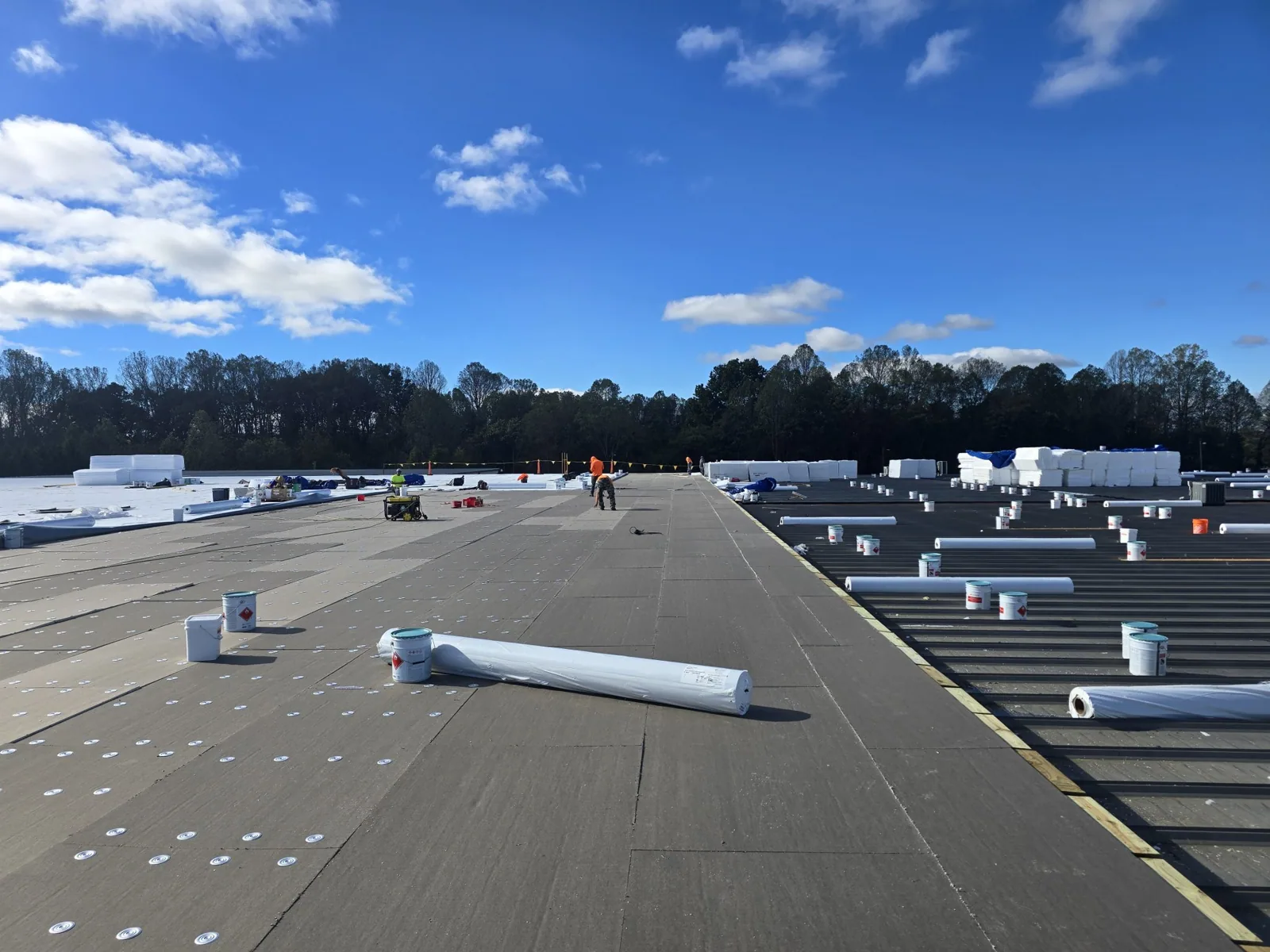
Commercial Roof Repair in New Haven, CT
Commercial Roof Repair
Repair commercial roof membranes, seams, flashing, and drainage details in New Haven with a documented scope that fits access and operations.
Freeze-thaw weather gives a weak seam or flashing edge repeated movement to work against. In New Haven, winter drainage and changing temperatures make the repair record useful before a patch is priced. We inspect the reported area, follow the water path, and record which membrane or detail has failed. That record lets a general contractor compare a defined repair with the next roof decision.
Repair work can address a puncture, open lap, split flashing, loose edge, drain connection, or another isolated condition. The approach depends on the roof material and what surrounds the failure. We match the repair method to the assembly, photograph the location, and describe the limits of the work so a facility manager can see what was corrected and what still needs attention.
Finding the repair boundary
A sound repair begins with more than the visible defect. We check seams, nearby penetrations, changes in plane, fasteners, and drainage points that could carry water to the reported area. On a low-slope roof, moisture may travel beneath the membrane before it appears inside. The inspection separates the entry point from the interior symptom.
Material compatibility matters. A patch made for one membrane may not bond to another, and aged surfaces often need preparation. We confirm whether the roof is single-ply, asphaltic, built-up, or metal, then match preparation and tie-in details to that surface. Repair limits should extend to sound material, not stop at the stain or tear.
Where a seam has separated, we check adjacent welds and field attachment. A seam failure repair can cover the confirmed area, while repeated failures may call for broader review. We photograph each location for the building's roof history and later condition reports. A photo should show the location in relation to a drain, curb, wall, or roof edge, then a closer view of the actual defect. That pairing helps maintenance staff find the detail again and compare a future observation without confusing separate repair areas.
Membrane, flashing, and edges
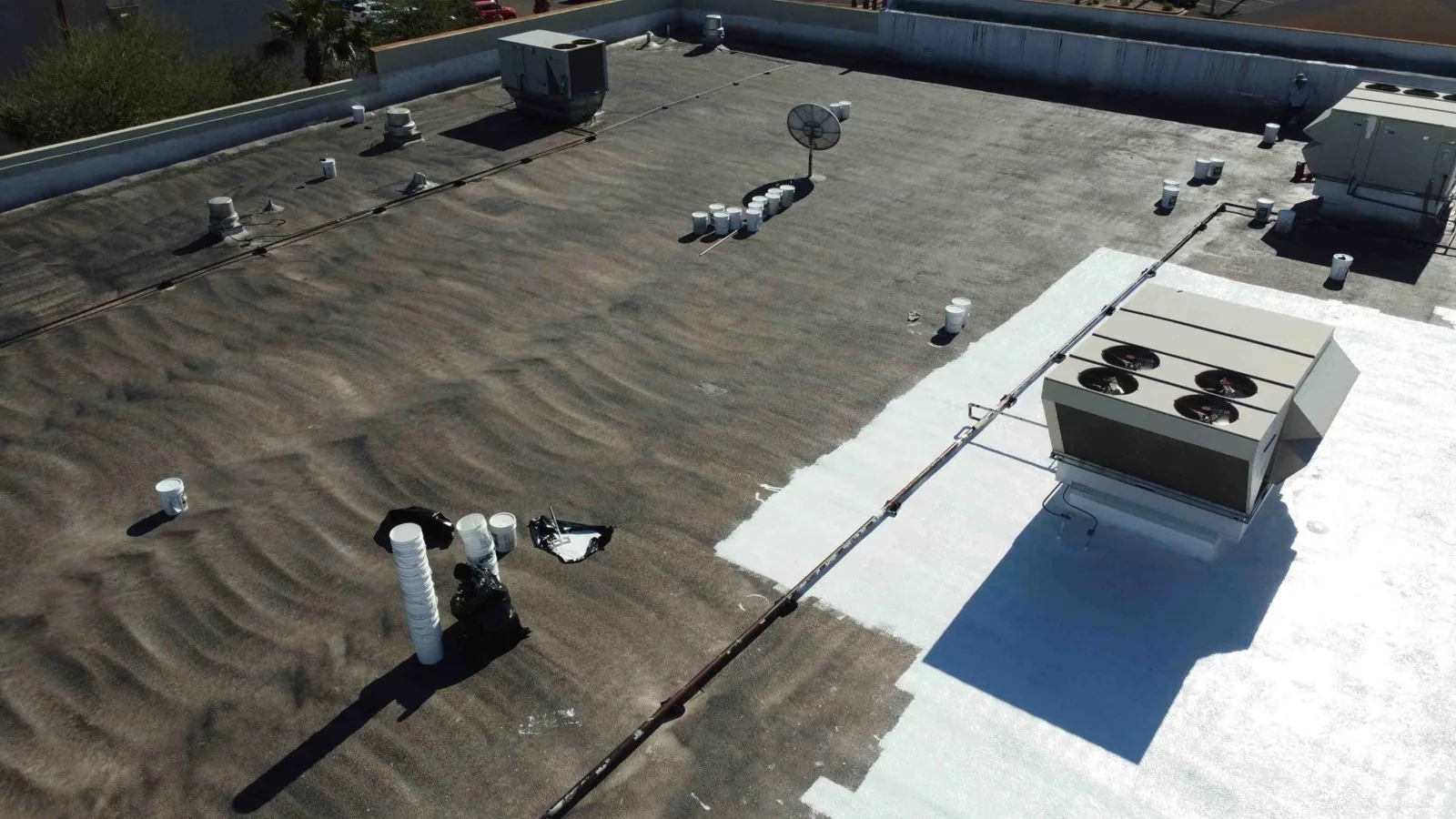
Flashings protect the transitions where a roof meets walls, curbs, pipes, skylights, and equipment. Sealant alone does not correct a loose counterflashing or a membrane termination that has lost its attachment. We inspect how the layers overlap, whether water can reach a vulnerable edge, and what preparation is needed before new material is installed. The repair scope should describe each transition rather than bundle them as miscellaneous patching.
Perimeter metal also needs attention after wind or repeated movement. We review cleats, fasteners, laps, corners, and coping conditions to understand whether the edge remains restrained. Madison's 85 mph Sandy gust makes perimeter restraint a useful regional review point. We inspect cleats, fasteners, corners, and coping, then price edge work from movement or failed attachment observed on the roof.
Drain repairs may involve a clamping ring, flashing, strainer, sump, or surrounding membrane. Water that remains near a drain can make a small separation harder to isolate, so we look at the surrounding slope and outlet condition too. A separate drain and scupper scope can address a confirmed drainage detail, and a flashing repair can be specified where the transition itself is open.
Repair or a larger scope
One isolated puncture in sound membrane does not call for the same scope as repeated seam separation. We compare repair locations with prior work, adjoining material condition, and moisture readings. That shows whether a spot repair can restore a defined area or whether several defects share a larger attachment or drainage problem.
We mark the repair threshold: the boundary of sound material, components that need adjustment, and evidence that would change the scope. For broader wear, we compare repair with a replacement review or recover assessment, then align the choice with capital timing. We also identify work that can be completed in one access window and work that needs a second visit after another trade finishes. This helps the contractor sequence roof work without leaving an open repair dependent on an unconfirmed rooftop schedule.
New Haven's commercial mix includes health, education, manufacturing, and business services. Hamden also has computer products, wire and cable, concrete equipment, fabricated metals, and business services. These uses can affect equipment, loading, and work-zone planning without defining a specific roof's condition.
Access and operating limits
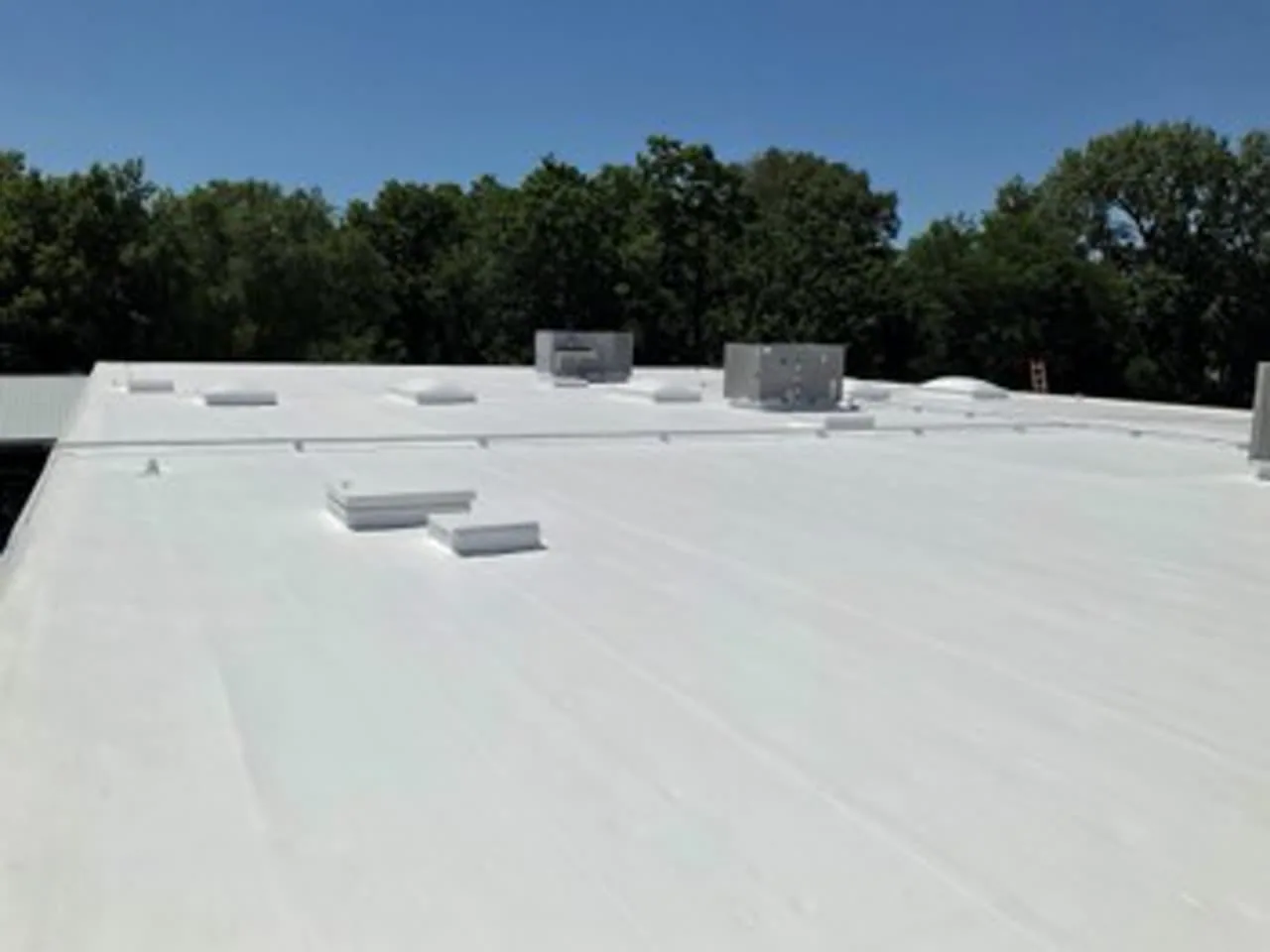
A small roof repair can require careful access below. We confirm hatch routes, loading limits, tenant notice, equipment clearances, and controls near entrances. For an occupied building, we coordinate the work window with operations and route tools and materials safely.
Regional passenger routes and freight connections link New Haven commercial properties with the surrounding market. Delivery timing can therefore belong in the mobilization plan. Near the I-95, I-91, and Route 34 interchange, the general contractor can include traffic constraints without assuming a roof defect.
Emergency response remains available around the clock, including nights and holidays. We can apply temporary protection, then return with a permanent repair scope when access and conditions support the chosen method. The emergency response plan distinguishes temporary dry-in from completed membrane work.
Closeout that supports the next decision
After the repair, we photograph the completed detail and record its material, location, preparation, and any open condition. The record states whether the work is temporary or permanent and records follow-up access. This entry supports maintenance planning and continuity when another contractor joins.
Repeat repairs at a drain, edge, or penetration can change a bid comparison. We group the history by location, then distinguish routine repair from work that may affect replacement or restoration. For an occupied commercial building in West Haven, the record can support phasing and access coordination. Current roof findings and the operator's own requirements establish the work.
Bring roof plans, invoices, photographs, leak records, and access constraints to a repair scope review. We will identify the observed failure, state the repair limit, and record the next condition that could change the decision.
Questions Owners Ask
Can a membrane patch stop a leak that appears far from the roof defect?
Water can travel beneath a low-slope assembly before it shows indoors. We trace the route across seams, penetrations, walls, and drains, then repair the confirmed entry point and any unsound surrounding material. The interior stain remains useful as a reference, but it does not define the patch boundary by itself.
What should be in a commercial roof repair record?
Photographs, location, material, preparation, repair limits, and open observations make the entry useful later. We connect it to prior work when records are available and record whether follow-up inspection is warranted. That helps a general contractor compare repeated repair areas before setting a capital scope.
How do you handle different membrane materials on the same building?
Each roof area is identified before a patch method is selected. We prepare the surface according to its material and detail, then keep the repair compatible with adjoining layers. Where a transition joins two systems, we describe the tie-in so the scope does not assume one generic patch will bond everywhere.
Can repair work happen during a tenant's operating hours?
Access, noise, safety controls, and weather exposure shape that window. We coordinate a work zone with the building operator and state when an entrance, service area, or roof route needs to remain clear. If a leak requires immediate protection, we can respond at any hour and set the permanent work sequence after the condition is contained.
When do repeat repairs point toward replacement?
A pattern across seams, drains, or multiple roof areas can move the discussion beyond isolated patches. We compare the repair record with current moisture and attachment findings, then show which boundaries remain repairable and which affect the larger assembly. The owner can weigh that evidence against replacement timing.