
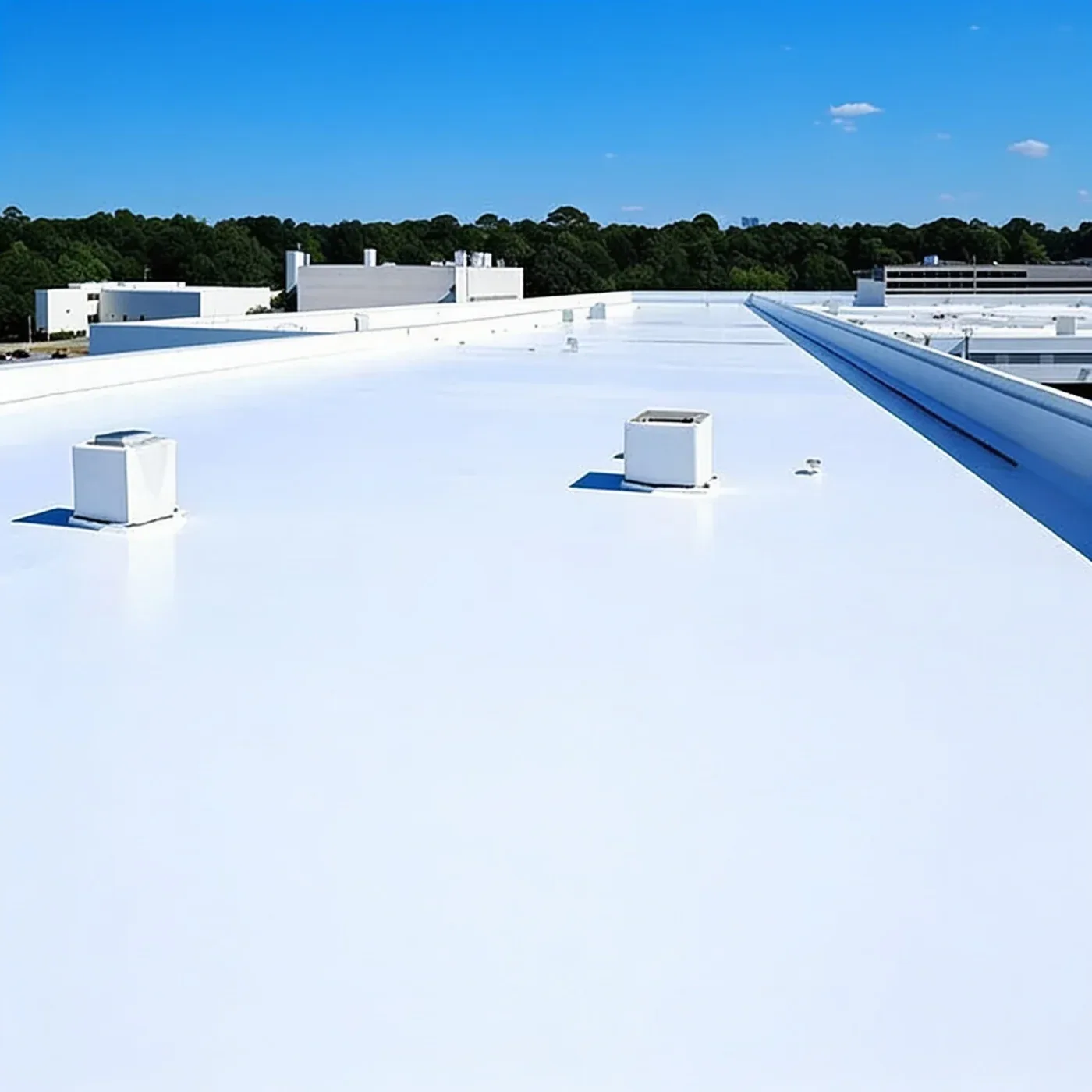
Commercial Roof Drains and Scuppers in New Haven, CT
Commercial Roof Drains and Scuppers
Resolve roof drainage problems in New Haven by tracing flow, checking drains and scuppers, and defining corrections that fit the membrane and roof slope.
Winter water has little margin when a drain, scupper, or low area is restricted. New Haven’s freeze-thaw pattern puts drainage paths on the maintenance list before colder weather arrives. We trace how water reaches each outlet, examine the surrounding membrane and slope, and record what is holding flow back. The scope then separates cleaning from correction of the roof assembly.
Health, education, business services, and manufacturing are part of the city’s commercial building mix. A drainage repair can affect roof access, equipment service, loading, and occupied areas below. We coordinate the work window and identify how the roof will stay protected while drain details, crickets, or adjacent membrane are being corrected.
Following water to the outlet
Water on a low-slope roof should follow a deliberate route to a drain or scupper. We review the field slope, sumps, outlet openings, strainers, and downstream connections that can be observed. Debris may call for cleaning, while a damaged flashing, undersized opening, or settled area can require a defined repair. The first step is to tell those conditions apart.
A stain near a wall or ceiling does not identify which roof outlet failed. A leak can migrate through the roof assembly and leave an interior mark well away from the point where water crossed the surface. We compare the reported location with the roof path, inspect nearby seams and penetrations, and document the points that need follow-up. A roof condition examination can establish a broader baseline when drainage is one of several reported issues.
In East Haven, commercial activity includes wholesale distribution, warehousing, electronic components, architectural castings, and welding. Roof equipment, loading patterns, and maintenance access can differ across these properties. We verify the actual path and outlet at each building instead of assuming that a similar use means the same drainage layout.
Drains, scuppers, and crickets
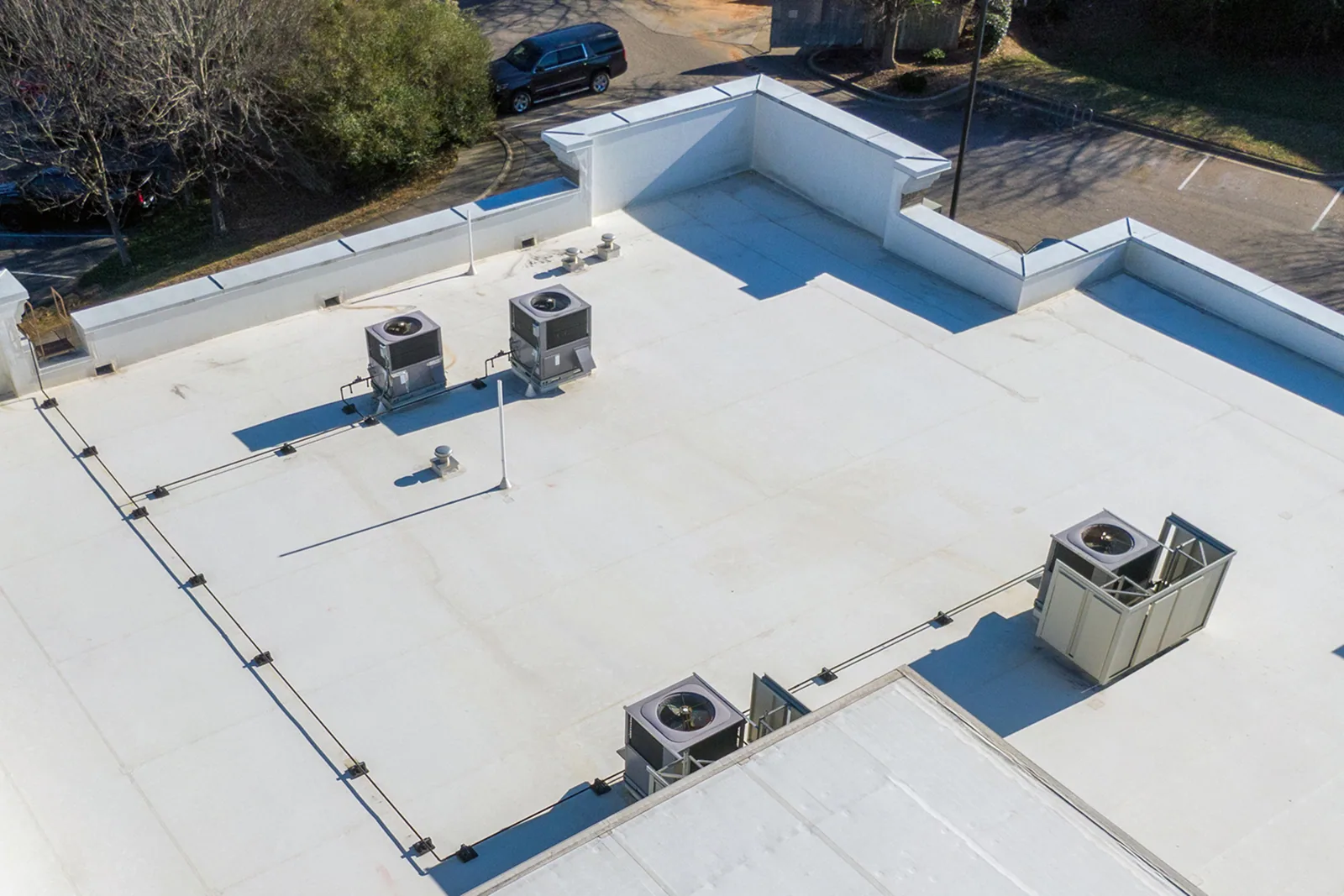
A roof drain depends on the surrounding membrane, clamping or flashing detail, strainer, and clear discharge path. We check whether the sump has a consistent transition and whether the opening remains accessible after rooftop work. A blocked strainer can be cleared; a loose drain flashing or damaged membrane needs a separate repair boundary. Photographs should show both the outlet and the surrounding slope.
Scuppers need a clear opening, sound perimeter attachment, and a discharge route that does not direct water back toward the wall. We examine the surrounding edge detail and note any staining, corrosion, or separation visible from safe access. If runoff reaches the perimeter, a coping, gutter, or downspout scope may be needed alongside the roof correction.
Crickets and tapered saddles redirect water around curbs or toward outlets. Their placement and height should work with the membrane laps, equipment clearances, and finished elevation. Adding slope may affect door thresholds, roof hatches, and flashing heights, so we record those interfaces before setting a quantity. An insulation or cover-board change may be needed where the correction alters the roof plane.
Freeze-thaw and standing water
New Haven’s winter normal includes many days with overnight lows at or below freezing and some full days below freezing. Water that remains around an outlet can freeze, then expand against seams and flashing details as temperatures shift. New Haven's winter normal makes seasonal drainage review useful. The roof examination identifies whether cleaning, repair, or regrading fits the observed condition.
We note ponding depth and location, surface condition, and whether water drains after a suitable interval. A recurring low area can arise from deck deflection, insulation changes, a misplaced outlet, or construction geometry. Each cause points to a different correction. A ponding water repair review can help define that work when cleaning does not restore the intended path.
Hamden’s building mix includes computer products, cable, concrete equipment, and fabricated metal activity. Service work around rooftop equipment can interrupt a drainage path if temporary protection or staging is not planned. We coordinate with the general contractor so materials, hoses, and removed debris do not block the outlets that remain in service during the repair.

Matching correction to the roof
Drainage repair follows the membrane and the surrounding assembly. We confirm the installed roof type and outlet detail first, then select a repair method that can tie into the surface and restore the intended drainage path. A patch that does not match the assembly can separate at the transition and recreate the same water path. The scope identifies preparation and tie-in limits before installation.
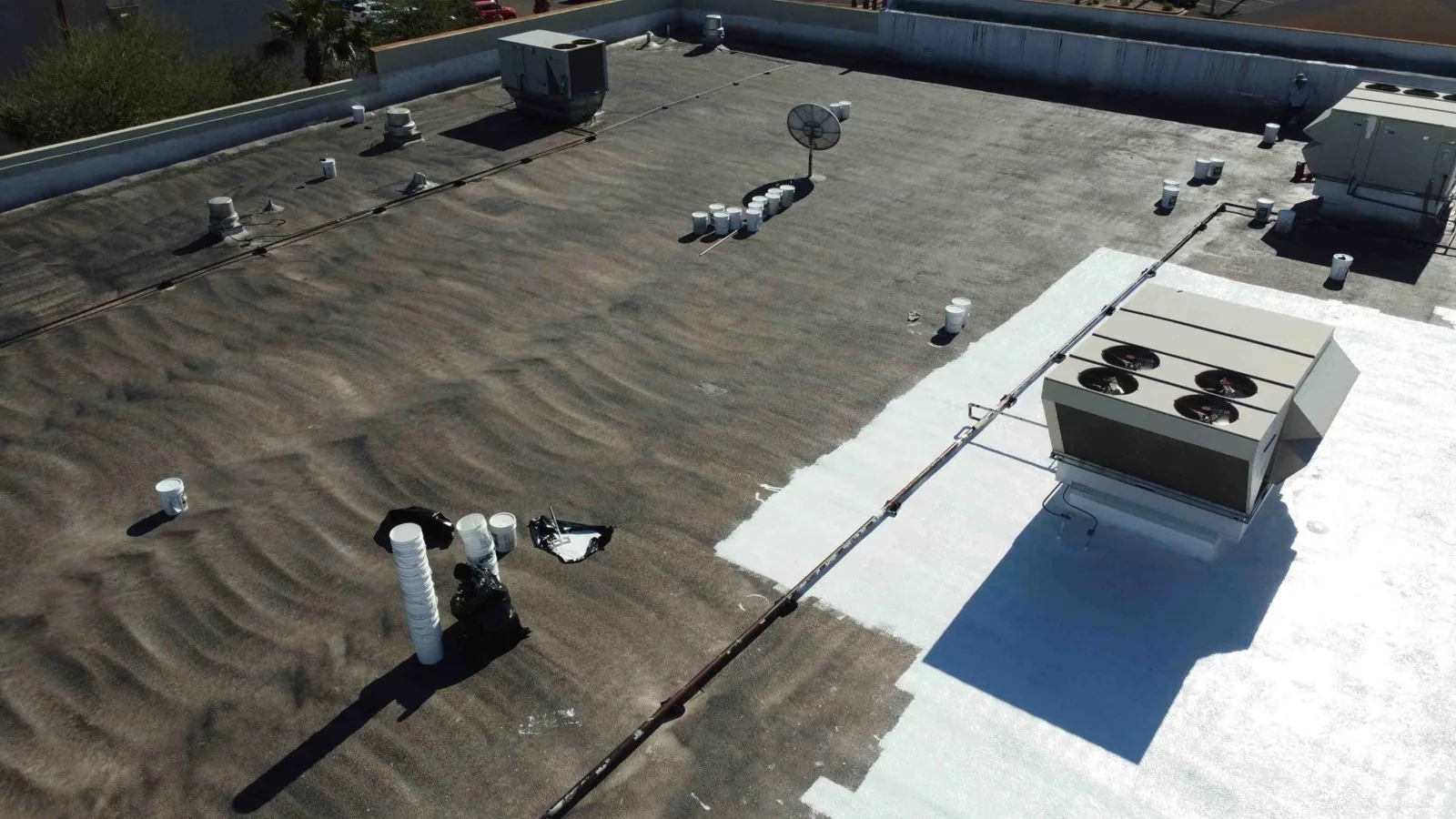
Correction may include cleaning, drain flashing repair, sump reconstruction, a tapered insulation insert, or a broader slope adjustment. We specify what remains in place and how the outlet will be protected while work proceeds. Where coating restoration is under consideration, the coating scope should include drainage and ponding conditions rather than treating the field surface alone.
Work can be phased by roof area so the building retains a usable path to remaining outlets. We identify temporary drainage controls, daily closeout points, material staging, and any interior protection needed below. Temporary protection can control active water entry before a planned drainage correction is completed.
A drainage record for the next visit
Closeout photographs should show the corrected outlet, adjacent membrane, and direction of flow. We note whether the work addressed cleaning, flashing, slope, or another component, then record nearby items left outside the repair. A photo-supported condition report helps maintenance staff compare the same low area during a later visit.
For buildings in Hamden or New Haven, a common record format can support portfolio budgeting while each roof keeps its own findings. The report should include access constraints and equipment clearance so future maintenance can reach the outlet without disturbing other trades.
Bring prior roof reports, drain photographs, maintenance notes, and any recurring leak locations to a drainage scope review. We can map the water path, distinguish routine clearing from assembly repair, and identify what should be completed before the next freeze period. The closeout should name the next flow check, particularly where a new membrane tie-in or tapered section changes the route to the outlet.
Questions Owners Ask
What does standing water tell you about a roof?
Its location and persistence help identify whether the issue involves debris, outlet height, slope, settlement, or another condition. We document the area and surrounding details before selecting a correction. The visible water alone does not establish which component needs work.
Can cleaning a drain solve a recurring leak?
Cleaning restores flow when debris is the cause, but it will not repair a loose flashing or low roof area. We check the sump, membrane tie-in, and surrounding slope after clearing the outlet. If the leak continues, the record guides a separate repair examination.
Why does freeze-thaw exposure matter for roof drains?
Water held near an outlet can freeze and place additional movement on the drain flashing and nearby membrane. New Haven’s winter temperature pattern makes seasonal flow checks useful. We use the roof examination to determine the specific repair or maintenance step.
Do crickets always need to be added around rooftop curbs?
The existing slope and water path determine whether a cricket would improve drainage. We check the curb, nearby outlet, membrane elevations, and service clearances before adding one. A new cricket must direct water without creating a difficult transition at the surrounding flashing.
How can drain repairs be phased in an occupied building?
We sequence work so a usable outlet remains available where the roof layout permits, and establish daily protection at each open area. Access, equipment service, and interior impacts are coordinated with the general contractor. The plan identifies any temporary diversion before the repair begins.