
Commercial Roof Leak Repair in New Haven, CT
Commercial Roof Leak Repair
Trace active commercial roof leaks in New Haven, protect the interior, and document the membrane or flashing repair with clear next steps.
A winter drip can travel well beyond the roof detail that admitted it. In New Haven, freeze-thaw cycles and changing drainage conditions make a leak response begin with the water route, not the ceiling mark. We document where water appears, inspect the roof above and around that area, and protect the building while locating the entry point. The first repair decision is what needs containment now.
Once the active path is traced, we distinguish temporary dry-in from permanent work. The building owner and general contractor receive a record of the observed condition, the repair boundary, and any access or drying constraint that affects timing. That keeps an interior disruption from becoming a guessed roof scope and helps the team decide what can be completed during the first visit.
Containment and access
Active water may require an immediate interior check before the membrane can be reached. We coordinate with the building operator to identify affected rooms, protect equipment or materials, and locate a safe route to the roof. If weather or access prevents a permanent repair, we apply temporary protection and record exactly where it was placed and what return visit is needed.
Response is available at any hour, including weekends and holidays, when a leak cannot wait for the normal workday. The site plan still matters. We confirm roof access, electrical clearances, occupied areas, and any controls around a loading or patient entrance before setting tools on the roof. The emergency dry-in response gives the owner a clear distinction between immediate protection and permanent correction.
New Haven's health and education activity includes buildings with continuing operations. West Haven has manufacturing activity, where work-area access can affect response planning. The property contact defines routes and schedules, and we record them before setting the leak-repair sequence.
Following the water route
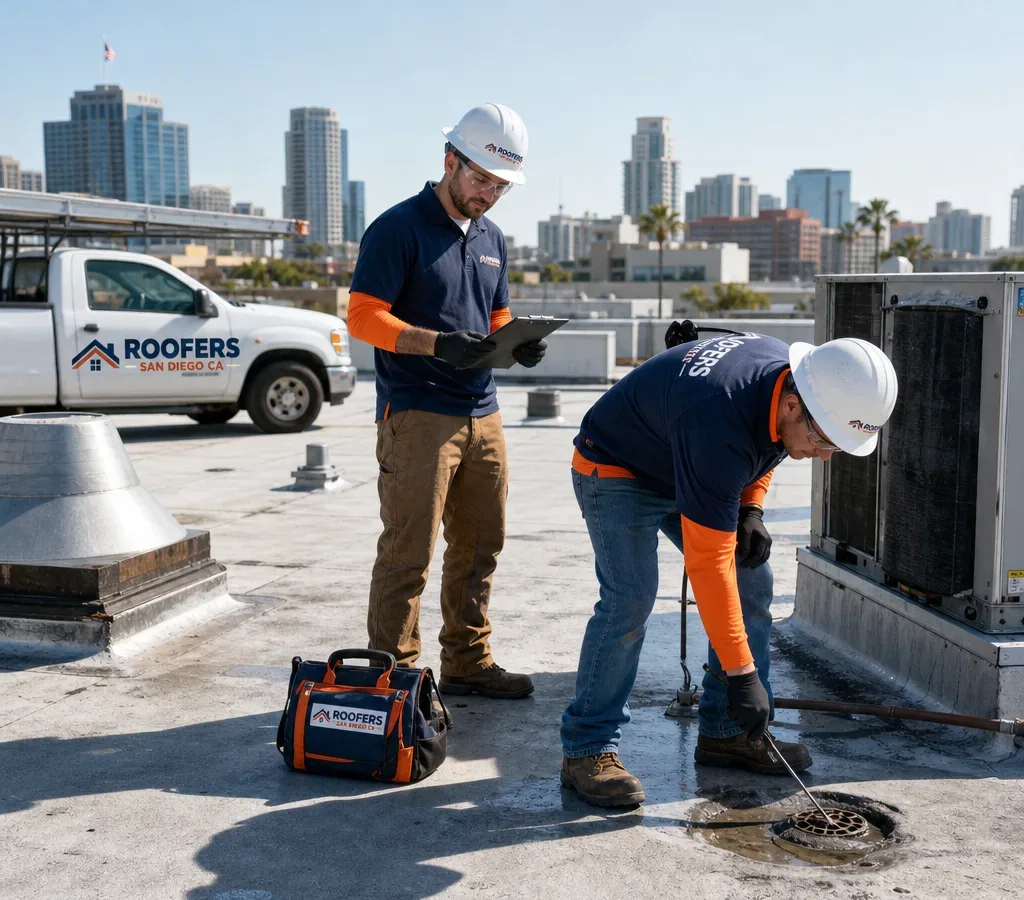
Water can move under a low-slope membrane, follow a deck joint, or run along insulation before it reaches an interior opening. We compare the stain location with drains, seams, penetrations, walls, and changes in roof elevation. Moisture readings and visual checks help narrow the search, while test openings can confirm concealed conditions when the project needs that evidence.
We pay particular attention to transitions because a lap, curb, pipe boot, skylight, or wall termination may fail in a small area and release water into a wider assembly. A repair should address the entry and any surrounding material that no longer bonds or sheds water. If the reported area lies near ponding, we review the drainage path as well as the membrane. A drainage-related roof repair may be needed when the condition contributes to repeated entry.
Freeze-thaw exposure adds another reason to document the route. Water held at a drain or in a seam can change as temperatures cross freezing, placing movement on the detail. Regional winter conditions make retained water a useful part of the leak investigation. We check how roof drainage performs through temperature changes, then document the field evidence that defines the repair boundary. We use the field observations to identify where a repair begins and where sound material resumes.
Matching repair to the roof
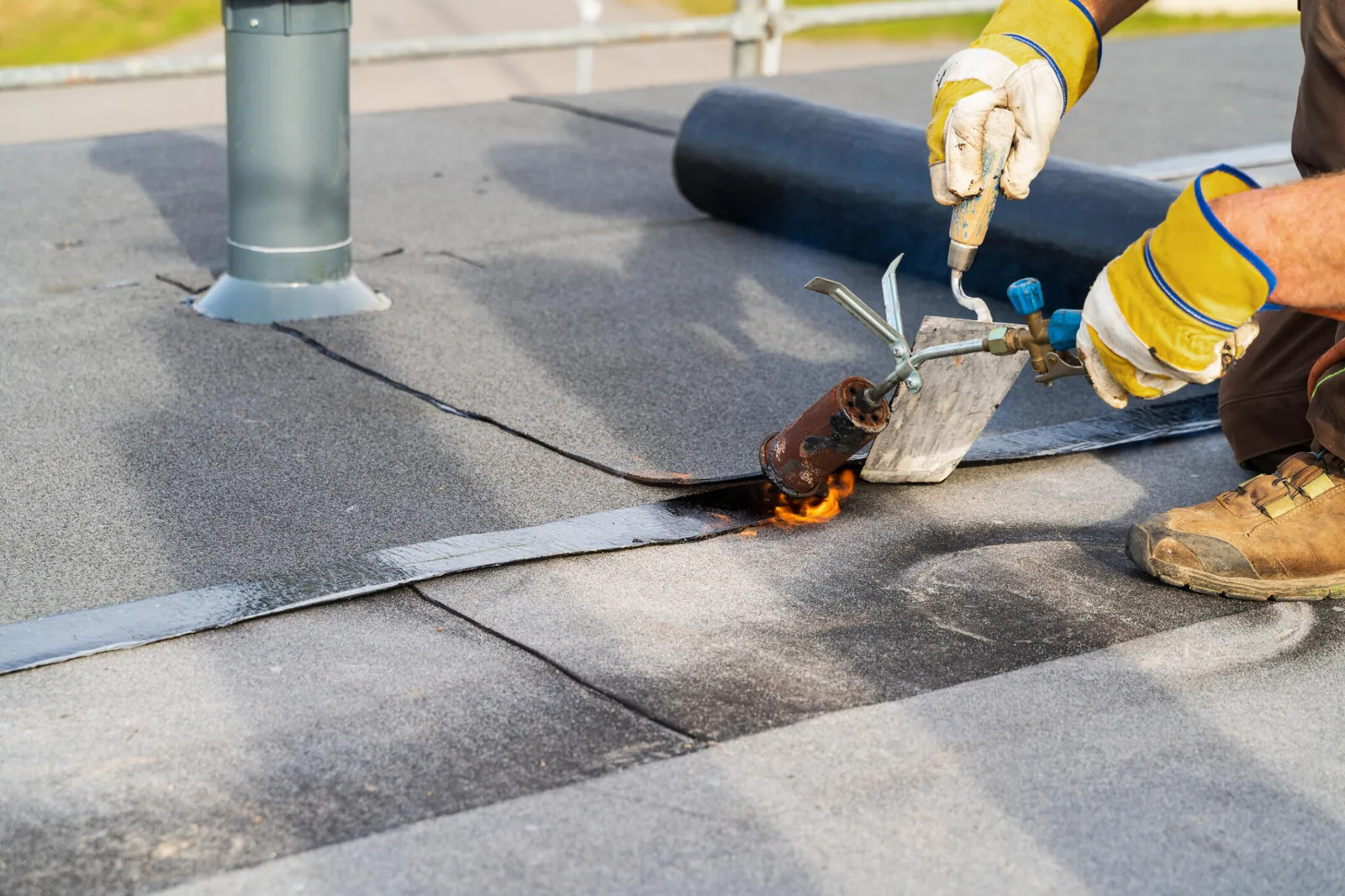
A permanent repair must suit the membrane and how it is installed. We identify the surface, prepare it for the selected patch or flashing, and check whether adjoining seams and fasteners remain secure. Repair preparation follows the installed roof: single-ply seams, bituminous laps, built-up surfaces, and metal panels each need a compatible tie-in. A sealant note alone cannot define that durable scope.
At an edge or wall, we check the flashing layers, termination, counterflashing, and nearby fasteners. A bead of caulk may conceal an open transition without restoring the way water sheds across it. For a confirmed transition failure, the flashing repair scope should identify the materials being removed, the tie-in extent, and what surface needs preparation before new components are installed.
Branford's manufacturing, healthcare, and retail activity adds variety to the regional commercial mix. The roof under inspection defines the repair, and a planned repair visit can address related seam, edge, or drain details once access and materials are ready.
Interior effects and work timing
When a leak affects a room with equipment, inventory, or scheduled occupancy, the repair sequence should include the interior response. We coordinate the affected area with the operator, record any protection used, and plan roof work around safe access. If another trade must move equipment or open a ceiling, we set the order before the roof repair so each team can work without duplicating access.
Waterproofing conditions also affect timing. A wet substrate may need to dry before a permanent patch can be installed; cold or rain may make certain adhesives or welds unsuitable. We explain that limit and use a temporary measure when the building needs immediate protection. The plan names the next visit or test needed, rather than leaving the owner to infer whether a temporary fix closed the issue.
Near coastal areas, current weather and secure access guide the work window. Sandy brought storm-surge exposure to Connecticut's coast, while Madison recorded a severe gust in New Haven County. These facts support care with exposed edges and staging; they do not replace a site forecast or prove damage. We secure materials, keep temporary protection in view, and close out each roof area before conditions change.
A repair record the next team can use
We close the visit with photographs of the entry point, repair area, and completed detail, plus notes on temporary protection or work that remains open. The record links the interior report to the roof location and states any access limit or drying condition that affected the repair. A facility manager can use that information when the same area is checked after the next rainfall.
If reports return from the same location, we compare the repair history with the current roof condition rather than repeat the same patch without review. Repeated moisture may involve adjoining seams, saturated insulation, blocked drainage, or a larger assembly concern. A photographic condition report can organize those findings for a general contractor's bid comparison and capital discussion.
Madison's storm record and the nearby Branford and West Haven building context are regional points to keep in view, while the documented leak path remains specific to the property. Bring photographs, prior repair notes, occupancy limits, and access instructions to a leak assessment. We will set the immediate protection step and identify what evidence is needed before the permanent work is priced.
Questions Owners Ask
Why is the ceiling stain not enough to locate a commercial roof leak?
A stain records where water reached the interior, not necessarily where it entered the roof. We trace the route across seams, penetrations, walls, and drains, then inspect nearby assembly conditions. That approach lets the repair reach the failure while keeping the patch boundary tied to sound material.
What happens if the roof cannot be permanently repaired during the first visit?
We protect the active area, photograph the temporary measure, and identify the condition that prevents a permanent repair. Weather, access, or a wet substrate may require another work window. The owner receives a return plan that states what must be confirmed before the final detail is installed.
Will you respond overnight or during a holiday?
Yes. Emergency leak response is available around the clock, including overnight hours and holidays. We first coordinate roof access and interior protection, then contain the water path and document what remains for a permanent repair visit.
How can an owner tell whether the leak is tied to a drain or flashing?
The roof inspection checks water direction, membrane seams, drain connections, curbs, and wall transitions around the reported room. We compare those details with the interior location and use test openings when concealed moisture needs confirmation. The record explains which detail the repair addresses.
What information should the facility manager give the repair crew?
The room, time of observation, recent changes in the leak, prior repair locations, and access limits make a useful starting record. Share any equipment or occupancy concern that changes the route below or roof access above. We will check the reported area and document the next action.