
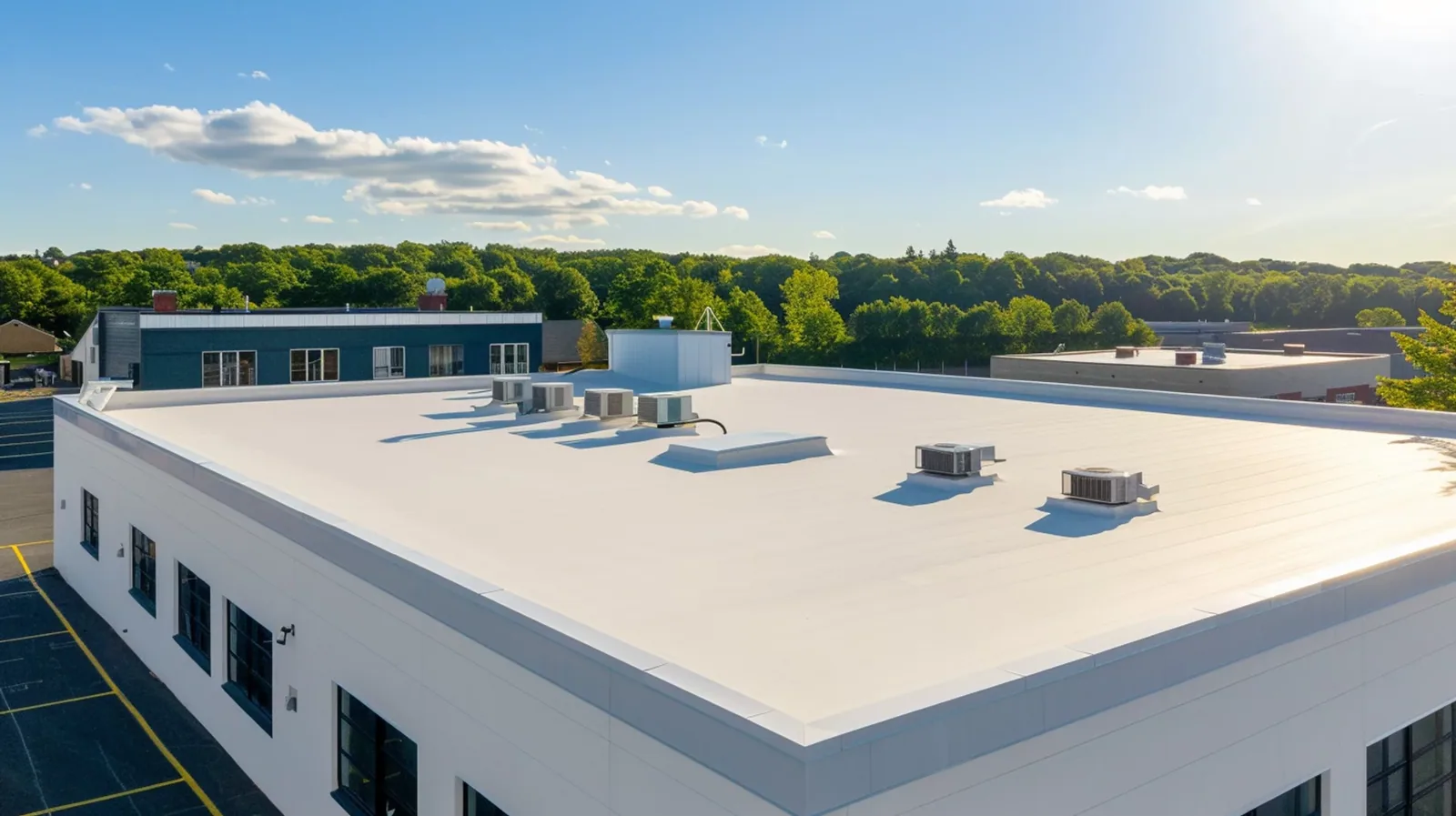
PVC Roofing in New Haven, CT
PVC Roofing
Compare PVC roof installation and repair in New Haven with seam, flashing, drainage, and access details tied to the building's operating plan.
Coastal wind and winter drainage put PVC roof edges and welded seams on the New Haven, CT scope list. The membrane can serve commercial roofs where chemical resistance, seam integrity, and a defined drainage path matter, but the assembly below still sets the work. We review roof history, insulation, attachment, penetrations, and access before pricing repair, recover, or replacement. That gives a general contractor a bid boundary tied to the actual roof instead of a membrane name alone.
New Haven's health, education, manufacturing, and business-service activity brings different equipment and occupancy requirements to roof work. A PVC specification has to address those operating limits alongside material compatibility. We document the observations, identify open design questions, and state which condition could change sequencing before materials are ordered.
Surface exposure and membrane choice
PVC is a thermoplastic single-ply membrane joined through heat-welded laps. Its formulation can suit roof areas where grease or other chemical exposure needs consideration, yet a product selection still has to match the actual discharge, surface, and manufacturer requirements. We ask where rooftop exhaust reaches the roof, whether a walkway or protection layer is needed, and how flashing will meet the surrounding equipment.
Branford's factories, research uses, health-care buildings, and retail properties create distinct roofing needs. For Branford projects, we coordinate mechanical work and deliveries around the occupied areas and roof access identified during the site review. We inspect the area under consideration and record the exposure that the design team needs to resolve. Where the proposed PVC assembly differs from existing TPO roofing or KEE membrane, the bid should name the transition detail instead of assuming the materials tie together without preparation.
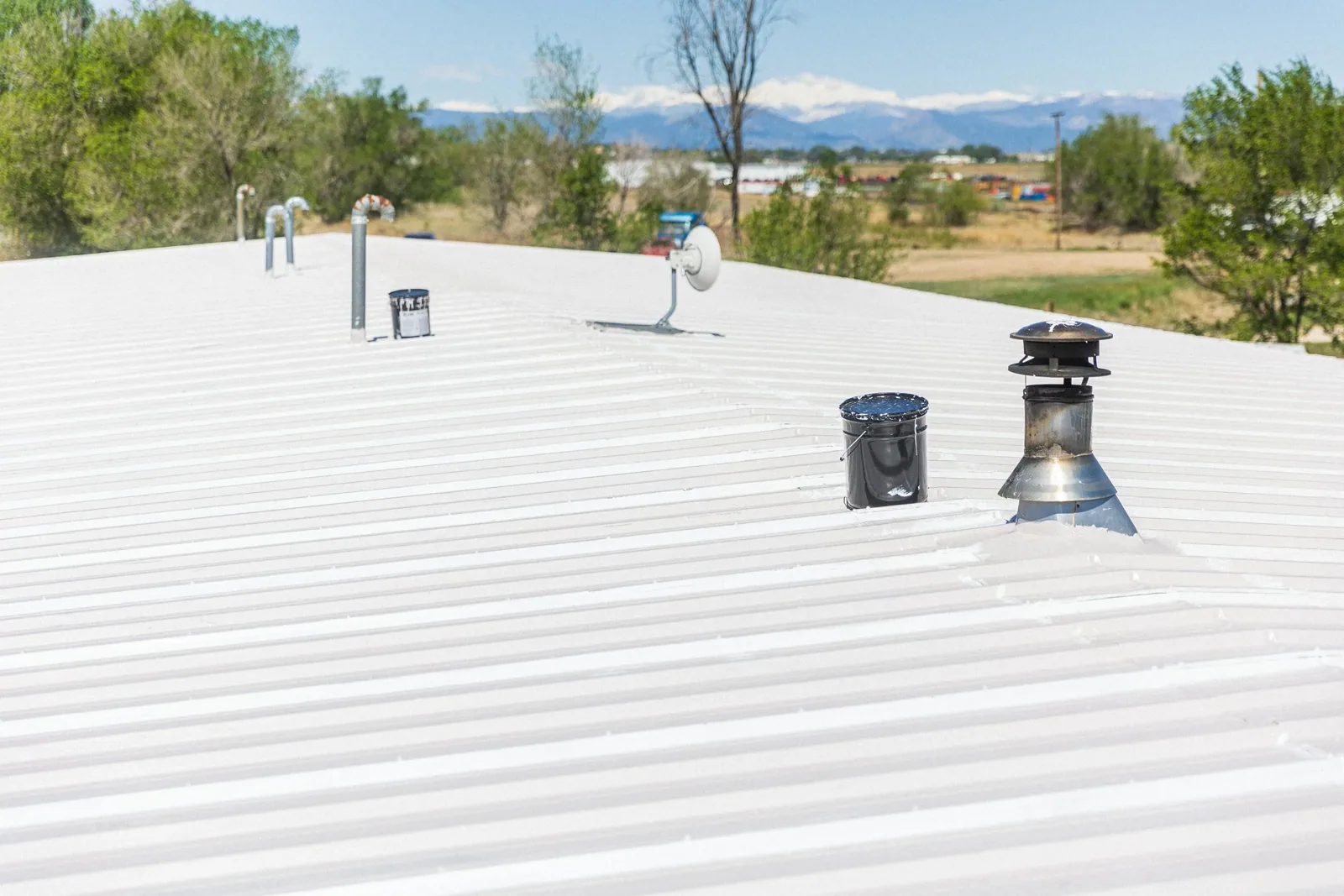
Welds and transition details
A welded lap needs compatible material, clean surfaces, and a setting that produces a continuous bond. At field seams, we check for open edges, wrinkles, contamination, and repairs that may interfere with a new weld. At walls, curbs, drains, and pipes, the membrane must connect to a termination or flashing detail that keeps water moving away from the opening.
Coastal storms make exposed transitions worth careful review. Madison's Sandy gust reached 85 mph on October 29, 2012; inspect PVC perimeter attachment and exposed flashing after severe wind. We inspect the property before defining work, then include corners, cleats, fasteners, and membrane terminations when the observed condition calls for them. If an edge repair is separate from the field membrane, a perimeter-metal scope can make that boundary explicit. A flashing correction should also identify which layers will be removed and how the new termination will be protected.
Drainage and substrate checks
Water that does not leave the roof can expose weak seams and details longer than intended. We trace the drainage path from high areas toward drains, scuppers, and gutters, noting low points, debris, and transitions that may hold water. If the deck or insulation is wet, the repair boundary may extend beyond the visible membrane opening. A targeted moisture survey or test cut can help answer that question before the PVC scope is priced.
The substrate affects attachment and weld layout. We review deck information, existing insulation, cover board, and prior roof layers, then identify whether removal is needed for a reliable base. Where a recover is considered, we compare layer count, drainage height, and curb clearances with the proposed assembly. If those checks point to a larger project, replacement planning can include concealed-condition allowances and a review of adjacent equipment work rather than leaving the decision until the roof is open.
A scope walk should also locate equipment supports and transitions where the membrane meets another material. We measure clearances around drains and check whether a new cover board would raise the finished surface above an existing curb or door threshold. If the assembly contains several roof layers, we record that condition before a recover is priced. These details can affect flashing height, attachment, and access for future service, so we carry them into the bid notes instead of treating them as field adjustments. The owner can see which dimensions still need confirmation before materials are released.
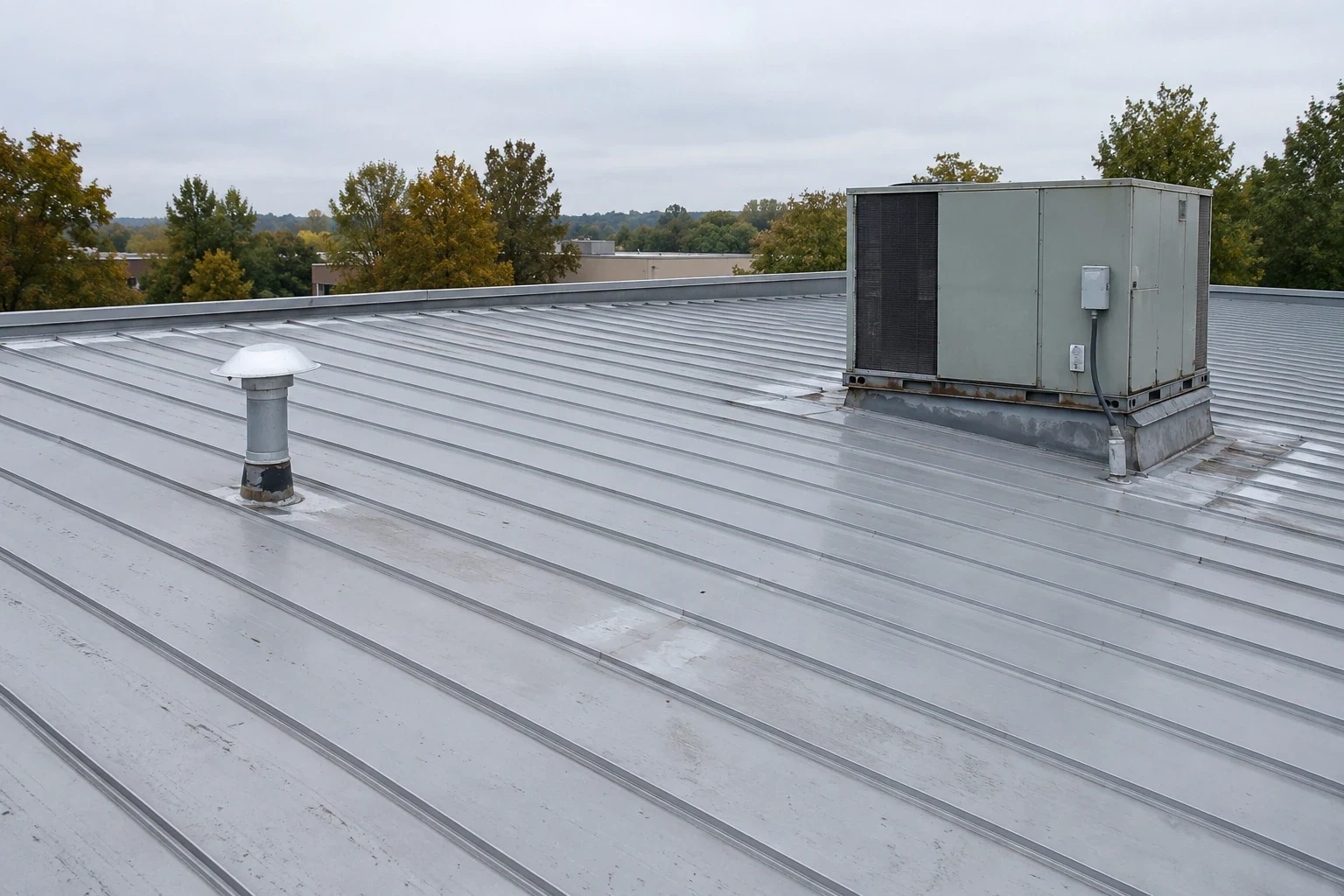
Trade coordination and access windows
New Haven buildings can require roof work beside active mechanical equipment, service routes, or occupied rooms. We confirm roof access, interior protection, material staging, and any period when a unit must remain available. If a mechanical contractor needs to disconnect or reset equipment, the PVC detail should be assigned to the same work sequence so the flashing is not left incomplete between trades.
A phased installation records where temporary tie-ins begin and end each day. The general contractor can compare those limits with tenant notices, deliveries, and any shutdown approval. We distinguish a weather-protection step from permanent membrane work and confirm who will inspect the tie-in before the next phase starts. These points affect labor and duration, especially when the roof cannot be released as one continuous work area.
A bid that names the assembly
A useful PVC bid identifies membrane thickness and attachment basis, insulation and cover board assumptions, flashing locations, perimeter work, drain details, and closeout records. It also states what existing materials remain and what concealed conditions could change the work. Those details let the owner compare bids on equivalent scope rather than selecting from different assumptions hidden beneath one line for membrane.
East Haven's distribution and manufacturing activity can bring loading and equipment constraints into a PVC installation plan, while New Haven projects may require a different occupied-building sequence. For either location, the roof record should identify the assembly and open decisions without assigning one building's condition to another. We can pair installation photos with future condition reporting, then align follow-up repair with a clear roof plan. Bring plans, leak records, bid scopes, and access constraints to a New Haven project review before the phasing decision is fixed.

Questions Owners Ask
When does PVC make sense for a commercial roof?
Exposure, drainage, roof geometry, and the existing assembly all affect membrane selection. We review exhaust locations and surface conditions, then compare PVC with other compatible systems. The specification should identify the actual exposure and detail it needs to address rather than rely on a generic material label.
How do you determine whether a PVC seam can be repaired?
We inspect the lap, surrounding sheet, and attachment before setting the repair boundary. A clean, stable area may accept a welded patch, while contamination or wet material can require added preparation or testing. The repair record identifies what was confirmed and where the next inspection should focus.
Does a coastal storm history change a PVC replacement bid?
Wind exposure makes edges and terminations useful review points, but the scope follows the roof's observed condition and design. We check perimeter restraint, corners, flashing, and drainage, then include corrective work where needed. The bid separates those details from the field membrane quantity.
Can PVC be installed over an existing roof?
A recover requires suitable attachment, acceptable moisture conditions, sufficient drainage clearance, and code compliance. We examine layer count, deck condition, drains, and curb height before including that option. The proposal should state exactly which materials stay and which areas require removal.
What should a PVC bid include for an occupied property?
Access routes, staging, temporary tie-ins, interior protection, and trade coordination can change duration and cost. We identify those limits with the membrane, insulation, and flashing scope so bids can be compared on the same sequence. The operating schedule should be part of the phasing plan.