Commercial Roofing for School Districts in New Haven, CT
School Districts
Plan school district roofing in New Haven around academic calendars, occupied buildings, roof condition records, and public project approvals.
A summer break offers a window for roof work, but it does not remove weather or approval constraints. New Haven's winter freezing makes drains, low areas, and edge details useful items to assess before the academic calendar is set. We inspect each building separately, then map work zones to access rules, interior uses, and the time available. The district receives a scope that distinguishes immediate repair from testing or renewal, with each assumption ready for review.
New Haven's health, education, business-service, and manufacturing base includes public buildings with roof work scheduled around daily use. North Haven combines educational, healthcare, and production uses, while A district proposal should identify who approves access, where materials can be staged, and which interior areas need protection during the work window. For a district portfolio, we map each roof by building, drainage zone, access point, and the records available for that location.
Academic dates and release windows
Roof work may fit between school terms, during a break, or in smaller areas while buildings remain occupied. We start with the district calendar, summer programs, deliveries, and any dates when a specific wing cannot be released. Material staging and lift paths can affect entrances, play areas, or staff parking, so those limits belong in the schedule. A bid based on a full-site closure can misstate both duration and cost.
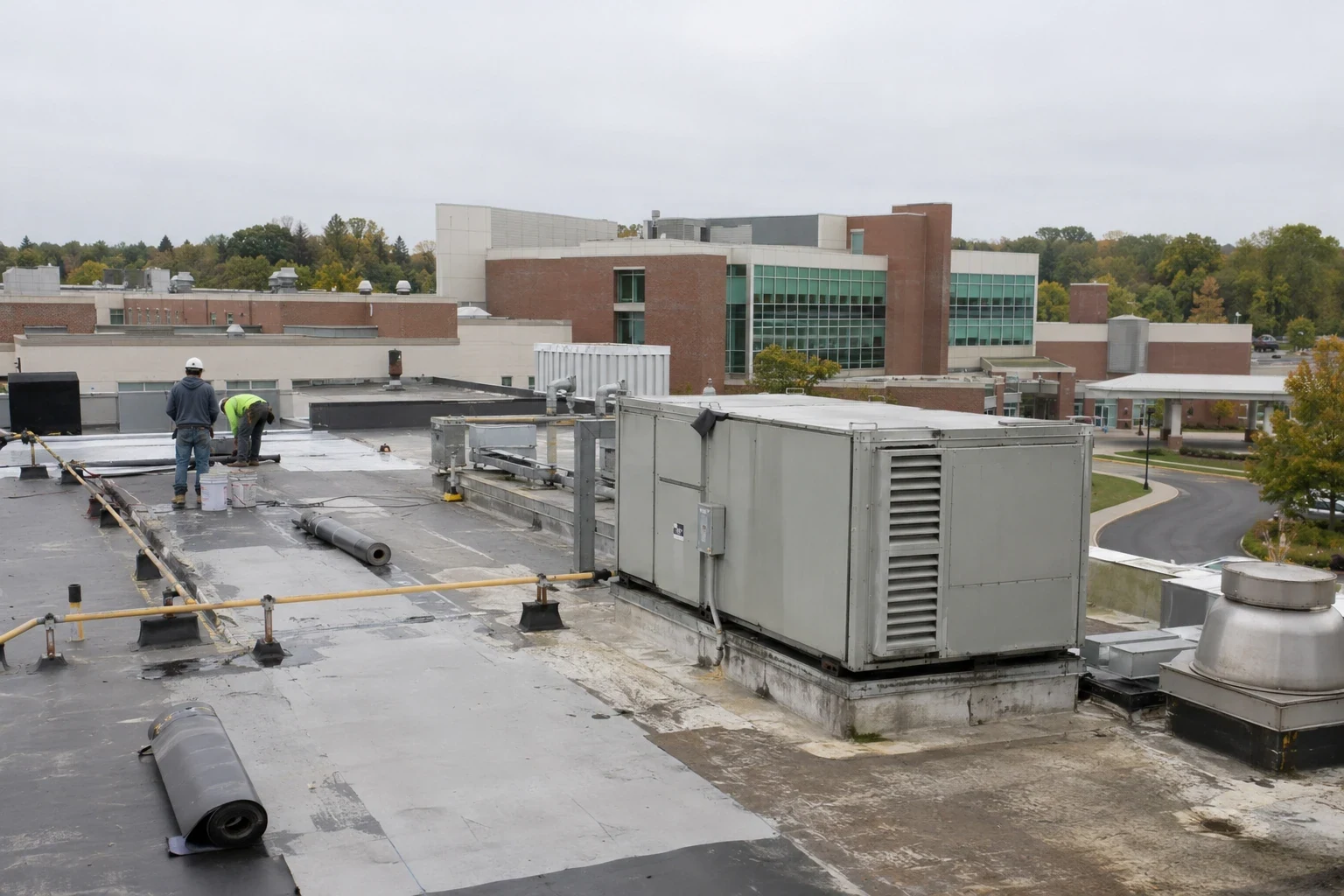
We divide the project into zones that can be opened, completed, and secured within the approved window. Each phase lists the access route, daily tie-in, interior protection, and person who can approve concealed repairs. If another trade is moving equipment, that work must happen before roofing closes the penetration. A phased school roof plan can preserve selected programs while keeping the active area clear.
District calendars often carry summer maintenance, custodial work, and other contractor schedules at the same time. We compare those activities with crane access and material deliveries before fixing the sequence. If a weather delay consumes a planned window, the scope should show which tasks can shift and which require new notice or approval.
Building records before a district bid
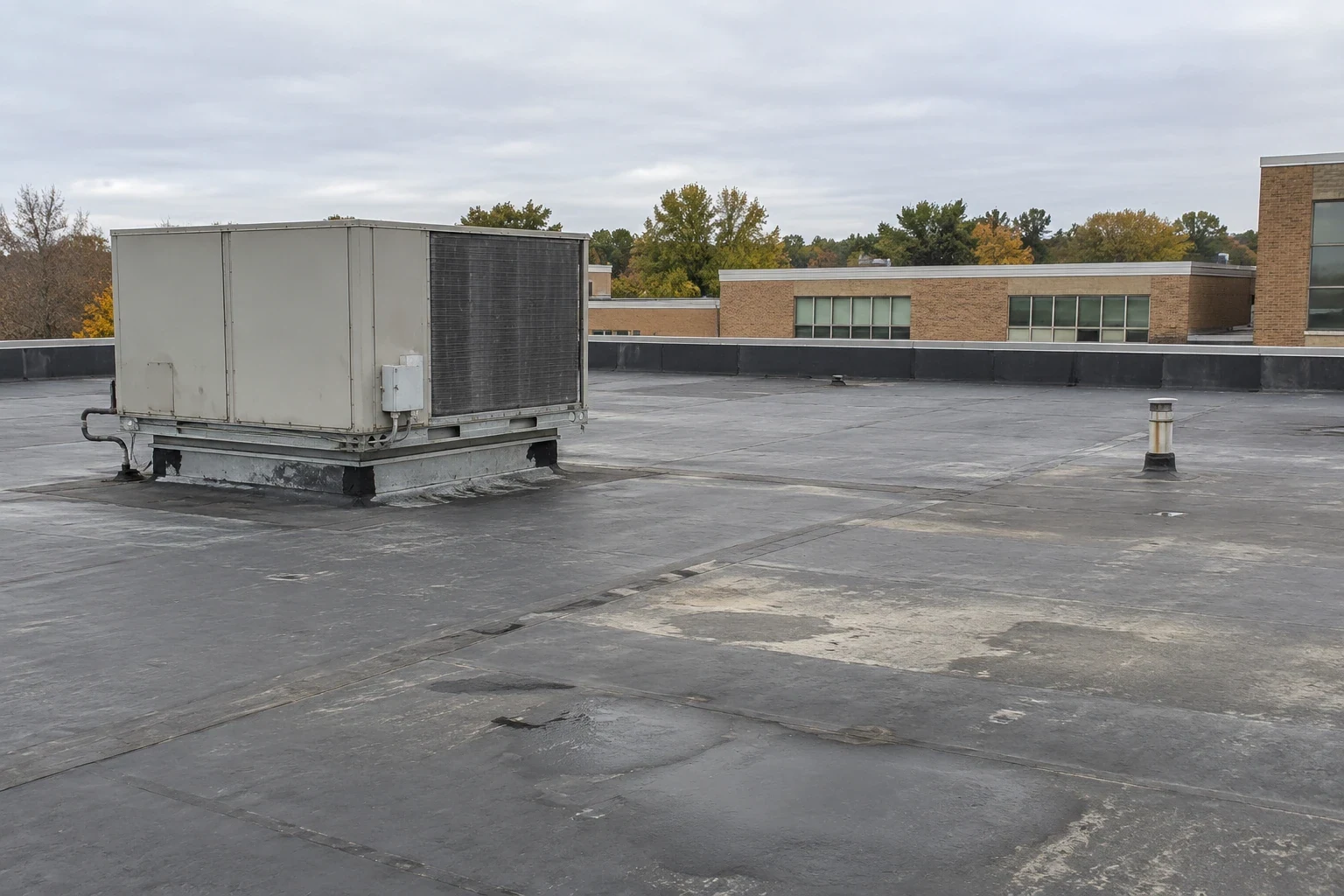
School roofs can have different assemblies, past repairs, and equipment even within one district. We create a roof-plan reference for each building and note drains, edges, seams, penetrations, and known work history. An inspection report can give facilities staff a common basis for comparing conditions while keeping quantities separate. If records are incomplete, that should be shown before a bid carries assumptions across multiple buildings.
North Haven's educational, healthcare, and manufacturing uses make trade access and interior protection important parts of a roof-work schedule. The roof file should identify each assembly from plans, prior repairs, and field observations before a district compares repair and replacement options. We verify the actual assembly and connect each observation to the building where it appears.
A ceiling complaint should be matched to the roof above and the likely path along slopes, curbs, and wall transitions. We distinguish visible deterioration from suspected moisture, then identify a test opening when it changes the repair boundary. That lets the district compare a focused repair with a larger capital scope using documented conditions rather than a single interior symptom.
Drainage through winter conditions
New Haven's cold-season freezing makes standing water and blocked outlets useful maintenance checks. We inspect bowls, strainers, scuppers, overflows, and the route feeding each drain. A clear outlet with a persistent low area may point to slope or insulation issues that need further review. The drainage repair scope should identify the outlet and the contributing roof area, not simply list a building-wide allowance.
At parapets and exposed edges, we check coping laps, fasteners, terminations, and transitions between roof and wall. A regional coastal wind event can prompt a post-storm look, but the scope follows the observed detail. We photograph open laps or movement and distinguish them from areas that remain sound. Temporary protection can be handled first when an opening cannot wait for a full project approval.
In Hamden and North Haven, we keep noisy tear-off, delivery access, and occupied-room protection in the same phase plan. These nearby activities can influence delivery and trade coordination around school property. They do not show what is installed at a particular building. We use the district's site rules and roof plan to map access without assuming local industry facts apply to the school's assembly.
Repair, renewal, and procurement
A repair proposal should state the defect, location, materials, and limits. If several findings sit near one another, a planned repair package can reduce repeated access while preserving separate quantities. District reviewers can compare which items need immediate work and what can wait for a scheduled maintenance visit. Any area requiring further testing is listed as a decision point, not folded into an unsupported repair.
Replacement bids should define removal limits, substrate assumptions, insulation, drainage, edge metal, equipment interfaces, protection, disposal, and daily tie-ins. Any option that leaves part of the current assembly needs confirmation of remaining layers, concealed moisture, deck condition, attachment, and finished drainage levels under applicable code. The replacement comparison should identify approvals needed if the exposed substrate differs from the records. That helps procurement compare scope and alternates on matching assumptions.
Public project requirements can add review dates and documentation steps. We identify the submittals, access limitations, work windows, and approval authority needed before mobilization. If the district requests alternates, they should clarify a construction decision, such as repair versus replacement or phase timing, rather than conceal incompatible assumptions in one price.
Facilities records from one term to the next
Closeout can list repaired locations, photographs, materials, drains, and items left for monitoring. We attach each observation to the correct building plan and state what was not accessed or tested. That gives district facilities staff a record to use at the next summer planning meeting, even when responsibility changes between school years.
For school district roofing in New Haven, bring roof plans, service requests, academic calendars, procurement dates, and access rules. A public agency team may have similar bid documentation, while a healthcare system may have different occupied-area restrictions. We will keep the scope aligned with this district's approval path and building conditions.
Follow-up can compare drain performance, recurring reports, and completed repairs with the prior record. We identify the next inspection item and any test needed before a capital request. The district can then set a budget sequence grounded in the roofs observed rather than applying one replacement cycle to every school building.
Questions Owners Ask
What should be resolved before a summer roof bid?
The district calendar, building release dates, access route, staging limits, and approval contact should be identified first. We then connect those constraints to the inspection findings and daily closeout plan. Any work requiring a different window or additional test is shown as a separate decision.
Can school programs continue during roofing?
Selected programs can remain if their area is separated from the work and the access plan accounts for deliveries, noise, and protection. We define which zones are active and when they can be released. The district receives a phase schedule that can be adjusted through a named approval path.
How do you compare roof needs across district buildings?
We use consistent reports while keeping assembly, repair history, access, and conditions tied to each building. Similar findings can be grouped for budgeting, but the quantities remain separate. If an area needs testing, the report explains what question the opening or survey will answer.
Which details matter after a winter leak report?
We inspect the outlet, drainage path, flashing, seams, and roof area above the interior location. Freeze-thaw exposure can make low areas worth checking, but it does not set the repair limit. Photos and plan references preserve the observed condition for review.
What nearby building uses help frame district roof planning?
We carry each school's inspection photos, service history, and open items into the next budget review so repairs can be compared by roof zone. A district proposal should identify who approves access, where materials can be staged, and which interior areas need protection during the work window. Once the roof maps and school calendar are in hand, we can separate urgent water-control work from projects suited to a planned break.