Commercial Roof Inspection in New Haven, CT
Commercial Roof Inspection
Get a commercial roof inspection in New Haven with photographs, drainage and flashing observations, repair priorities, and findings for capital planning.
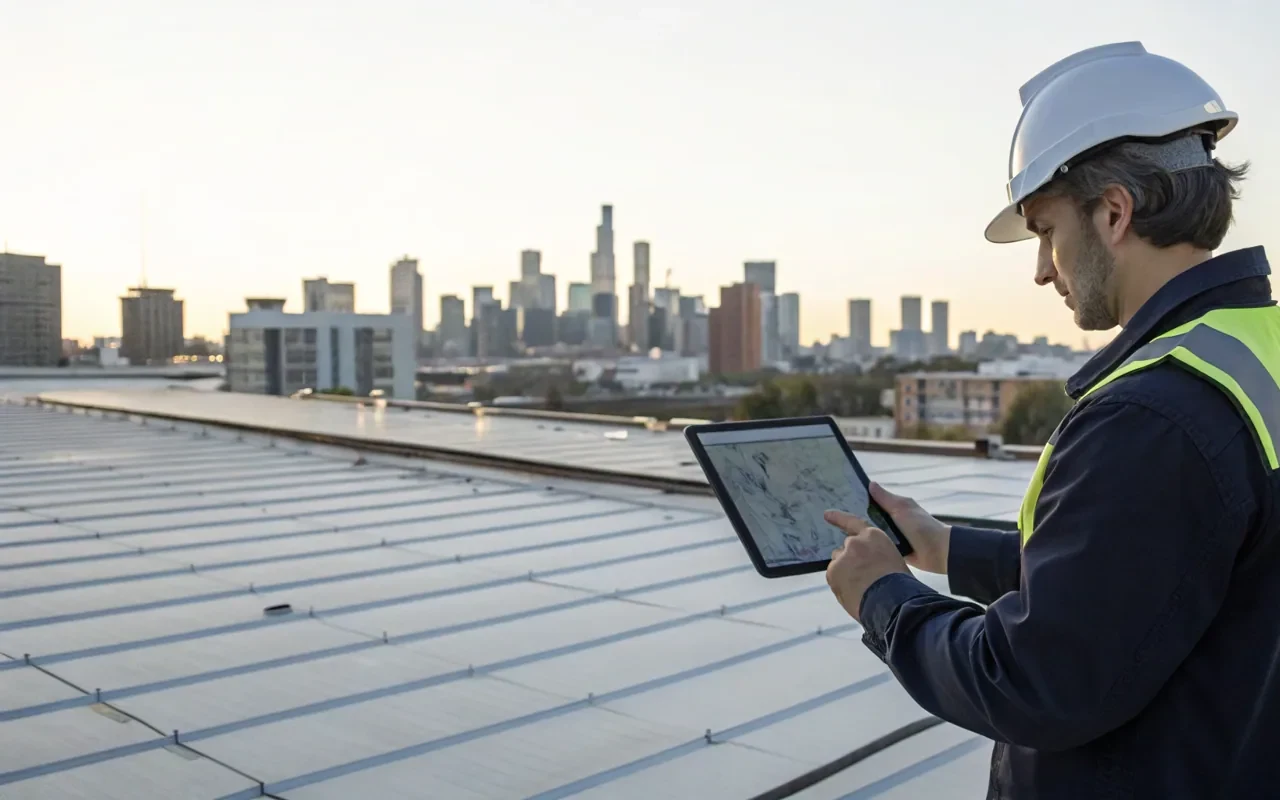
New Haven's winter climate brings more than a hundred days each year with overnight lows at freezing or below, giving roof drainage and edge details a recurring test. We inspect the roof surface, seams, penetrations, flashings, perimeters, and outlets, then photograph conditions that affect repair or capital timing. The goal is a condition record a general contractor can use to compare bids and sequence work.
A roof walk is not a replacement recommendation by itself. We note what is visible, what needs testing, and what remains inaccessible, then connect each observation to a practical next step. The report separates immediate repair, scheduled monitoring, and questions that need more evidence before the scope moves forward. That distinction helps the owner match each finding to an approval path instead of treating every roof note as urgent work. The project team can carry it into a bid review or budget request.
Roof history and inspection limits
Previous repairs, leak reports, drawings, and warranty records help explain how a condition developed. We review those materials before the walk, mark known repair locations, and check whether the current roof findings agree with the record. If a prior patch is not visible or a roof area cannot be reached, the report says so rather than treating that location as cleared.
New Haven's health, education, business services, and manufacturing mix includes buildings with different access controls and operating schedules. West Haven includes medical research and manufacturing uses, while Hamden has computer, cable, concrete, and metalworking activity. Those regional building uses make access planning and equipment coordination relevant; the particular roof examination establishes what is present at the property.
For a project involving an acquisition or major renovation, a due-diligence roof survey can organize observed conditions and questions for follow-up. If the owner needs ongoing budget support, we can connect the report with capital planning that separates urgent repair from later work.
Details checked from the roof
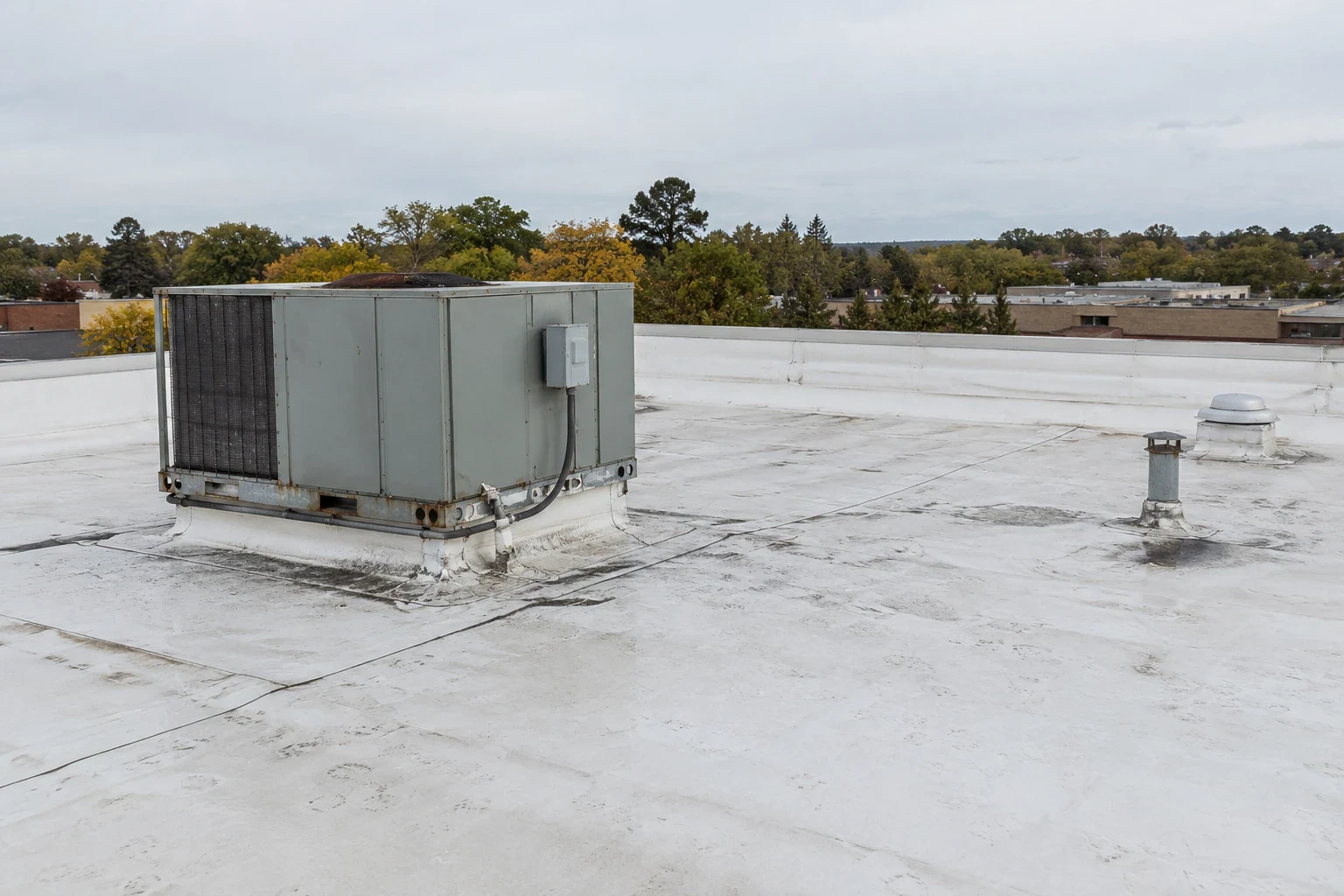
We examine membrane laps, field seams, fasteners, patches, penetrations, equipment curbs, skylights, walls, and perimeter transitions. On a metal roof, we also check panel laps, seams, fasteners, and flashing movement. At drains and scuppers, we look for debris, standing water, damaged strainers, and conditions that interrupt the path to an outlet.
Observation connects the detail to the larger assembly. We note whether a seam has an isolated opening, whether an edge is loose, or whether water may be held near a drain. A photograph pairs the close condition with enough roof context to locate it later. When an observation cannot be confirmed from the surface, we recommend the specific test or access needed to answer the question. We can also note debris, surface wear, sealant condition, or earlier repair materials that differ from the surrounding assembly.
Where moisture is a concern below the membrane, a moisture survey can help identify areas for confirmation. For wide or difficult-to-reach surfaces, drone imaging can add an overhead view, while the hands-on inspection remains necessary for details that require touch or close examination.
Findings tied to repair priorities
A useful inspection report ranks conditions by what they can change in the project. We describe active entry paths, open seams, loose edges, damaged flashing, drainage concerns, and areas that need testing. The owner can decide which condition needs immediate repair, which can be grouped into a planned visit, and what should remain on the next maintenance review.
New Haven has recurring winter freezes, so outlets and low areas belong in the inspection priorities. The field examination shows whether water is being held on a particular roof. We confirm each finding with a roof location, photograph, and condition note before recommending work. We identify the actual location, photograph it, and state whether cleaning, repair, testing, or monitoring is the appropriate next step.
Inspection findings can also support a photo-based condition report for a general contractor comparing proposals. If repeated leaks involve several transitions, our leak tracing service can investigate the water route before a permanent scope is set.
Planning access and timing
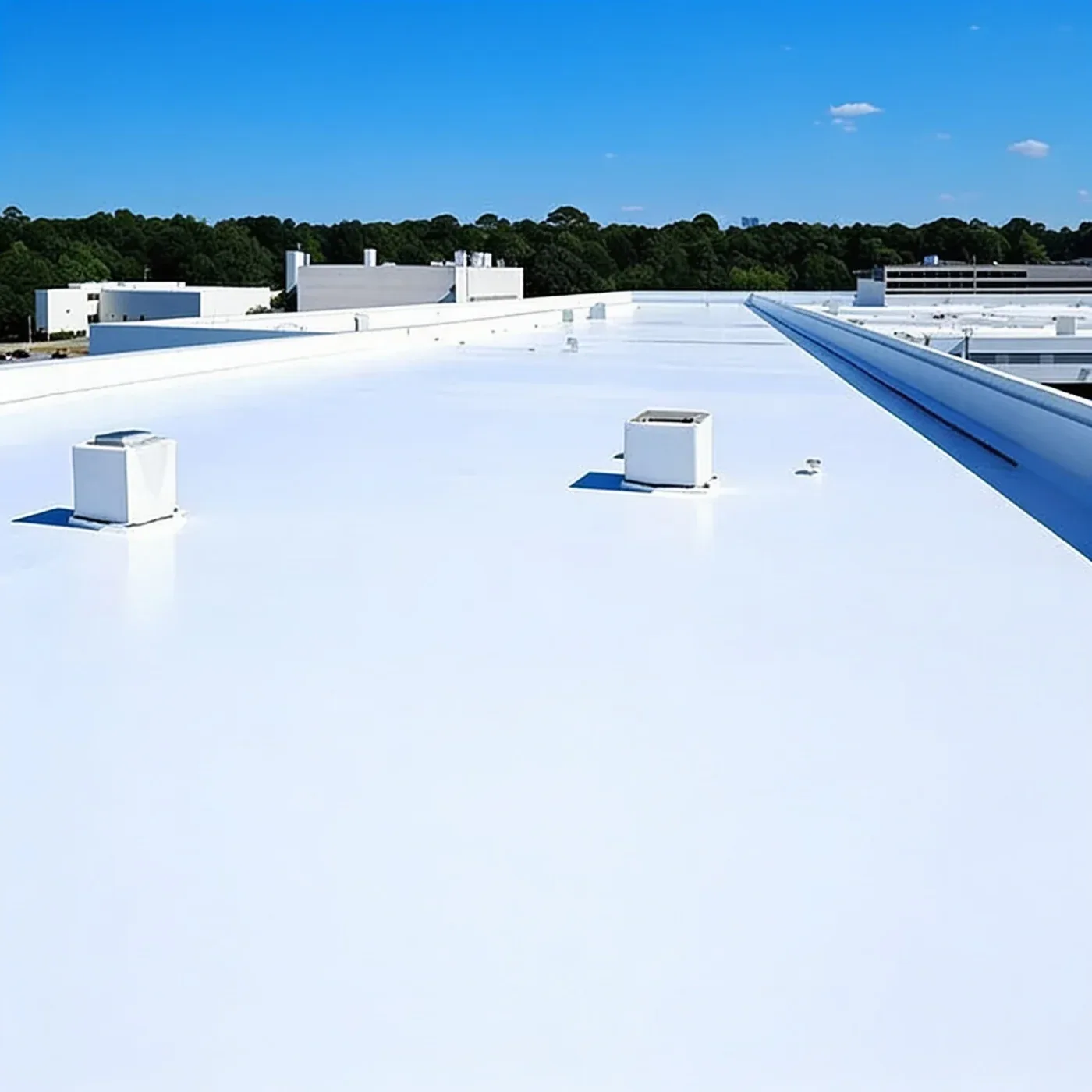
Inspection access may require a lift, roof hatch, ladder, escort, or coordination with equipment operators. We confirm those arrangements before setting the visit, identify any restricted area, and agree on the contact for opening doors or clearing access. For occupied buildings, we plan the route to limit disruption and avoid entering spaces that are not part of the authorized examination.
Coastal wind and storm water also affect inspection timing. Sandy brought surge exposure along the Connecticut coast, and Madison recorded a severe gust. Those regional conditions help frame why edge details and drainage deserve review, but we schedule the walk against current conditions and the property's access rules rather than assume a storm damaged a roof.
Branford's commercial mix includes manufacturing, bioscience, healthcare, and retail. In occupied properties, adjacent components can be part of a condition discussion. Our inspection records what the roof under review shows and identifies where another trade or facility contact may need to confirm access or equipment status.
A report that supports the next budget
The written findings include photographs, location notes, observed condition, repair priority, and any limits on what could be examined. We distinguish a confirmed defect from an area that needs further testing, and we connect the recommendation with an access or timing requirement when that affects cost. This gives the owner and general contractor a shared record before soliciting work or setting a phase.
A report is most useful when it can be compared later. We keep descriptions specific enough to identify the same drain, curb, seam, or edge during a follow-up visit. If the roof history is incomplete, we note which records would improve the next decision. That gives maintenance staff a clear way to track changes instead of repeating the original walk without a baseline.
Bring plans, prior repair notes, leak locations, bid scopes, and access restrictions to a condition review. We will align field observations with the project decision, whether the next step is a focused repair, a survey, or broader capital planning.

Questions Owners Ask
What will the inspection report give the general contractor?
The report records observed conditions with photographs, location notes, repair priorities, and limits on access or visibility. We separate confirmed defects from questions that need testing and connect each item to a useful next step. That gives the contractor a common basis for scope alignment and bid comparison.
Can a roof walk identify moisture inside the assembly?
A surface walk may show clues, but concealed moisture often needs a survey or confirmation opening. We identify areas that merit additional investigation and state what evidence would resolve the question. Infrared or other methods can guide that work without replacing confirmation where needed.
How should I prepare roof records for a condition review?
Gather prior leak reports, repair invoices, roof plans, warranty documents, and any bid scopes under consideration. We use those records to check recurring locations, understand prior work, and focus the visit on decisions that affect access, repair threshold, or capital timing.
How does winter weather shape a roof inspection?
Freeze-thaw patterns make drainage and edge details useful inspection priorities. We document the roof's actual condition and connect it to a repair or monitoring recommendation.
Can the inspection support a replacement bid?
Yes. We record removal concerns, substrate questions, access limits, and conditions that may change a replacement scope. If recover or repair remains under consideration, the report can identify the evidence needed before the owner compares those options.