Cold Storage Roofing in New Haven, CT
Cold Storage Roofing
Plan cold storage roof repairs in New Haven around moisture control, refrigeration equipment, drainage, and protection for temperature-sensitive operations.
A cold-storage roof has to keep precipitation outside without disrupting the temperature plan below. New Haven's annual cycle moves from summer warmth to regular winter freezing, so drainage and flashing deserve attention alongside insulation and refrigeration penetrations. We connect roof observations with operating limits before pricing a repair or replacement, giving the general contractor a clear work area and an explicit protection plan.
North Haven's commercial activity includes food distribution, medical equipment, fabrication, and warehousing. East Haven also includes distribution and storage activity. Across the New Haven region, nearby distribution, medical-equipment, and fabrication uses make logistics and interior protection relevant; each building's temperature zones and assembly still need confirmation from its records and examination.
Separating roof moisture from process moisture
Condensation, refrigeration discharge, and roof leaks can leave similar interior evidence. We compare the location and timing of a report with the roof above, equipment drains, pipe routes, vapor control, and the building's temperature pattern. The goal is to identify whether water crossed the roof assembly, formed at a cold surface, or came from a connected system. That distinction changes the repair scope and the trade responsible for the next step.
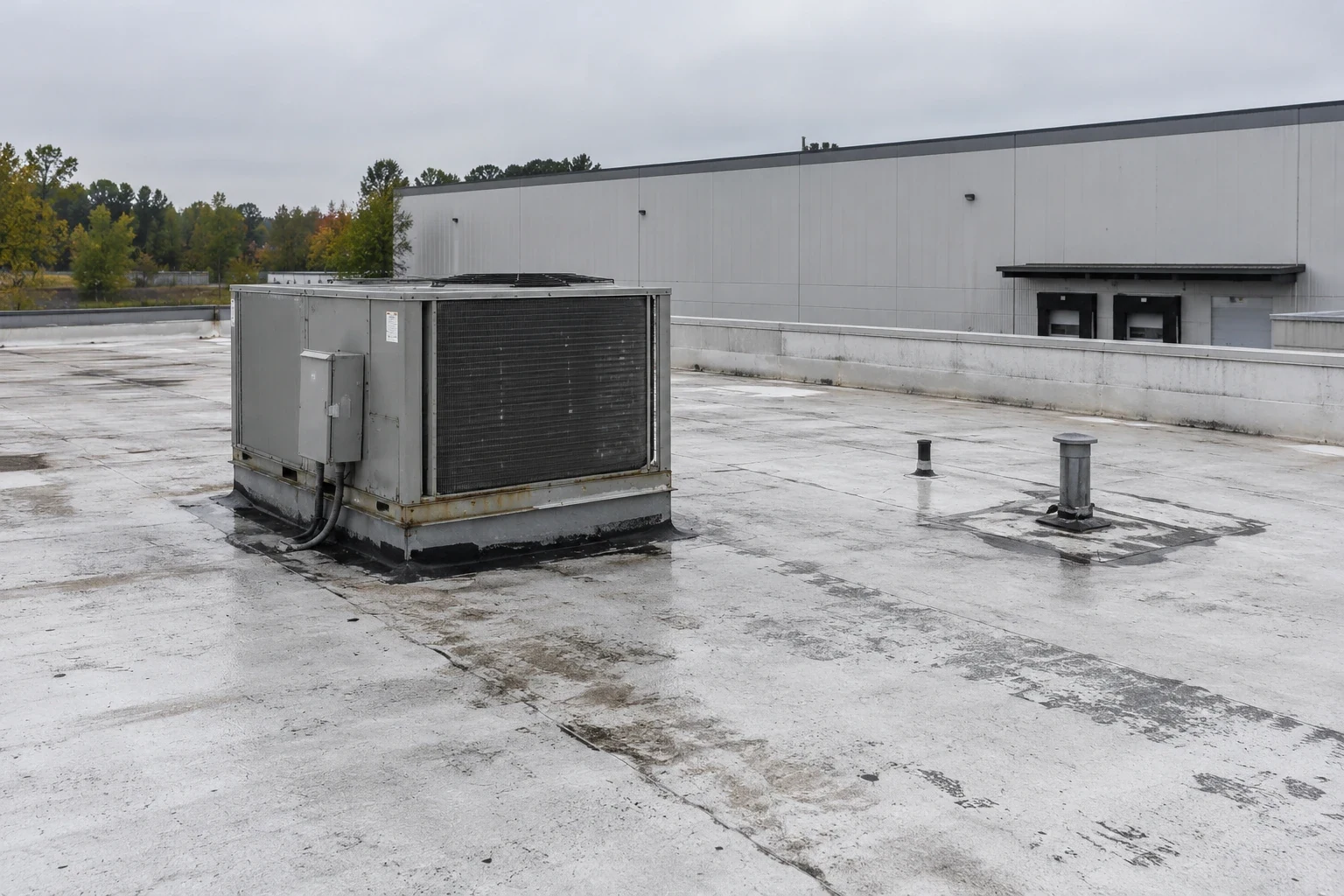
At the roof, we inspect seams, penetrations, curb transitions, pipe supports, and nearby insulation. A leak near a refrigeration line may require coordinated access before flashing can be opened. We document the condition with photographs and mark the test or repair boundary. A hands-on roof inspection checks the details that thermal images cannot resolve alone.
We also ask where product, controls, and electrical equipment need added protection. The roof plan can identify vulnerable rooms below each work zone and how interior access will be limited during the shift. If the leak is intermittent, operating logs can help correlate the event with weather or equipment cycles. We use that history to guide inspection rather than assume one source from a ceiling mark.

Insulation, vapor control, and penetrations
Insulation performance depends on continuity and on keeping bulk water out of the assembly. A wet board can lose thermal value and may hold moisture against the deck or vapor retarder. We review roof layers, attachment, penetrations, and known repairs to determine whether a local opening can be corrected or a wider area needs removal. The bid should distinguish observed wet material from conditions hidden beneath intact membrane.
Refrigeration piping, exhaust, drains, and equipment supports create interfaces that need trade coordination. We identify which lines remain active, who can isolate them, and whether a temporary curb or weather cover is required. An added pipe or moved unit can leave a patched opening that deserves inspection before a new membrane is installed. We schedule the flashing after the mechanical position is set, avoiding a tie-in that must be disturbed later.
Where roof-mounted equipment is crowded, safe walks and service clearances also affect membrane protection. The curb and support work should identify which pieces are roof scope and which belong to the refrigeration contractor. We document each handoff and access restriction so an operator can keep essential equipment available during the roofing phase.
Drainage through changing seasons
Water should leave the roof before a freeze turns a low point into an ice pocket. We inspect drains, scuppers, strainers, overflows, and the slopes feeding each outlet. Where water remains, we determine whether debris, a blocked leader, settlement, or an insulation depression is responsible. A drainage correction can then be matched to the verified source rather than added as a vague line item.
New Haven's winter pattern makes that review part of seasonal planning. Coastal weather can also bring wind-driven rain at edges and walls, so perimeter metal and flashing laps belong in the same walk. Madison's severe Sandy gust puts roof attachment on the regional review list after major weather. We inspect the affected building's edges and seams before assigning repairs. Loose metal or open transitions can be documented for a separate repair decision.
Scheduling work around cold-room operations calls for more than a weather forecast. We confirm which roof areas can be opened, how temporary seals will be monitored, and who can approve a pause if conditions threaten the interior environment. The daily closeout record should identify the protected zone and the person responsible for confirming it before the crew leaves.
Repair, recover, or remove
A small flashing defect may be repairable if the adjacent roof remains sound and dry. Repeated leaks, widespread moisture, poor attachment, or deterioration around several curbs can shift the decision toward removal. We compare those findings with the repair history and the owner's tolerance for planned interruptions. A targeted repair should identify its limits and any condition that remains for monitoring.
When a broader project is under review, the proposal should separate removal depth, insulation, vapor control, curb work, drains, edge details, temporary protection, and commissioning interfaces. A recover is considered only after existing layers, moisture, attachment, deck, drainage elevations, and applicable requirements have been evaluated. replacement planning is more useful when each assumption is visible and the refrigeration team can confirm its access needs.
The approved work may need to follow sanitation, production, or product movement windows set by the operator. We coordinate deliveries, roof access, and interior safeguards with the general contractor before tear-off. For an occupied building that must maintain service, phased roofing can keep a controlled work boundary, provided each phase has a safe tie-in and an approved temperature-protection plan.
Closeout that protects the next shift
At completion, we record the repaired details, insulation areas replaced, drainage work, photographs, and restrictions that remain. If a refrigeration or mechanical contractor performed a handoff, that boundary belongs in the closeout file. Operations can then match later observations to the roof work and see which items are open. Clear records reduce the chance of treating a process issue as a membrane failure on the next call.
For a New Haven area building, bring roof plans, leak logs, temperature-control constraints, and refrigeration access rules to the review. The distribution center roof plan offers related loading questions, while manufacturing roof work adds process equipment coordination. We will show what evidence supports a roof repair, what needs a mechanical check, and which work window keeps the interior protected.
A recurring moisture concern may deserve a broader baseline before the next capital decision. We can place each finding on a plan, distinguish active repair from observation, and note when a follow-up should occur. The owner can carry those conditions into a roof condition report and schedule the next review around operating requirements.
Questions Owners Ask
What signs help separate a roof leak from refrigeration condensation?
We compare the reported area with roof slopes, membrane details, refrigeration drains, pipe routes, and operating conditions. Photos and selective tests can help determine whether moisture crossed the assembly. If equipment or process evidence points elsewhere, we coordinate a separate mechanical review before expanding roof work.
How are active refrigeration systems handled during roof work?
That depends on the location and whether the lines or supports need to be moved. We identify active equipment, required isolation, and the flashing handoff before opening the roof. The owner and mechanical trade approve any shutdown; the roofing sequence protects exposed areas while that work proceeds.
What roof details most affect cold storage protection?
Insulation continuity, vapor control, curb transitions, drains, and temporary tie-ins all affect the interior risk. We inspect the assembly and specify which rooms or product zones need protection below each phase. That information should appear in the bid and the daily closure plan.
When should a cold storage roof be replaced rather than patched?
Repeated defects, broad moisture, weak attachment, or deterioration around multiple penetrations can support a larger scope. We compare those findings with the existing roof history and identify areas suitable for repair. Testing may be needed before the owner commits to removal limits.
Which regional facts inform this New Haven review?
New Haven experiences regular winter freezing, so drainage and transitions matter in seasonal planning. North Haven includes food distribution and warehousing, while East Haven includes storage and distribution. Those uses frame operating questions while field evidence determines the roof condition.