
Commercial Roofing for Property Management Companies in New Haven, CT
Property Management Companies
Coordinate commercial roofing in New Haven across managed properties with clear inspection records, repair limits, tenant access, and capital timing.
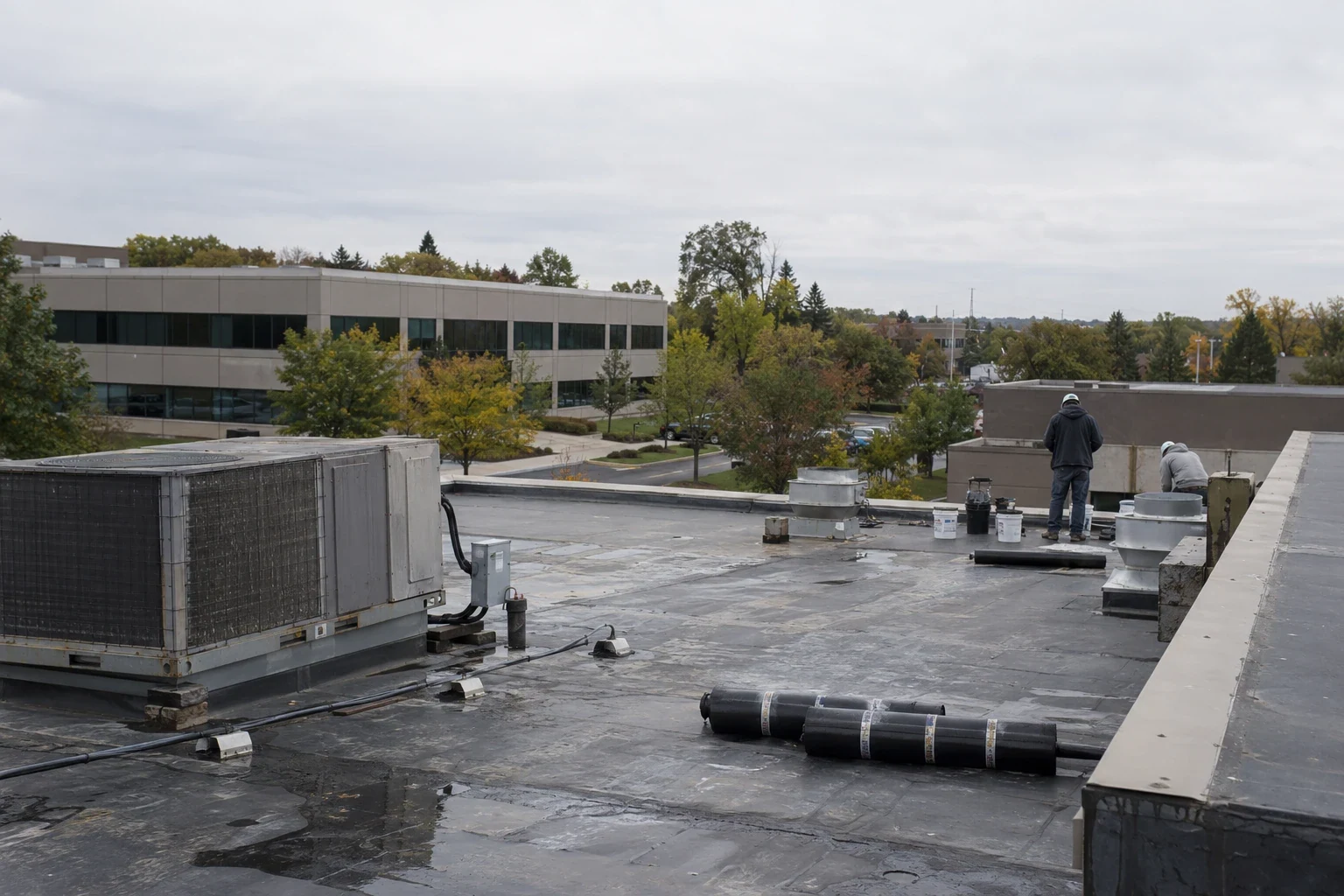
A scattered leak log creates a difficult portfolio decision when every property uses a different roof history. New Haven's winter freezing makes drains, edge details, and wall transitions useful inspection priorities across a managed group. We document each building on its own terms, then give the manager a condition record that separates urgent protection, scoped repair, and capital work. That lets ownership compare needs without assuming the same assembly or replacement year across the portfolio.
Branford has manufacturing, healthcare, and retail activity; Hamden combines fabricated metals, computer-related work, construction, and business services. The surrounding mix calls for distinct access plans, not a single maintenance assumption. We review each property's operating hours, tenant responsibilities, and roof records before setting a visit schedule or bid scope.
One inventory, separate roof histories
A property list becomes useful when it identifies assembly, last known work, leaks, access points, and open questions for every address. We can inspect buildings in a consistent order while recording conditions individually. Photos, plan references, and repair locations allow the manager to compare similar details without treating two roofs as interchangeable. If records are missing, we mark that gap before using it to estimate a project.
New Haven's working economy includes health, education, business services, and manufacturing. Branford adds retail and production, while Hamden contributes construction and service businesses. Those differences may affect delivery routes, interior protection, or tenant scheduling. They do not determine roof condition. A portfolio review should name the actual constraints for each site and leave unsupported quantities outside the bid.
For a group with several owners or funds, a property investment review may connect roof condition to capital timing. Our roof asset record can track photos, inspection dates, repairs, and outstanding questions. Each record remains tied to a building, so a later manager can find the affected area rather than inherit a general note.
Ranking conditions by consequence
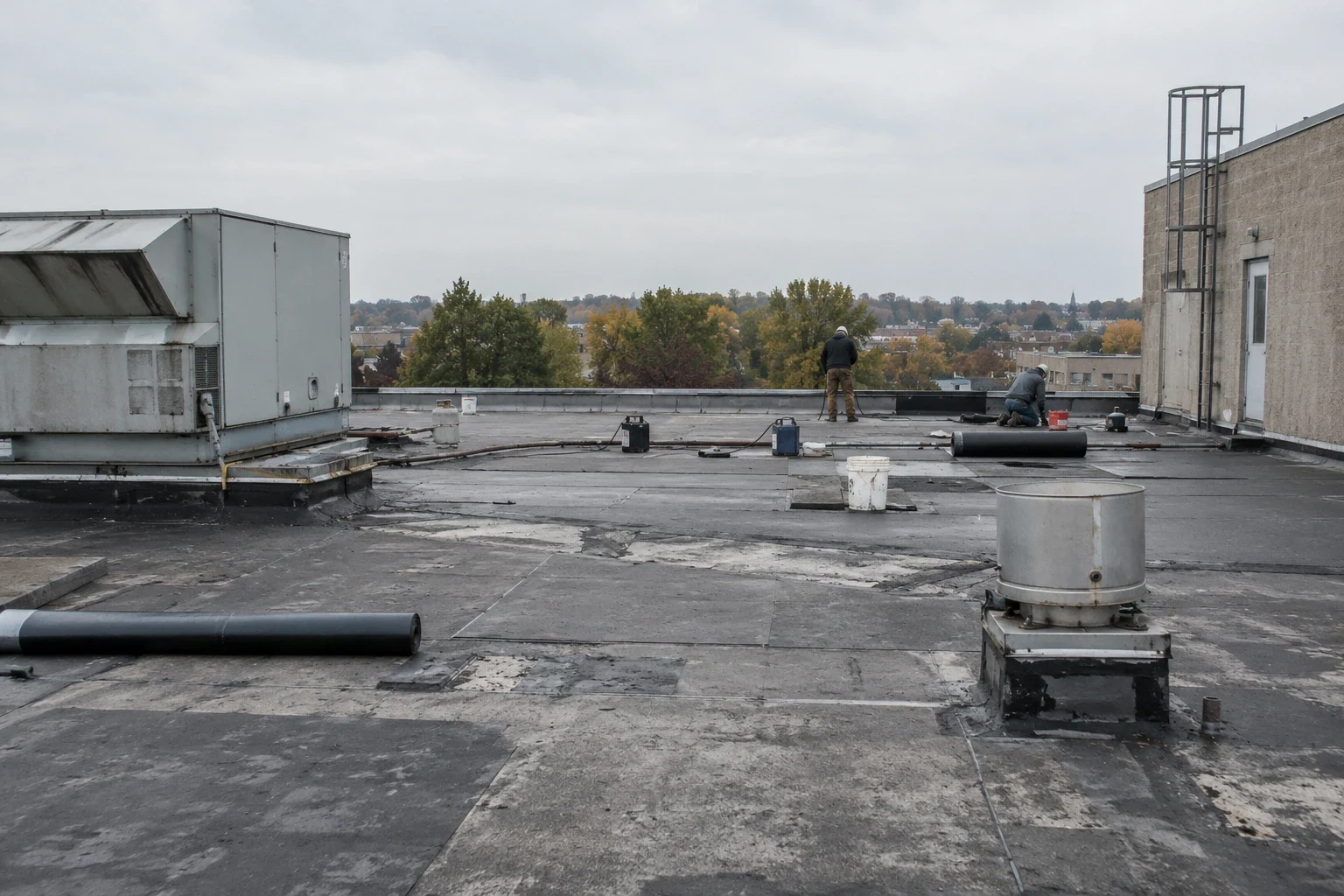
A wet ceiling, open flashing, blocked outlet, and worn coating do not belong in one priority category. We record what is visible, what needs testing, and whether temporary protection is needed before permanent work. A condition inspection provides a photo set and roof-plan reference for the manager's file. The first review can then separate a current opening from an item appropriate for the next maintenance cycle.
Drainage deserves attention before winter water freezes around low areas or weak transitions. New Haven's climate history makes outlet function a practical inspection item, while coastal wind exposure makes terminations worth including after severe weather. We document the specific roof detail and evidence that set a repair boundary. If water entry remains uncertain, a test location is more useful than a portfolio-wide allowance.
Branford's healthcare and manufacturing uses and Hamden's retail and industrial activity illustrate the range of operating constraints nearby. A leak over a quiet storage area has different consequences from one above occupied space or active equipment. We record the use and access limit with the defect so managers can rank work by exposure, tenant impact, and lead time for approvals.
Access that fits each management agreement
Roof access can require keys, escorts, notice, or a specific loading route. We confirm who can release a hatch, whether a tenant controls an interior area, and where material staging is allowed. If lift placement or parking restrictions affect residents or customers, those limits belong in the schedule. Clear access assumptions help the manager compare bids and reduce day-of changes.
Occupied work needs a boundary that staff and tenants can understand. We identify the roof area opened, temporary protection below, daily tie-in, and contact who can approve added repair if concealed conditions appear. A phased occupied-building plan can coordinate work zones while keeping each property's schedule separate. When a retail tenant or healthcare use needs a quieter window, that restriction is recorded for that location.
Emergency response can be arranged around a reported opening at any hour. We first stabilize the active condition, then document what needs follow-up when conditions permit. That visit does not replace a planned inspection or priced repair. A concise work record allows the manager to notify ownership, preserve the expense file, and decide whether permanent scope should be grouped with nearby work.
Comparable scopes without false uniformity
Portfolio bids are easier to evaluate when every line identifies the building, roof zone, work limit, included detail, and assumption. We can group mobilization where access makes that practical, but each repair quantity remains tied to observed conditions. If a roof needs testing before a firm scope is possible, we state the question and the decision it will answer. That gives management a clear next approval instead of a broad contingency.
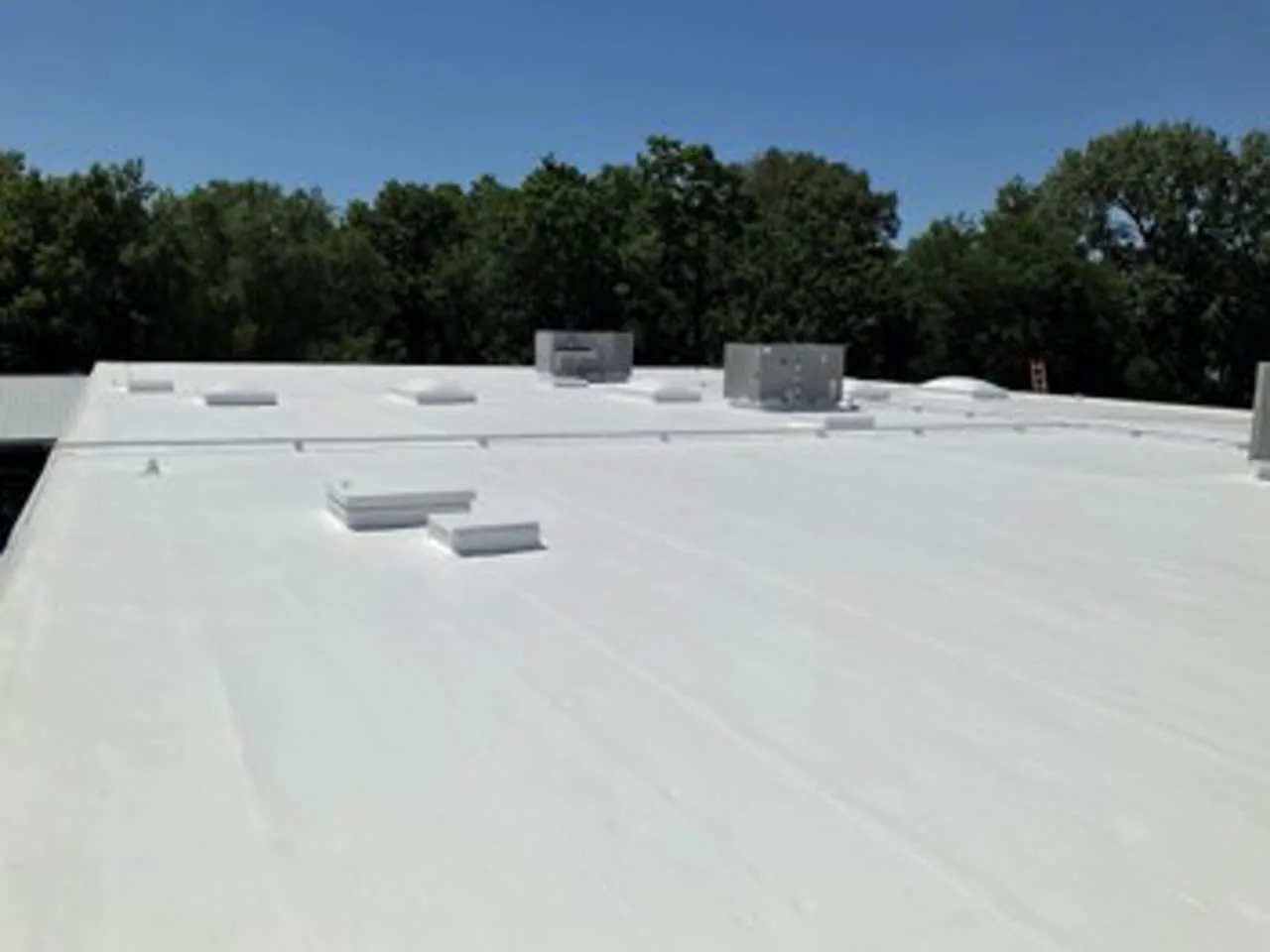
Replacement comparisons should show tear-off limits, substrate expectations, insulation, drains, edge metal, equipment interfaces, disposal, and daily tie-ins. A second-layer option requires checking existing plies, moisture, attachment, deck, drainage height, and applicable requirements. The replacement proposal should identify confirmed findings and assumptions. A capital timing review can distinguish repairs from projects that need a longer approval cycle.
When several properties are considered together, management may request a combined schedule or separate budgets by ownership entity. We can preserve the same roof references in either format, making later changes traceable. Hamden and Branford differ in tenant uses, so access and equipment conditions should be recorded individually rather than forced into a standard roof assumption.
Closeout that survives a handoff
Closeout should state what was repaired, which material and detail were addressed, where work stopped, and what remains under observation. We include photos and locations on the roof plan, along with any access limit or trade handoff. The manager can attach that record to tenant communication and later maintenance without reconstructing the project from invoices. It also prevents an excluded item from disappearing from the next budget discussion.
For managed properties in New Haven, bring the building list, roof plans, maintenance logs, tenant contacts, and approval limits to the first review. A general contractor can use the same scope references when coordinating other trades. If properties sit in Hamden and Branford, we will record their access and operating differences instead of assigning one schedule to both.
Periodic review compares new observations with completed repairs and unresolved questions. We can note which drains need seasonal checks, which flashing repairs remain stable, and where a future test may change capital timing. That gives the next manager a usable condition record and gives ownership a basis for choosing what to fund.
Questions Owners Ask
How can a manager compare roofs with different records?
We establish a building-by-building condition file with assembly notes, roof-plan locations, photographs, prior repairs, and questions needing confirmation. A common format makes the information comparable, while each work scope remains specific to its building. That prevents a missing invoice or unknown roof age from becoming an unsupported replacement assumption.
Can inspections be scheduled across several properties?
Yes, we can arrange a sequence by access window and operating priority. The manager identifies key holders, tenant notice, loading limits, and restricted areas; we keep findings tied to each property. The visit plan can combine mobilization without blending separate repair quantities.
What belongs in an emergency roof visit?
We address immediate water entry or exposed openings, record the temporary work, and identify permanent follow-up. The manager receives location and condition notes needed to notify ownership and set the next approval. Emergency stabilization is recorded separately from a later repair or replacement proposal.
How do you separate maintenance from capital work?
We identify localized defects, recurring failures, broad moisture, and assembly questions, then state the evidence supporting each category. A targeted repair can remain in maintenance when surrounding materials are serviceable. Wider conditions or extensive removal may need a separate capital comparison and approval.
Which local conditions shape property management roofing?
New Haven's winter freezing makes drainage and terminations useful inspection points. Branford includes manufacturing, healthcare, and retail, while Hamden includes construction and industrial uses. Those local patterns frame operating needs; each building's records and examination set its scope.