
Commercial Roofing for General Contractors in New Haven, CT
General Contractors
Coordinate New Haven commercial roofing scopes with clear exclusions, trade interfaces, access windows, and documented approval points for the schedule.
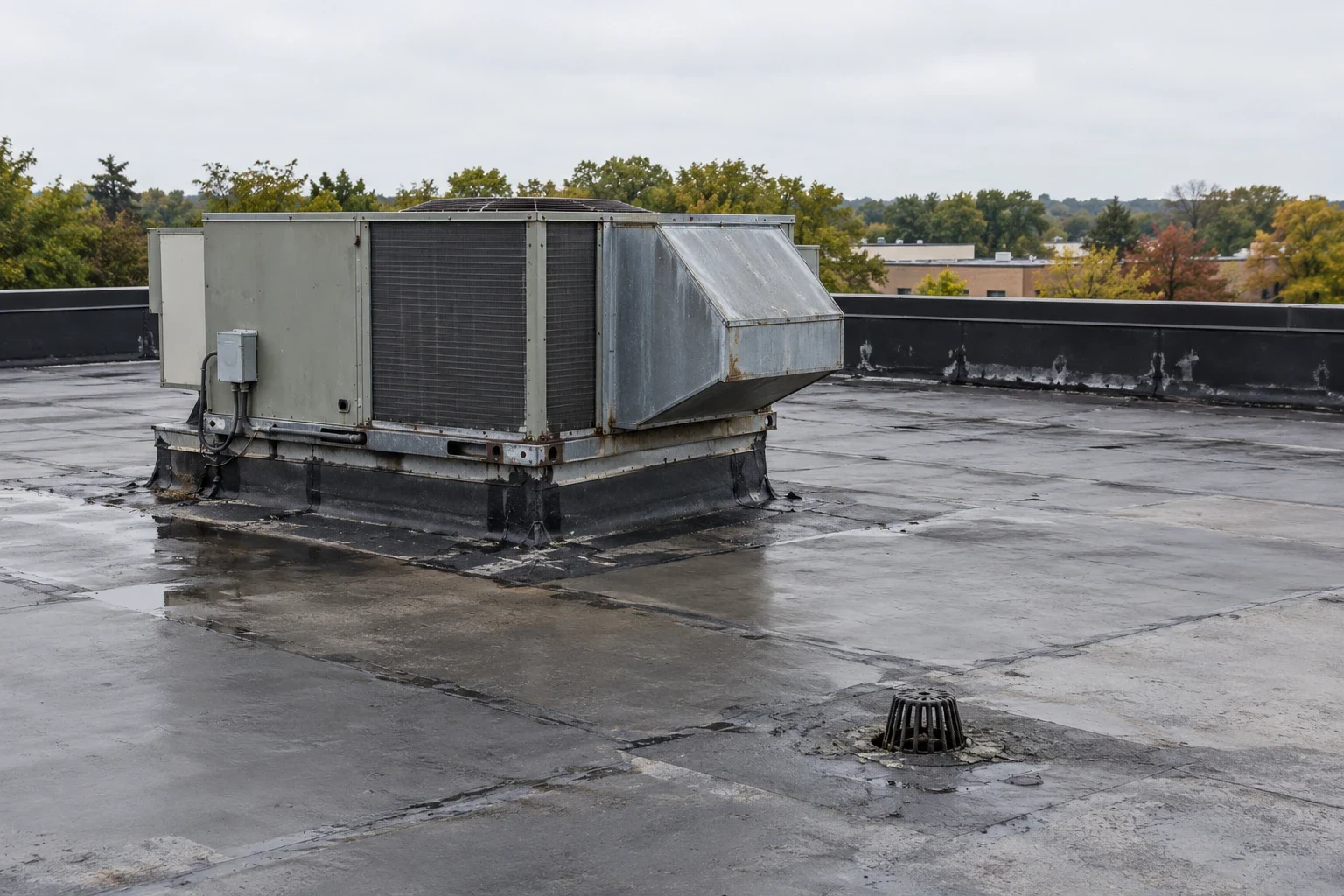
A roof bid can carry a different assumption than the mechanical or envelope scope beside it. New Haven's freeze-thaw exposure makes drains, terminations, and roof-to-wall details useful items to verify before bid leveling. We document the existing assembly, identify the work boundary, and list the handoffs that affect sequence. The general contractor can compare price, access, and exclusions without discovering after mobilization that two trades expected the other to own a detail.
Hamden has construction, metal fabrication, and business services; North Haven combines machinery, steel fabrication, and distribution. Those local uses make trade coordination and delivery planning relevant across the area. Each project still needs its own roof plan and access assumptions. We can review the documents and report where a condition, detail, or missing quantity may change the bid.
Bid boundaries before leveling
Before bid leveling, we identify roof zones, removal limits, substrate assumptions, insulation, drains, edges, penetrations, and temporary protection. If an alternate changes one of those items, we state the difference directly. A roof inspection can establish accessible conditions, while a test opening may be needed before carrying concealed moisture as a confirmed quantity. That separates a measured scope from an allowance.
New Haven's cold-season freezing makes outlets and transitions practical inspection points. Hamden includes construction and metal-related activity in its local mix, while North Haven includes fabrication and distribution. We connect those operating patterns to delivery and access planning, then verify the roof assembly from drawings and field review. We use site drawings, Diligence Notes, and access restrictions to identify quantities for the actual project.
A condition record with photographs helps the GC compare the roofing scope with other trades. It should locate the observation and identify what it supports: repair, removal, further testing, or no current work. If the bid package omits a curb, penetration, or edge condition, we flag it before award rather than assume it is included.
Trade handoffs at the roof line
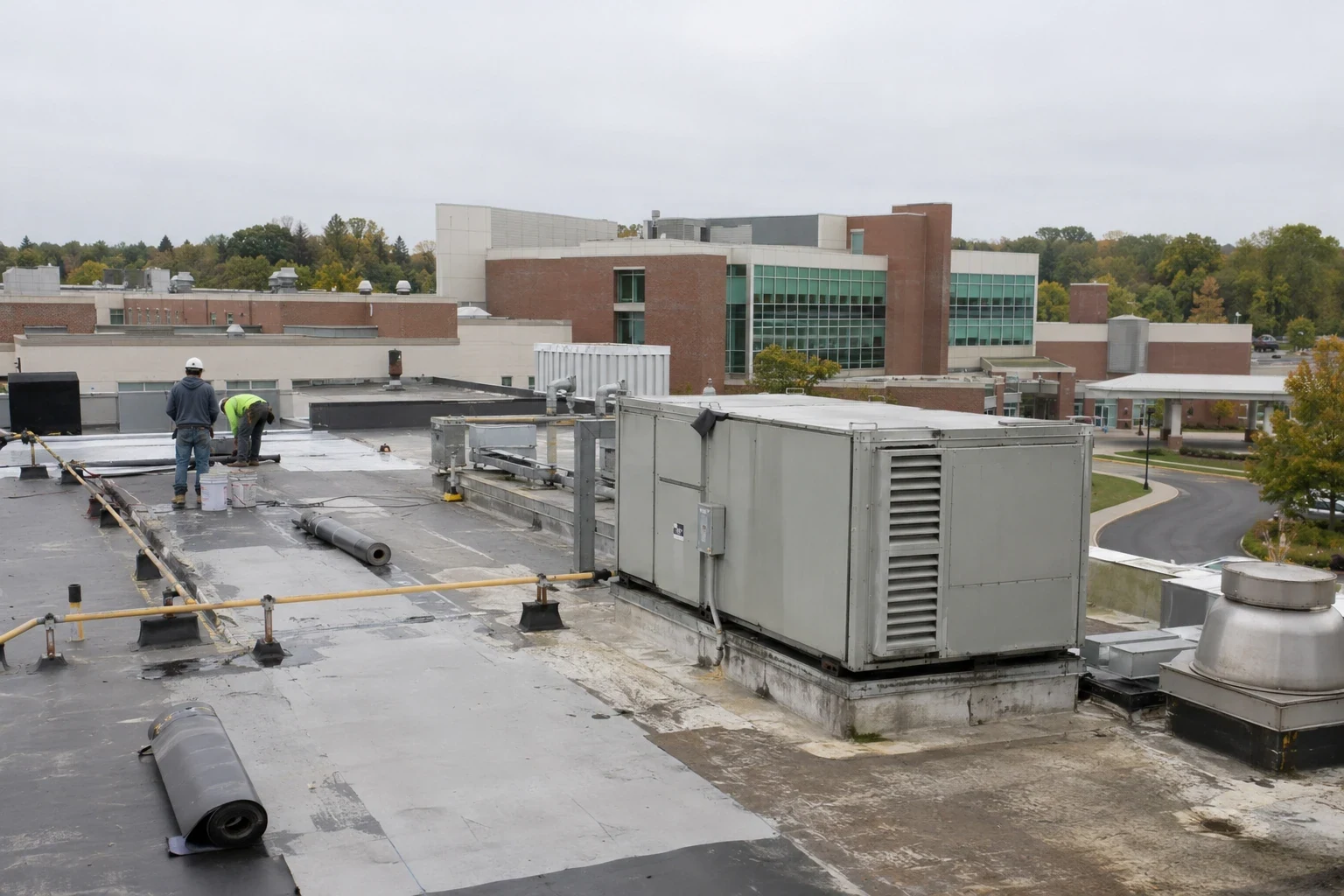
Rooftop units, exhausts, piping, conduit, and supports create interfaces that need an owner. We map each curb and penetration, then identify who disconnects, lifts, resets, and tests equipment. If a mechanical contractor changes a curb after roofing starts, the detail and schedule may change. The scope should name the handoff and the condition required before membrane closure.
Roof-to-wall transitions can also cross envelope or masonry work. We identify the termination, counterflashing, coping, and any adjacent repair so the GC can define trade limits. A curb and support detail scope can be priced separately when equipment work belongs to another subcontractor. Photos and detail references reduce ambiguity during submittal review.
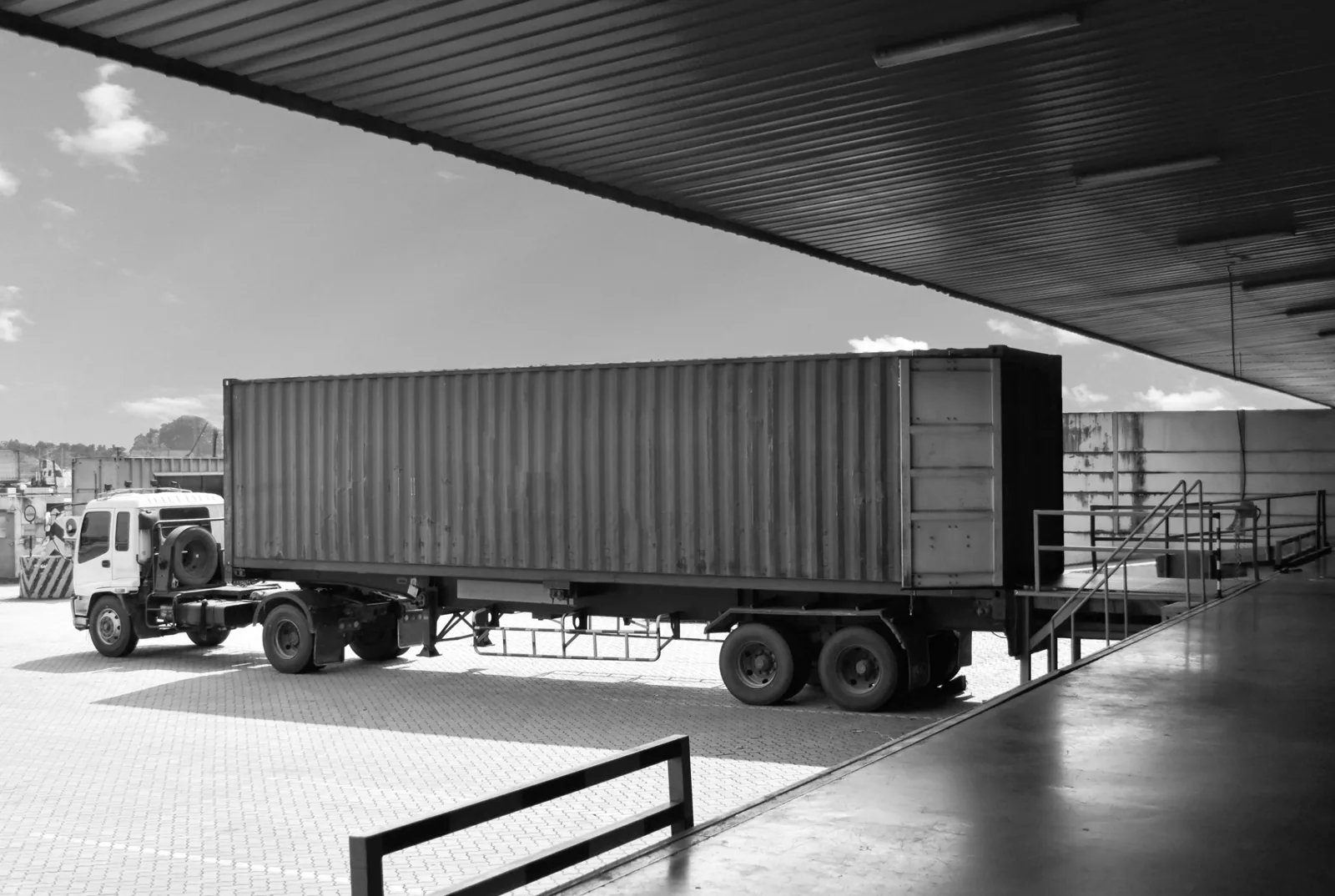
Hamden's building-use mix includes fabricated metals and construction; North Haven includes steel fabrication and industrial equipment. Those nearby activities underscore why staging and trade sequence can matter. We confirm crane access, roof loading restrictions, and staging with the project team instead of relying on generic site assumptions.
Access, weather, and daily closure
New Haven's winter freeze-thaw cycle and coastal weather can affect removal, adhesion, coating, and exposed-area protection. We identify the forecast conditions that affect each task and define how the roof is closed at shift end. The schedule should include a weather decision point and a contact authorized to move the next phase. That gives the GC a sequence that can absorb a lost work period without leaving an open boundary unclear.
For occupied properties, access routes, interior protection, noise periods, and delivery hours can control production. A phased occupied-building scope can align the roof work with area releases and other subcontractors. We state the daily work limit and what must be complete before the next trade enters. If an area remains inaccessible, the bid notes the resulting assumption.
Temporary tie-ins and water control deserve their own scope notes. We identify where a same-day closure is required, which existing detail receives protection, and what response is planned if weather interrupts the work. The GC can then coordinate temporary measures with other exterior trades and inspection hold points.
Repair choices and change control
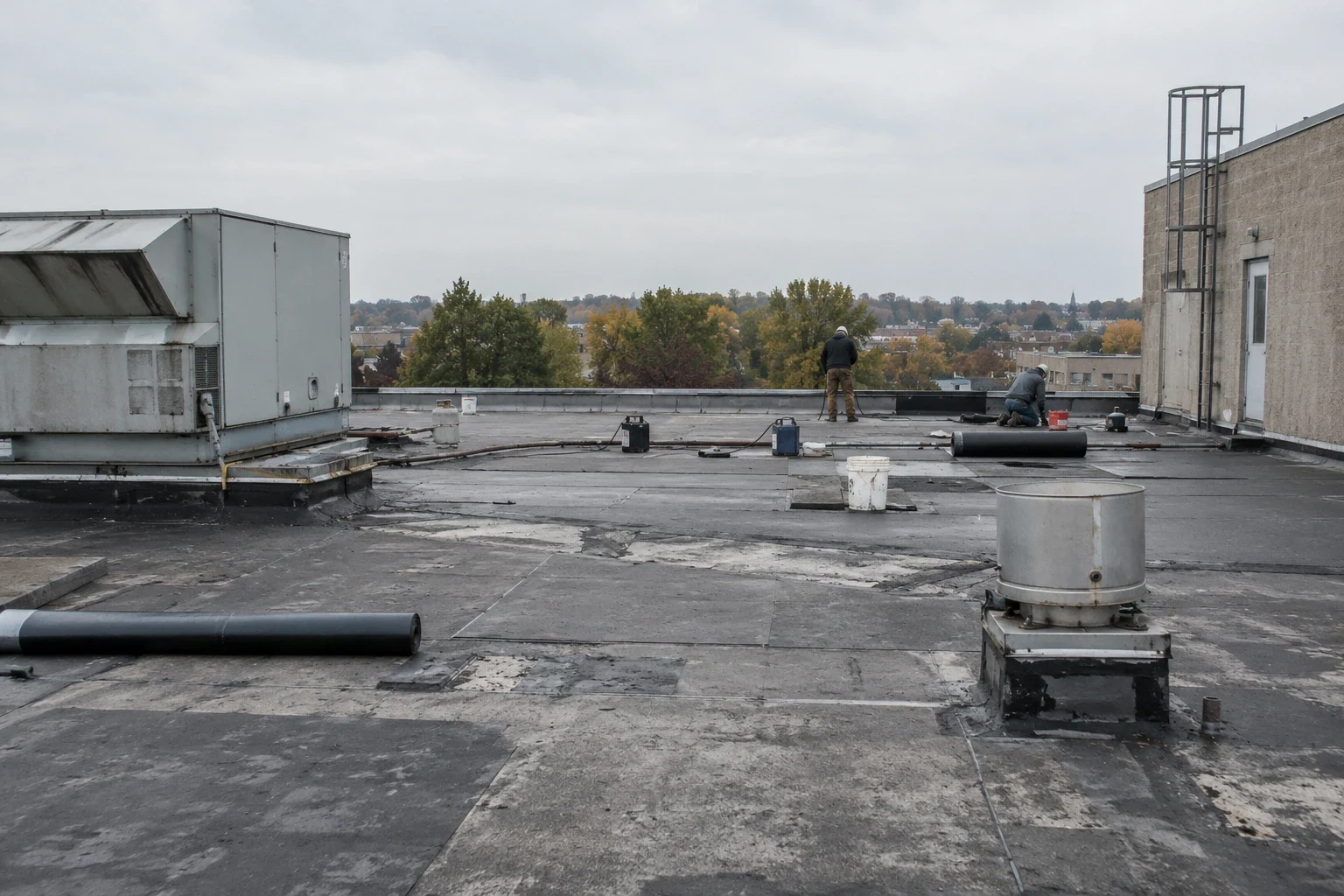
A local repair can be the right scope when surrounding materials remain sound. We mark the location, materials, and included detail, then state whether moisture testing or removal is required. A roof repair package can combine defects in one access window, but unrelated areas should stay separately listed. That makes a change in quantity easier to review and approve.
Replacement bids should identify removal, insulation, drains, edge metal, deck assumptions, equipment, disposal, and protection. An overlay needs review of existing layers, moisture, attachment, deck, drainage elevation, and applicable code before pricing. The replacement comparison should show which assumptions support each alternate. If a concealed condition is exposed, we provide photos and a defined approval point before expanding the work.
Hamden has construction and metalworking, while North Haven has fabrication and distribution; project conditions still vary by building and tenant. We keep those site constraints attached to the schedule and price. A capital sequence review can help an owner separate immediate repairs from a later phase without hiding a scope gap.
Submittals and records through turnover
Roof closeout can include material records, photographs, repaired details, drain observations, and any item left for maintenance. We mark completed work on the roof plan and identify what remained outside scope. The GC can carry the same references into closeout documents and future warranty or service files. If an adjacent trade owns a connected detail, the interface and acceptance point should be recorded.
For commercial projects in New Haven, bring bid drawings, specifications, schedules, access rules, and existing roof reports to the scope review. manufacturing work may require a production window, while public projects may have formal submittal dates. We will identify the roof decisions that can affect the critical path.
At turnover, we can state which areas were inspected, what was repaired, and which observation requires follow-up. That gives the owner and GC a shared record for maintenance and future capital work. The next roof review can compare current conditions with the completed scope rather than reconstruct decisions from change orders.
Questions Owners Ask
What roofing details should be clarified before bid day?
Set removal limits, substrate assumptions, drains, edges, curbs, equipment responsibility, temporary protection, and access. We identify which quantities are measured and which need testing. That gives bidders a common scope and helps the GC spot exclusions before award.
How do you handle equipment work by another subcontractor?
We identify each curb, support, and penetration, then state the condition needed before roofing closes the detail. The scope lists who moves or resets equipment and how the interface is inspected. This prevents a later change from being treated as an unpriced roofing assumption.
What belongs in a roof change request?
The request should identify the exposed condition, location, photos, added quantity, and schedule effect. We compare it with the original assumption and request approval before widening the work. That keeps the record tied to a field finding rather than a broad contingency.
Can roofing run alongside occupied-building work?
A phased schedule can work when area release, delivery routes, protection, and daily tie-ins are planned with the GC. We state each phase boundary and any access restriction. If another trade needs the same roof zone, the sequence should assign a handoff before installation proceeds.
Which New Haven area conditions affect the roofing schedule?
Winter freezing makes drainage and exposed transitions useful review items. Hamden's construction and metal work sits alongside North Haven's steel fabrication and distribution activity. Local commercial activity can affect coordination; the job documents and site review determine the sequence.