
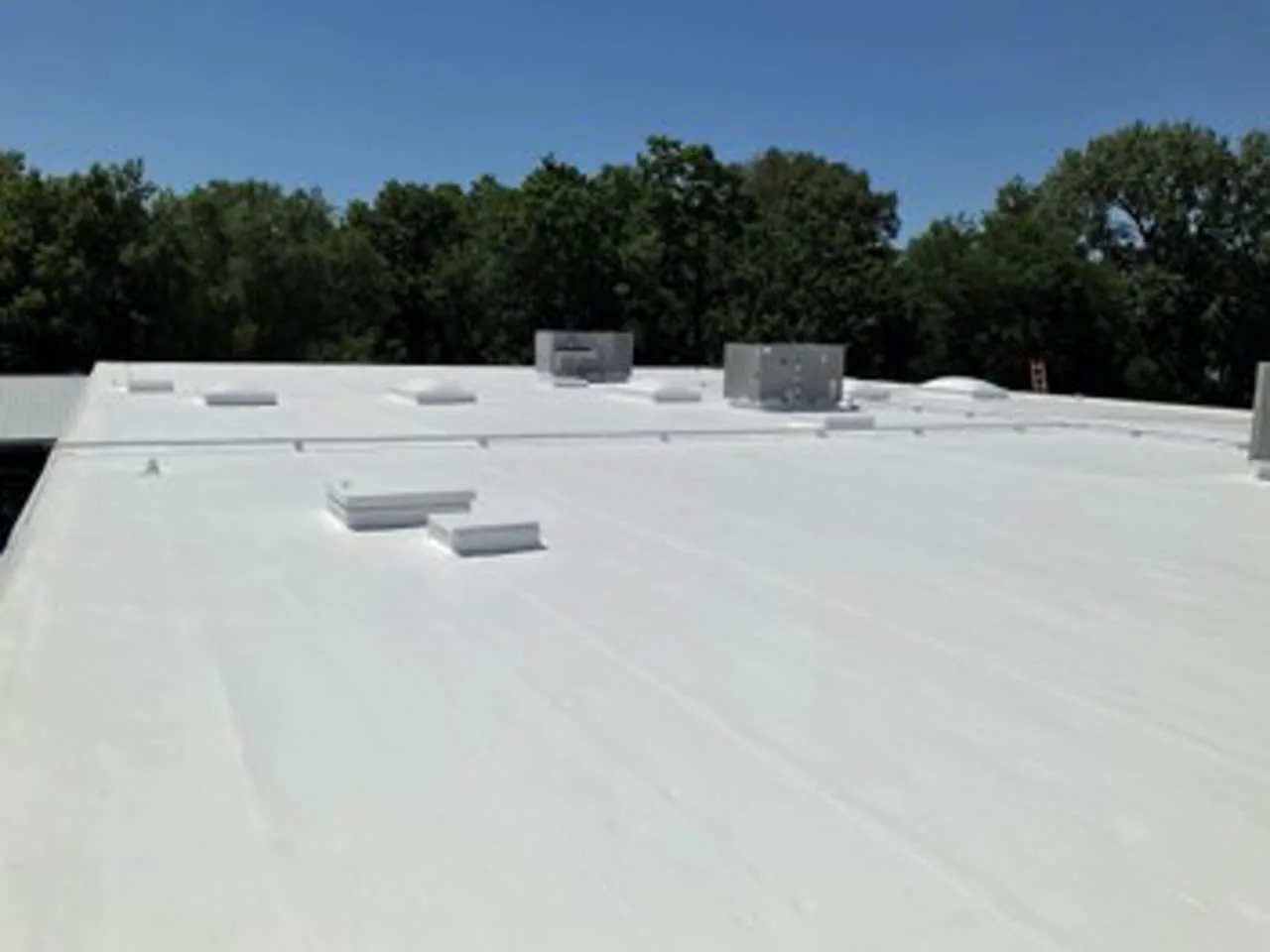
Commercial Roofing for Insurance Restoration in New Haven, CT
Insurance Restoration
Document New Haven commercial roof damage with photos, measured repair scope, temporary protection, and clear separation of observed conditions.
A storm file is stronger when each roof observation has a location, photograph, and repair boundary. New Haven's coastal exposure and winter freeze-thaw conditions make edges, drains, and penetrations useful items to inspect after a weather event. We document the visible roof condition, stabilize active openings, and identify what needs testing before a permanent scope is priced. That gives the property team and restoration contractor a clear record for the next decision.
Madison recorded an 85 mph wind gust during post-tropical Sandy on October 29, 2012, a useful local reference when reviewing exposed roof edges. After a coastal storm, we photograph coping, perimeter metal, and membrane terminations before deciding whether each detail needs repair. Branford's commercial mix includes manufacturing, bioscience, healthcare, and retail, while Hamden includes fabricated metals and construction, two local building contexts for access and trade planning. We use the event date to organize photographs and inspection notes, then separate observed roof conditions from the claim review.
A roof record that separates observations
We begin with the reported interior area and trace the likely path to a roof opening, seam, edge, drain, or equipment detail. Photos show the roof location and the condition observed, while notes distinguish active water entry from staining or suspected moisture. If the membrane conceals a wet assembly, we identify a test opening before assigning a broader repair quantity. A roof inspection gives the restoration file a field record that can be reviewed with the property team.
At the roof, we check exposed corners, coping joints, and edge attachment for movement before setting a repair limit. A separate storm or roof examination is still needed to determine what occurred at a specific property. We compare current observations with prior repair records when available and mark areas that were not accessed. The resulting record helps distinguish a new opening, an older patch, and a condition that needs further evaluation.
A medical-use building may need quieter interior protection, while a fabrication tenant may require a clear route for equipment and material handling. That range can influence interior protection and access. We note the occupied area beneath each repair and the route for materials, so a restoration contractor can coordinate work without treating every building as an unoccupied shell.
Temporary protection and safe closeout
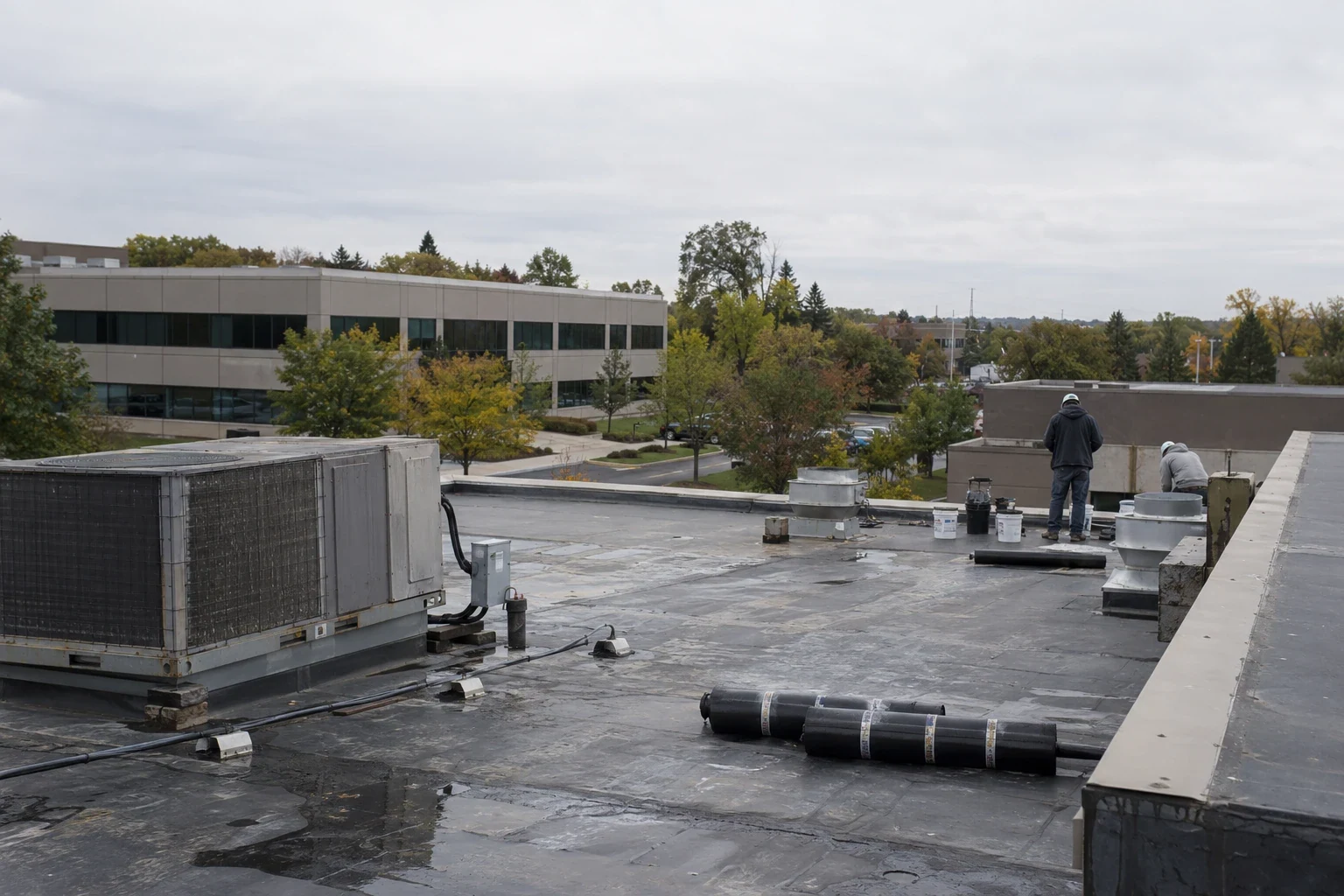
An exposed opening may need prompt protection before the full repair scope is ready. We identify the active area, secure a temporary covering or tie-in as conditions allow, and record its limits and follow-up needs. The closeout states whether the measure is temporary and what permanent work remains. Emergency stabilization is documented separately from later repair or replacement quantities.
Water control may also require clearing an outlet or protecting an edge detail. We inspect drains, scuppers, overflows, coping, and terminations around the reported location. New Haven's winter freezing makes standing water worth tracking after a storm or thaw. A drain repair can be listed separately when a damaged outlet is confirmed, avoiding confusion between drainage maintenance and wind-related damage.
Access and interior protection should be agreed with the property representative before opening the roof. We record any area that needs a temporary route change or a protected work zone. If weather interrupts the repair, the team needs a clear daily closure point. A rapid roof stabilization visit can address the immediate exposure while preserving photos and measurements for permanent scope review.
Measured repair and restoration work
A repair estimate should name each roof component, work limit, material, and access assumption. We separate flashing, membrane, edge metal, insulation, and drain work where the findings support distinct quantities. A storm-related repair scope can show which observations correspond to weather damage and which require separate maintenance review. We do not combine unrelated conditions into one line that cannot be checked against the roof plan.
If moisture extends beneath the membrane or attachment has failed, an opening or survey may help establish the repair boundary. We record test locations and results, then state whether more removal is indicated. A replacement proposal should include tear-off, substrate review, insulation, edge details, equipment, disposal, and temporary protection. If the owner wants to retain part of the existing assembly, we check moisture, fastening, substrate strength, and finished drain height before pricing that approach.
We identify each affected roof zone separately so the claim file can distinguish a localized transition repair from broader membrane work. A restoration schedule may need to protect equipment, tenant activity, or material storage. We identify those constraints in the work plan so the scope, access, and interior measures can be compared with the restoration contractor's schedule.
Communication across the claim file
Property owners, adjusters, restoration contractors, and building managers may need the same roof references. We can provide photos, a marked plan, observations, work limits, and a separate estimate for recommended repairs. The record does not determine coverage or settlement. It documents the physical roof findings and work needed to address them, leaving policy interpretation to the carrier and insured.
A photo-backed condition report can preserve the distinction between visible damage and items that need testing. We identify the date and area observed, note any access limits, and connect each recommendation to a measurable roof component. If the scope changes after removal, we document the exposed condition and request approval before adding quantity.
For restoration work in New Haven, bring storm timing, prior reports, repair history, property access rules, and the current claim documentation. A general contractor can coordinate other trades, while a property manager may handle tenant communication. We will keep the roofing record clear enough for each party to review.
Closeout for repair and future maintenance
After permanent work, we provide a roof plan showing completed repairs, photographs, materials, and any observation items. We state what remained outside the contracted scope and whether another trade owns a related detail. That record supports later maintenance and helps the property team compare a future leak with work completed after the event.
Before closeout, we match each completed repair to dated photographs, material notes, and the approved scope. Those nearby uses reinforce the need to account for access and operations in restoration work. We do not infer a roof assembly from a property's industry. The actual inspection and repair history remain the basis for the next maintenance recommendation.
Follow-up can confirm that a temporary measure was replaced and that drainage or flashing remains serviceable after the repair. If the owner chooses a larger capital project later, the documented scope and open questions can support planning. A record that separates emergency work, permanent repair, and future maintenance gives the next reviewer a clear starting point.

Questions Owners Ask
What documentation do you provide after a storm roof inspection?
We record the roof area, observed condition, photographs, access limits, temporary protection, and repair recommendation. If a concealed condition needs testing, we identify the location and question. The information describes physical findings and does not determine insurance coverage.
Can you stabilize a roof before a permanent estimate is ready?
We can address an active opening with temporary protection when conditions allow, then document what remains for permanent repair. The report states the limits of that measure and any follow-up access needed. Stabilization is kept separate from later construction quantities.
How do you distinguish storm damage from prior wear?
We photograph the current condition, compare it with available repair records, and identify any area that needs further testing. A storm inspection starts at reported interior symptoms and follows the water path to the roof detail that needs attention. The estimate ties work to observed components and leaves policy determinations to the insurer and insured.
What should a restoration scope include?
It should identify roof zones, components, quantities, materials, access, temporary protection, and conditions that may change after removal. We use photos and plan references to make each repair checkable. Any added work is documented and approved before the boundary expands.
Which local conditions matter when reviewing New Haven storm work?
Madison's 85 mph Sandy gust and New Haven's winter freeze-thaw cycle put perimeter and drainage checks high on the seasonal review list. Branford and Hamden properties bring different access needs, so we record delivery routes and occupied areas before repair work begins. These details frame regional inspection priorities; a roof examination determines what happened at the property.