
Storm Damage Roof Repair in New Haven, CT
Storm Damage Roof Repair
Document storm-related roof conditions in New Haven, protect exposed areas, and define repairs around evidence, access, drainage, and building operations.
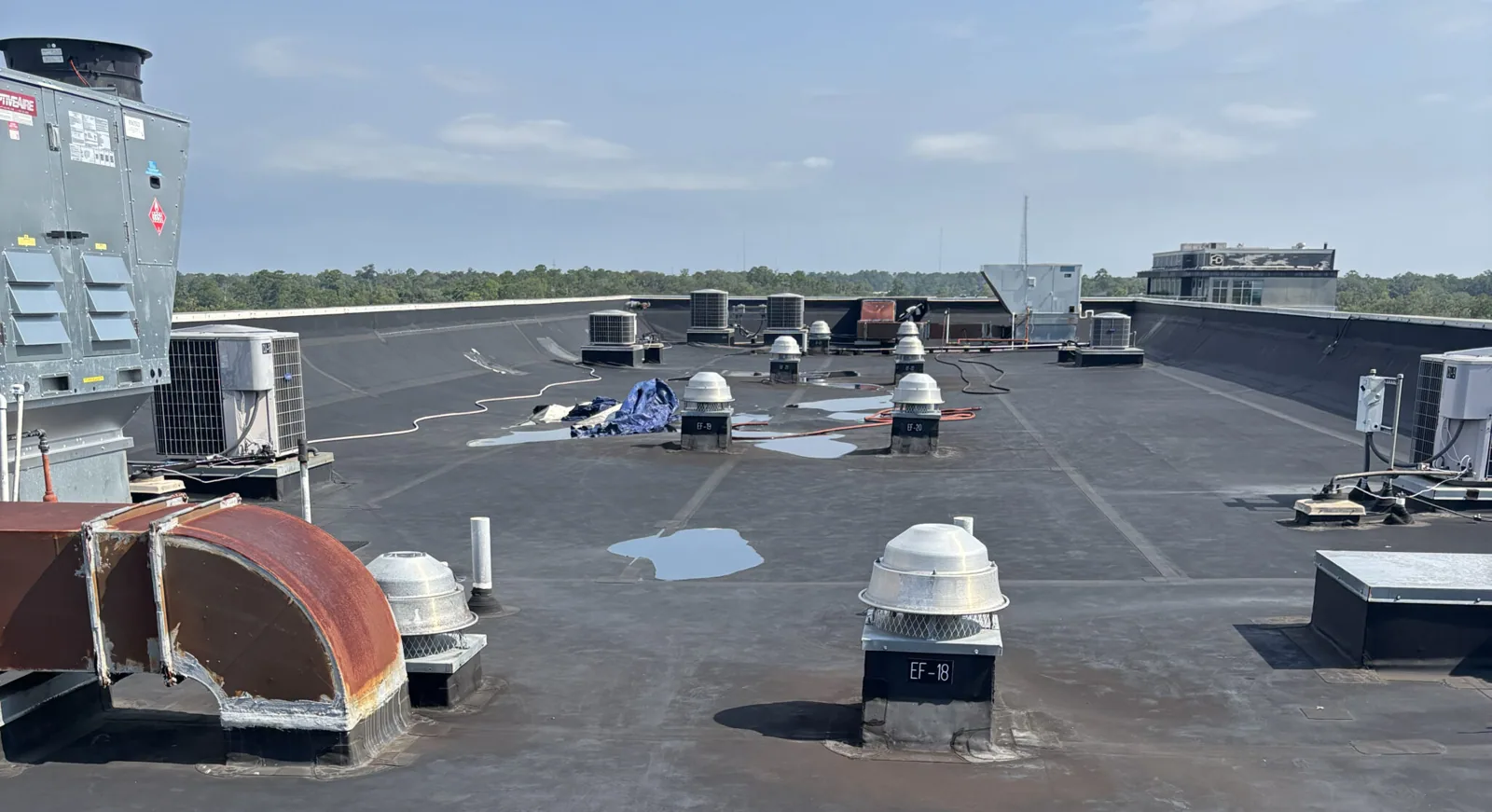
Coastal wind and heavy rain can place New Haven roof edges, seams, and drainage details under stress. After a storm, the first useful decision is how to protect exposed areas while documenting what changed. We inspect the affected roof, photograph each condition, and separate immediate stabilization from permanent repair. That record gives a general contractor a defined scope for approval and scheduling.
New Haven’s commercial properties serve health, education, manufacturing, and business services. A repair plan must account for occupied rooms, equipment, deliveries, and the next weather window. We coordinate access and temporary protection with the building contact, then explain which observations support repair and which require additional examination before work is priced.
Protecting the exposed area
Active water entry calls for a controlled first response. We identify the affected roof area, check the safest route to it, and apply temporary protection suited to the observed opening and forecast. Inside, the building team can limit exposure to contents and isolate affected spaces while the roof condition is recorded. Temporary measures are described separately from permanent work.
Urgent stabilization focuses on water control, safe access, and a clear record of visible damage. Once conditions allow a closer examination, we trace adjacent seams, flashings, drains, and roof edges to define the permanent repair boundary. That sequence avoids treating a tarp or temporary seal as a completed roof repair.
For an active leak, a rapid response scope can stabilize the area before a fuller roof condition examination. We record the materials used, the location protected, and any limit created by weather or access. The building owner can then see what remains open before the next crew visit.
Separating storm evidence from prior wear
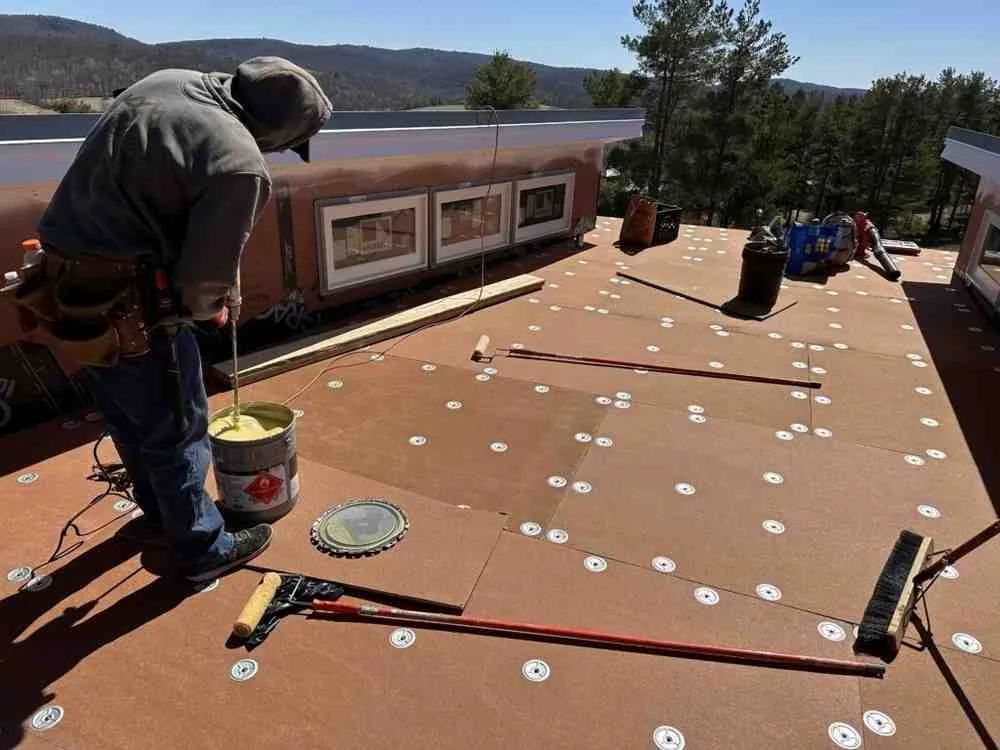
A storm date is not a repair diagnosis. We compare the current condition with prior reports, maintenance records, and photographs to identify what is new, what was previously noted, and what cannot be distinguished from available evidence. A displaced edge, split seam, puncture, or damaged flashing needs to be tied to a location and roof component.
Sandy's New Haven County wind record includes an 85 mph Madison gust on October 29, 2012. We keep edges and attachment on the review list, then set scope from current photographs, membrane condition, and water paths at the property. A wind-related repair review can classify observed conditions without assuming every loose component came from one event.
We also note whether a defect allows water to move beneath the surface or affects only an exposed finish. Infrared or moisture testing may help when the assembly cannot be assessed visually. A moisture survey can support the repair decision if readings, roof history, and access make that step useful.
Repair limits and adjacent details
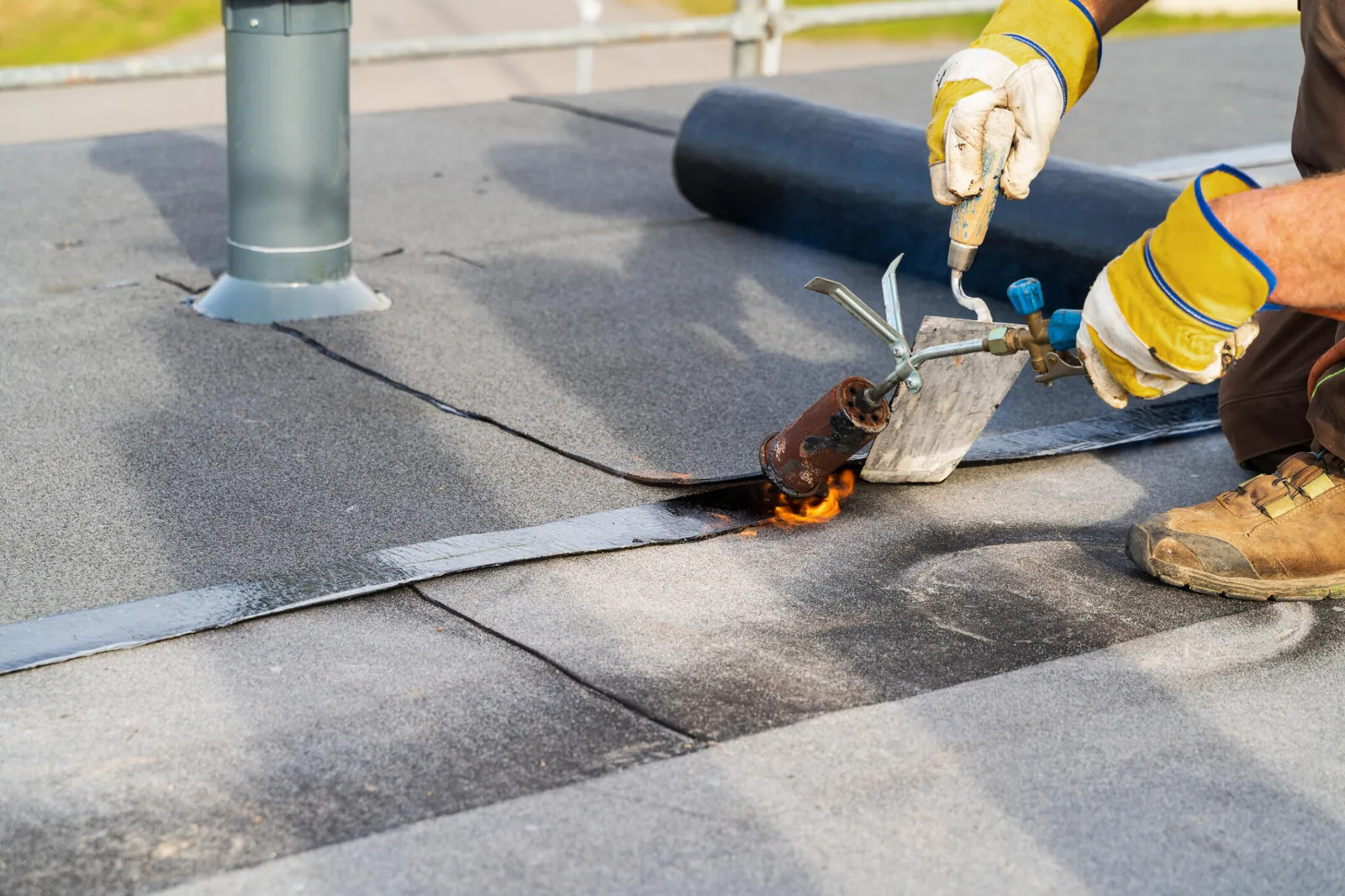
Permanent repairs need sound material at their edges. We inspect around a tear or open lap, verify membrane type, and check nearby flashing, curbs, fasteners, and perimeter metal. The scope identifies surface preparation, repair material, and the area included. Where evidence points beyond a single defect, we describe the larger examination needed before extending quantities.
Storm runoff can reveal blocked drains or a vulnerable transition even when the membrane itself remains intact. We check sumps, scuppers, gutter connections, and the slope leading to each outlet. If drainage contributes to the reported water, the contractor may need a separate drain and scupper correction. Edge movement may call for coping or perimeter repair in coordination with the membrane tie-in.
Hamden's nearby industries range from computer goods and wire manufacturing to concrete mixers and metalwork, details that can affect delivery and equipment access. We confirm the rooftop equipment, access limits, and loading rules at each property before setting the repair plan.
A record the project team can use
Storm documentation should identify the roof area and show each condition close enough to evaluate. Notes record the observation date, weather or access limits, roof component, and temporary protection. We connect a cause to the evidence collected during inspection.
That distinction is useful when the owner, insurer, and contractor need to compare records. We can prepare a written scope with repair quantities, materials, exclusions, and any recommended follow-up. A photo-supported condition report can organize storm observations, prior roof records, and repair estimates for a claim review.
West Haven includes manufacturing, textiles, and medical research in its commercial mix. Occupied spaces and scheduled processes can make repair access a project constraint after severe weather. We coordinate loading, roof access, interior protection, and work hours with the general contractor so documentation and repair can proceed without creating a second operational problem.
From temporary protection to closeout
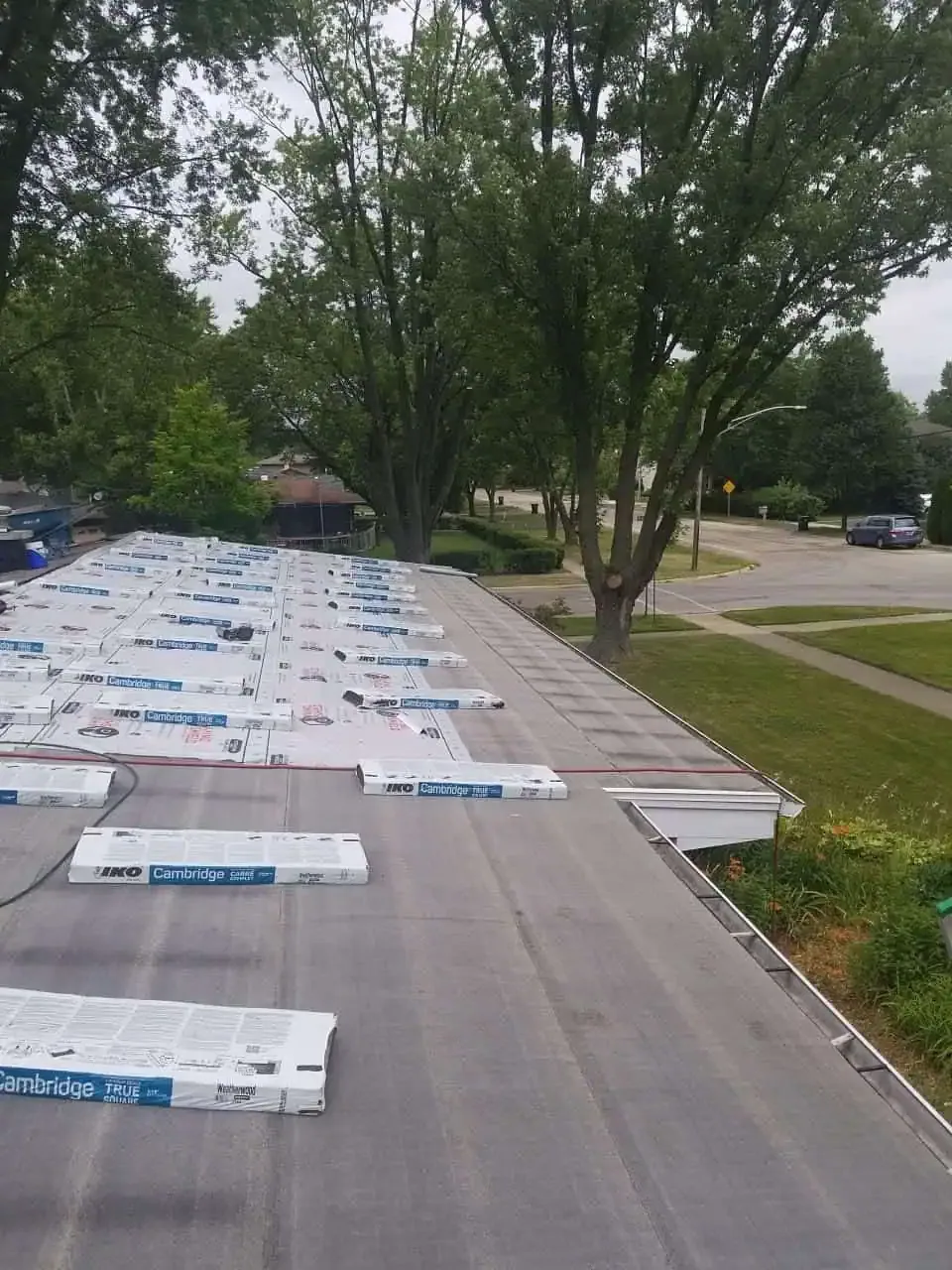
The repair sequence begins with access and weather controls, continues through removal or preparation of the affected material, and ends with a documented closeout. We identify where temporary protection will remain, which trades need to clear the roof, and how the building will stay protected between work shifts. If a concealed condition changes the plan, we photograph it and seek approval before expanding the repair.
Once the permanent work is complete, we photograph the corrected detail and note any adjacent item that requires monitoring. The closeout can be added to the building’s roof history so future reviewers have a before-and-after reference. In Branford, manufacturing, bioscience, healthcare, and retail are part of the local economy; across these uses, an accurate handoff supports the next maintenance or capital review.
For recurring concerns, compare the repair with a broader repair scope or replacement option rather than extending temporary patches indefinitely. The scope should state what the repair resolves, what remains, and what new evidence would change the recommendation. When a storm affects several roof areas, maintain a separate photo sequence for each location. Identify whether a curb, edge, seam, or drain was temporarily secured, and record any weather limit that delayed permanent work. If wet insulation or deck damage appears after removal, document the exposed area and obtain owner direction before expanding tear-off. Keep incident times with the photo sequence and access notes.
Questions Owners Ask
What should be documented after a storm?
The record should show each affected roof area, the visible condition, temporary measures, and any access or weather limits. We compare current findings with prior reports where available and separate observed damage from older conditions. That gives the contractor and owner a clear basis for the permanent repair scope.
Can temporary protection count as the completed repair?
A temporary cover or seal controls immediate exposure but does not establish that the roof detail has been permanently corrected. We identify the protected area and return when conditions support a durable repair. The closeout record states which portion remains temporary until the permanent work is complete.
Does Sandy’s regional wind history prove damage to my roof?
Madison's measured gust makes edge attachment a useful inspection priority. We photograph displaced components, open seams, and other findings, then compare current observations with the roof history before assigning a repair boundary.
How quickly can permanent storm repairs proceed?
The schedule depends on safe access, forecast conditions, material compatibility, and whether the assembly needs further examination. We protect active openings first, then set the repair window with the building contact and general contractor. Concealed conditions are documented before quantities or scope change.
What information helps with an insurance review?
Prior inspection reports, maintenance records, date-stamped photos, temporary work notes, and a separated repair estimate help establish the condition history. We can organize observations and scope details for review. Coverage decisions remain with the insurer, so the documentation should describe evidence rather than predict an outcome.