
School Roofing in New Haven, CT
School Roofing
Plan school roof repairs in New Haven around classroom protection, calendar windows, drainage, rooftop systems, and clear bid assumptions.
Winter water makes a school roof a calendar and interior-protection decision. In New Haven, repeated freezing puts drains, low areas, and flashing transitions on the review list before a work window is chosen. We compare the roof record with classroom schedules, occupied areas, and access limits, then define what a contractor can open, close, and price during each phase.
Education is part of New Haven's reported industry mix, and North Haven's town profile includes education alongside healthcare and manufacturing uses. Those local uses make occupied-building planning relevant across the region. The roof scope follows each school's assembly, water path, and schedule for releasing work areas.
Water paths above occupied rooms
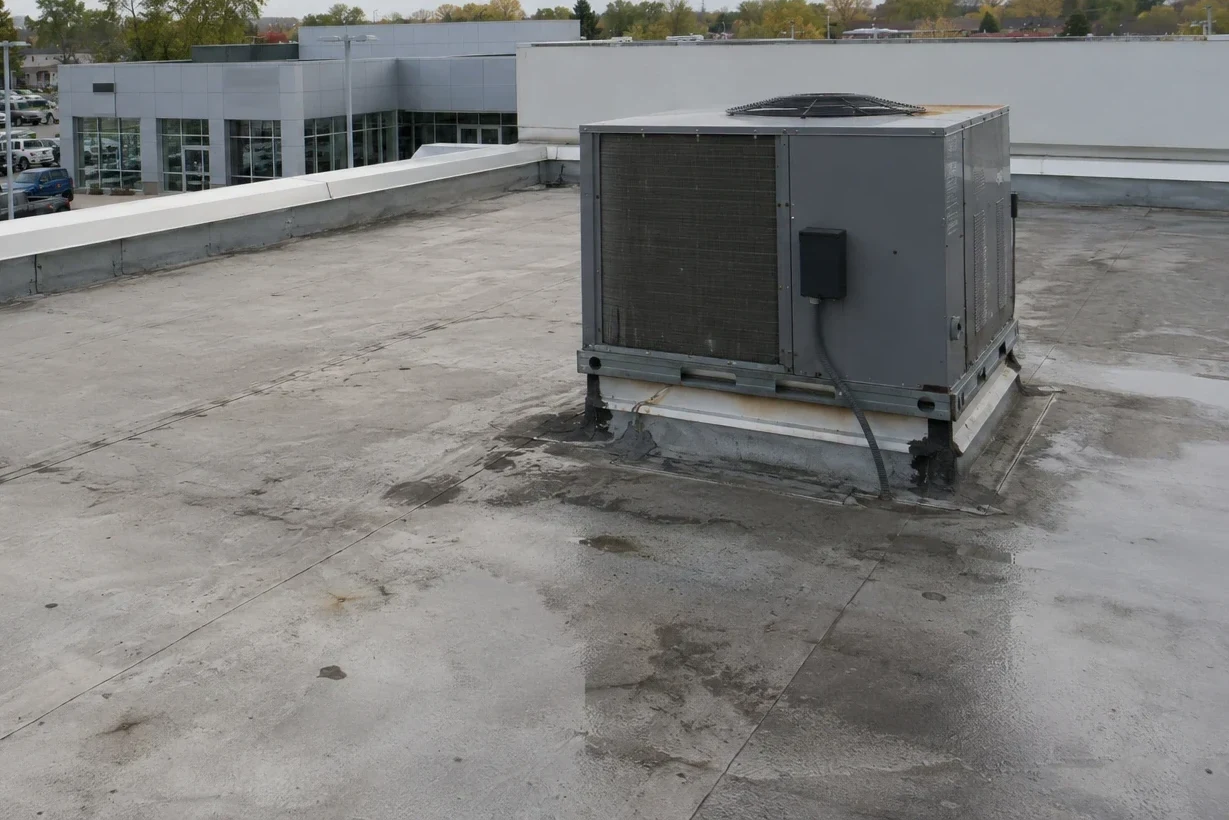
A ceiling mark can sit below a roof opening or several feet away from it. We inspect the roof area above the report, follow slope and deck direction, and check seams, penetrations, drains, and wall transitions. Photographs connect each observation to a roof reference so maintenance staff can match it to the room below. That record separates a confirmed entry point from an area that needs more testing.
School buildings may have several roof additions, mechanical upgrades, and repairs accumulated over time. We note changes in roof height, material transitions, abandoned openings, and the condition around equipment bases. If water may extend under the surface, we propose selective testing before expanding the repair. A roof inspection record helps the owner and general contractor set the repair boundary from evidence rather than an interior stain alone.
Drain bowls, strainers, scuppers, and overflows need review as a connected system. A slow outlet can leave water at low points when colder weather arrives, while debris or a damaged leader may redirect runoff. We identify the outlet and contributing roof area before recommending work. Where the drain itself needs correction, a drainage repair scope can be separated from other maintenance items.
Choosing a workable school break
Roofing during an active term calls for a phase plan that accounts for instruction, staff access, deliveries, and noisy work. We confirm which areas can be released and when the building can accept a short disruption. The schedule can place demolition or material movement in a break while keeping quieter work for other periods. If the school remains occupied, the work boundary and alternate routes should be clear before mobilization.
Temporary protection must be checked each day, especially when the forecast changes or an open section reaches the end of its planned shift. Daily tear-off stops at the boundary the crew can seal against weather before demobilizing; the closeout records that tie-in and any concealed condition awaiting approval. A phased occupied-building sequence can keep selected areas in service when the school team approves the route, hours, and protection plan.
Roof access may pass near play, service, or arrival areas, so material staging and lift timing deserve early review. We identify where equipment can be placed, which entrances remain available, and who communicates a temporary closure. If another trade needs the roof, the schedule should leave a clear handoff before flashing or membrane is completed around its work.
Equipment, edges, and assemblies
Ventilation units, exhausts, piping, skylights, and conduit interrupt the roof field. We check flashing at each curb, note service clearances, and identify whether equipment can be isolated for the work. A later unit move can disturb a completed tie-in, so the mechanical position should be agreed before the roof phase begins. The curb and support review can identify the required trade coordination.
At parapets and edges, corners, metal laps, cleats, and terminations can open under movement or weather. New Haven's coastal setting makes these details useful to review along with drainage, while the inspection determines whether repair is needed. Madison's measured gust during Sandy puts exposed edges on the regional review list. We document any observed edge issue with its location and photograph rather than add a broad storm allowance.
The existing layers also affect the project choice. We record membrane type, insulation, attachment, deck assumptions, and repairs that may change a patch or replacement boundary. If multiple areas are wet or details keep reopening, a larger review may be justified. A surface treatment should not cover unresolved moisture or a failed substrate that needs removal.
Repair limits and approval points
A repair proposal should name the roof area, defect, compatible material, temporary protection, and follow-up item. We can group small corrections into one access window, but the locations and limits should remain visible. That helps the school compare bid assumptions and decide which work can fit the next break. A planned repair visit should also identify any condition that could change the cost after opening.
Replacement bids need removal boundaries, insulation and substrate assumptions, drain and edge work, equipment flashing, and disposal. Before carrying a recover price, we inspect the roof layers for moisture, confirm fastening and deck capacity, and check how added thickness affects drainage and applicable requirements. The proposal should show what remains beneath the new surface. A replacement assessment can then be compared with repairs against the roof history and school calendar.
Approval roles should be set before mobilization. We document who can release an area, who can approve concealed work, and how a weather delay affects the next shift. The general contractor can price a defined sequence while school staff retain control over occupied routes and scheduling choices. Those responsibilities prevent an open roof area from waiting on an unclear decision.
Condition history for the next budget
Closeout should include repair locations, photographs, drain observations, flashing details, and any area that could not be accessed. We note the phase dates, temporary tie-ins, and follow-up items so the maintenance team can compare future findings against the work completed. The roof file should distinguish immediate correction from conditions left for observation or a later capital cycle.
For a New Haven project, bring roof plans, leak reports, term calendars, and access controls to the first review. A college roof scope may involve different academic scheduling, while healthcare roof work has distinct service-continuity needs. We will align the proposed phase with the building's actual use and the evidence recorded at the roof.
When planning future work, we can compare a fresh inspection with prior photos, repair limits, and maintenance records. This helps the owner separate a seasonal correction from a broader replacement decision when separate roof areas need attention in different budget periods.
Questions Owners Ask
Can roof replacement happen while classes are in session?
A phased sequence can work if the school can release specific roof areas and approve the access route, noise periods, and interior protection. We map daily closure limits and identify a contact for weather changes. Larger tear-off phases may fit better during a break, depending on the roof and schedule.
How do you protect classrooms below an open roof area?
We identify rooms beneath each phase, define the temporary protection line, and inspect the tie-in before the crew leaves. School staff confirm which spaces need restrictions. The plan should state what happens if rain arrives earlier than expected and who can authorize a change in work area.
What should an owner compare in school roof bids?
Compare removal limits, insulation assumptions, drain and edge details, equipment work, daily tie-ins, and the calendar used for pricing. We document confirmed quantities separately from concealed conditions. That gives the owner a common basis for reviewing cost and schedule without leaving protection out of the scope.
What if a leak appears far from a classroom stain?
Water can travel along a deck or insulation joint before reaching an interior surface. We inspect the roof above the report and follow seams, penetrations, and drainage paths. Photographs or selective testing help establish the leak origin before we price a repair boundary.
Which local patterns inform school roof planning?
New Haven includes education in its principal industry mix, and North Haven's local profile also includes education. Winter freezing makes drainage and transition details useful inspection priorities. Those facts help frame the timing discussion; the school roof's actual condition and calendar determine the work.