
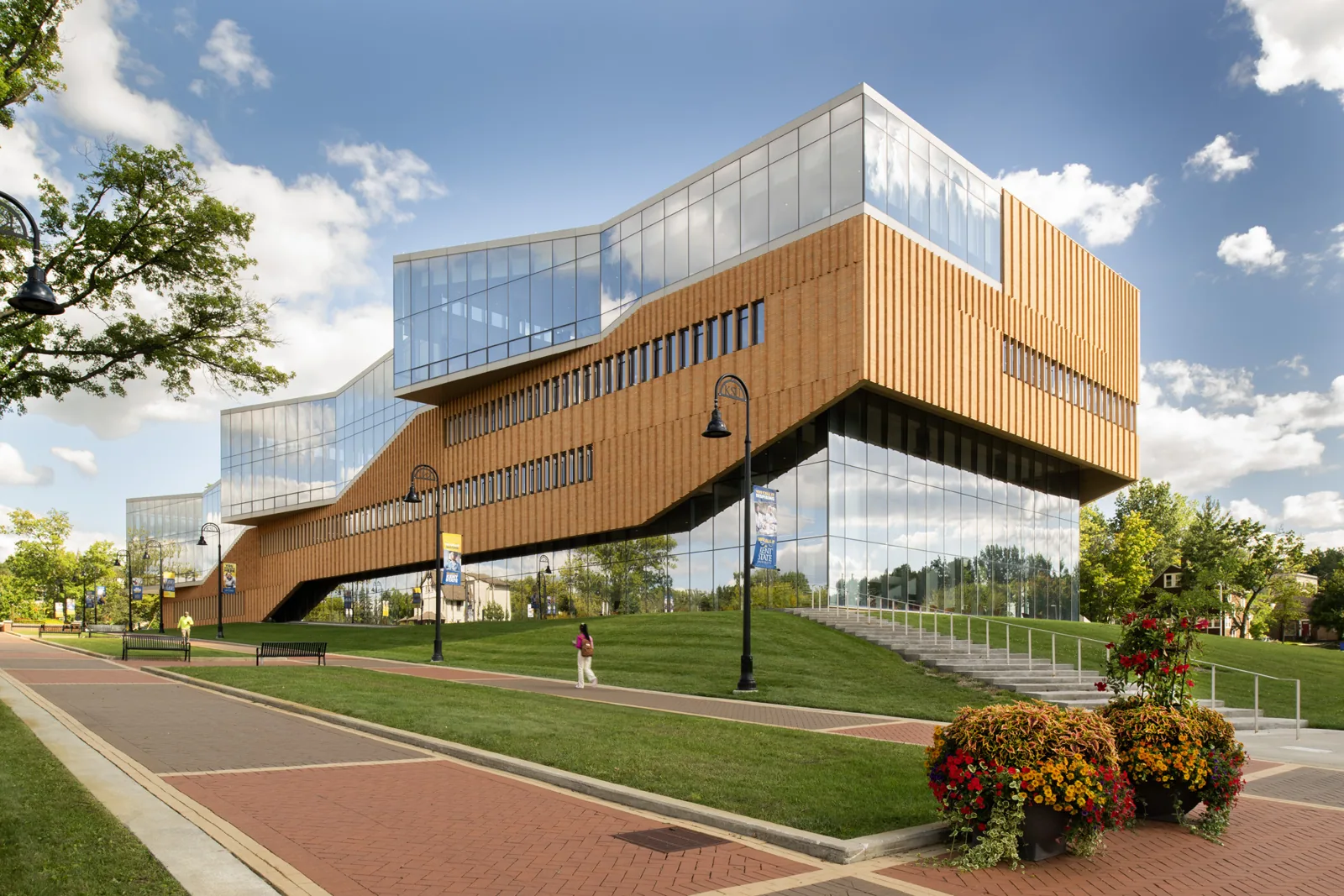
College and University Roofing in New Haven, CT
College and University Roofing
Coordinate college roof repair or replacement in New Haven with academic calendars, occupied buildings, equipment access, and documented work phases.
Academic calendars can create short periods when a roof area is easier to release, but weather still governs each day's closure. In New Haven, winter freezing makes drainage and flashing worth reviewing before a summer or intersession project is priced. We connect roof condition with the building schedule, access controls, and trade responsibilities so the general contractor can plan each phase without assuming an entire property can be cleared at once.
Education is part of New Haven's principal industry mix, and North Haven's local profile also includes education alongside healthcare and manufacturing. Those regional facts describe a broad building market, not a specific college or roof system. Each scope follows the actual roof record, the spaces below, and the time available for inspection, repair, or replacement.
Academic periods and phased access
A summer window may offer more flexibility for some buildings, while residence, laboratory, dining, and administrative uses can continue year-round. We ask which areas remain occupied and what schedule each department can support. Material deliveries, crane placement, and rooftop access should be planned around the movement of people and service vehicles. The bid then reflects the approved work window rather than an assumed property-wide shutdown.
For a multi-building program, roof areas can be sequenced by condition and access. We identify which roofs share equipment routes, drains, or a staging zone, then group phases to reduce repeated setup. The plan should state the daily boundary, tie-in, and contact for releasing the next area. A phased occupied-building approach can preserve selected uses while separating active work from normal access.
Some academic spaces need quiet periods, clean access, or continuous service to equipment. We record those restrictions before selecting demolition or delivery hours. If another trade must move an exhaust or cable route, that handoff should precede membrane closure. A calendar that lists both academic events and roof milestones gives the project team a shared basis for resolving conflicts.
Building-specific roof records
Large educational portfolios may contain roofs with different ages, assemblies, and repair histories. We inspect each area on its own terms, recording membrane type, drainage pattern, edge details, penetrations, and prior patches. A roof condition inspection gives the owner a location-based record that can be compared across buildings without treating them as identical.
Where a ceiling report points to a roof leak, we follow the slope and details above it before setting a repair limit. A moisture survey can help select test locations when conditions are suitable, but the owner needs the test results and field opening to confirm concealed conditions. We distinguish visible deterioration from suspected moisture so the next phase does not carry an unsupported quantity.
The review should also identify roof zones that could affect interior programs, including rooms with sensitive equipment or limited access. We note whether a condition requires immediate temporary protection, a planned repair, or a later capital decision. That classification helps facilities staff compare operational risk with available academic breaks and capital approvals.
Drainage, transitions, and rooftop trades
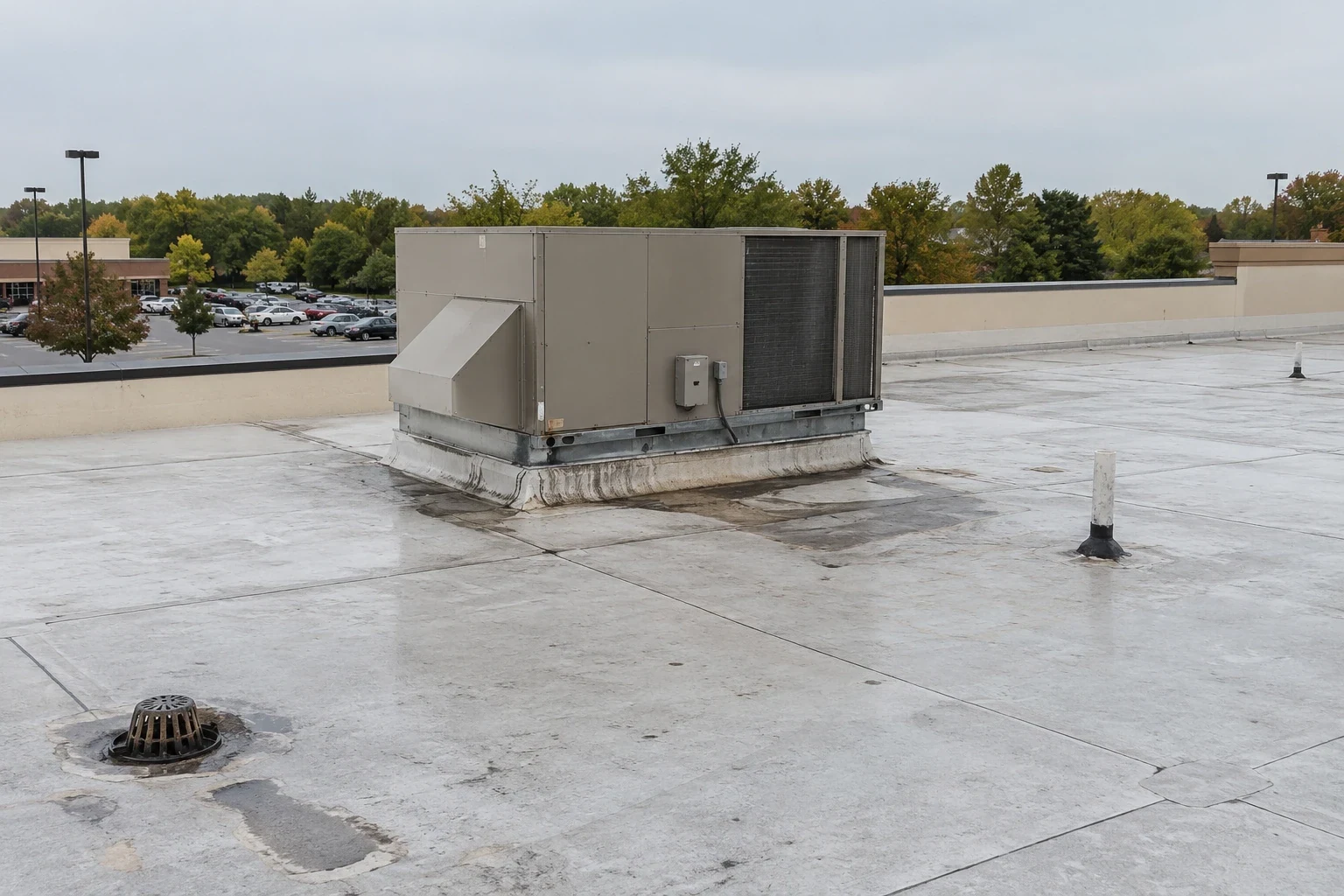
New Haven's winter freeze-thaw exposure makes drainage path and overflow performance useful inspection priorities. We look at strainers, bowls, scuppers, low areas, and the route water takes to each outlet. Water that remains around a curb or wall transition can put a weak flashing detail under repeated movement. A drainage correction should describe the outlet, contributing condition, and any work needed below the roof.
Parapet caps, edge metal, and terminations keep the membrane connected where the assembly ends. Madison's measured gust during Sandy puts wind-exposed corners on the regional inspection list. We photograph each observed opening and identify the metal, fasteners, or transition that changes the scope rather than add a broad weather allowance.
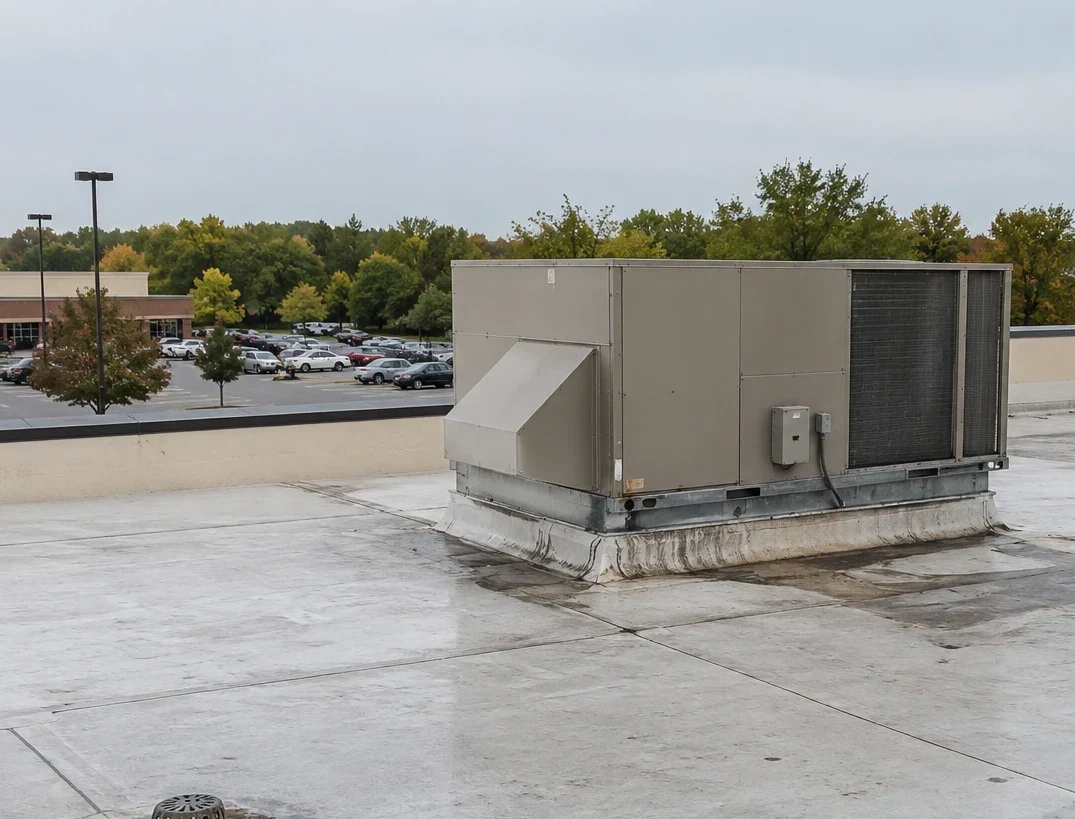
Mechanical equipment and service routes can also influence the installation sequence. We map curbs, pipe supports, conduit, and access walks, then confirm which trade owns each adjustment. If equipment must remain active, we set a work limit around its service area. A curb coordination review can keep future equipment work from disturbing new flashing.
Capital choices across buildings
A repair remains useful when the surrounding roof is stable and the defect can be corrected with compatible materials. Repeated failures, widespread wet insulation, or poor attachment can shift the discussion to broader work. We compare each condition with the roof history and identify any area that needs testing. The college can then group near-term repairs separately from the roofs that warrant capital review.
Replacement proposals should show removal limits, substrate assumptions, insulation, drain corrections, perimeter details, rooftop equipment, and temporary tie-ins. A recover belongs in the comparison only after layer count, moisture, attachment, deck, drainage elevation, and applicable requirements are checked. The replacement scope can be compared across roofs when each building's assumptions are documented.
Facilities teams can use a capital planning record to sort urgent defects, planned phases, and longer-term assemblies. It should name the evidence behind each option and the follow-up needed before funding. New Haven's institutional and education mix makes a multi-year view useful, but the timing decision still follows individual roof conditions and institutional approvals.
A record that survives staff changes
After work, we document repaired locations, materials at critical details, photos, drainage observations, and items left for maintenance. The closeout should name the roof area and phase so a future facilities team can locate each change. If another trade completed a handoff, the record identifies that boundary and what remains under its scope.
For a New Haven roof project, bring roof plans, prior reports, academic calendars, and access rules to the initial review. A K-12 roof plan involves a different timetable, while healthcare roof work can have service-continuity limits. We will map the college sequence to the spaces that can be released and the approvals required for concealed repairs.
When a portfolio includes both older and newer assemblies, records help avoid carrying a repair assumption from one roof to another. We can compare each area's current photos with its previous inspection and state which item should be reviewed next. That makes future bid comparison more direct when projects cross budget years or management teams.
Questions Owners Ask
How do academic calendars change roofing costs and timing?
The available work window can affect delivery, noise, and how many zones can be opened safely. We compare project phases with academic breaks and areas that remain in use. The bid should identify the calendar assumptions and any weather or access condition that could shift the sequence.
Can work be phased across several educational buildings?
Yes, if each roof has a separate condition record, access plan, and closeout boundary. We can group phases by equipment routes or staging while keeping repair quantities tied to each assembly. The schedule should show which building can be released next and who approves that handoff.
What belongs in a roof survey for an educational portfolio?
Record each roof's assembly, drainage, edges, penetrations, repairs, and visible moisture indicators with plan references and photos. We distinguish observed conditions from suspected areas that may need testing. That gives facilities staff a consistent basis for prioritizing work without assuming all roofs have the same needs.
How should equipment work fit with membrane replacement?
Confirm the final unit location, service clearance, shutdown window, and trade owner before the roofer closes the flashing. We note which supports or curbs are part of the roofing scope and where another contractor must complete work. That prevents a later adjustment from disturbing a finished transition.
Which New Haven-area facts help set the review priorities?
New Haven's education sector and North Haven's education and healthcare activity make occupied-building planning relevant. Winter freezing adds attention to drains and transitions, while regional coastal wind calls for edge review. Each building's roof record and calendar determine the actual work scope.