
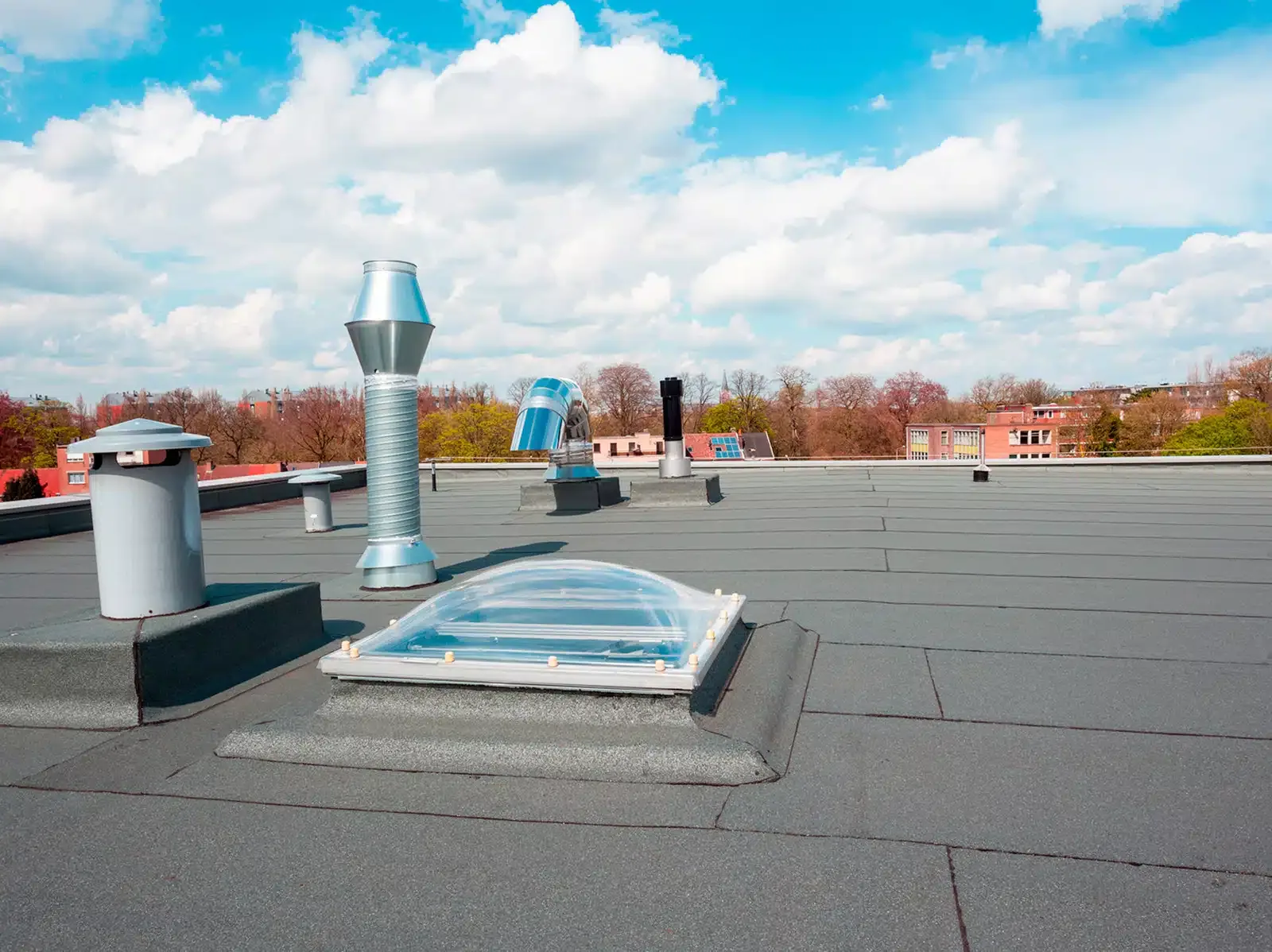
SOPREMA Commercial Roofing in New Haven, CT
SOPREMA Commercial Roofing
Review SOPREMA roof repair and restoration in New Haven, CT. Document layered assembly condition, drainage, flashing, and workable project phases.
Layered roofing needs a component review before a SOPREMA repair or restoration method is chosen. New Haven’s winter freeze-thaw cycle makes drains and low transitions useful points to document, especially where water crosses a seam. We compare the roof record with the surface, flashings, and accessible details, then mark what still needs investigation. Modified bitumen and liquid-applied flashing each serve different purposes, so the scope should connect the product to the condition it addresses. Local manufacturing, institutional, and service properties also bring distinct access needs. Start with a roof condition inspection, then compare the assembly with modified-bitumen options before selecting a work phase.
Read the layers before treatment
SOPREMA manufactures systems that include SBS-modified bitumen and liquid-applied products such as Alsan flashing. Modified-bitumen roofs use reinforced asphaltic sheets joined in courses; liquid flashing can form a reinforced detail around a complex transition when installed as a complete system. Neither material corrects a wet substrate or a failing deck on its own. We identify the existing layers, repairs, and coating history before suggesting a localized treatment.
At a curb or wall, the inspection follows the roof through each change of plane. It records whether sheet edges remain adhered, whether a flashing has cracked, and whether an old coating bridges a joint. A repair needs suitable preparation and compatible layers. If the condition requires opening, the scope says where and why. A comparison with Johns Manville roofing systems and GAF commercial roof systems can be useful where a capital plan is considering alternatives, but the comparison should keep removal, insulation, and edge assumptions consistent. A repair sample can also confirm adhesion at a prepared transition before crews extend treatment across the roof. Record the test location and surface condition, since a small sample does not establish suitability over areas that were not examined.
Protect drainage through freeze and thaw
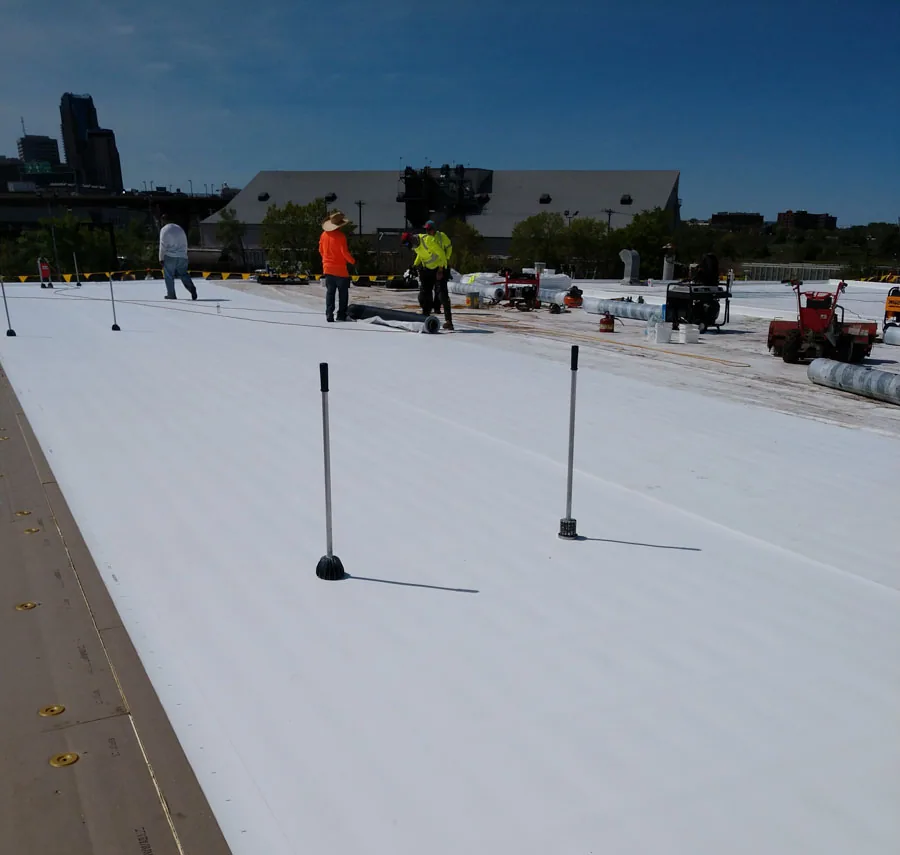
New Haven's climate normal records 102.3 days a year with overnight lows at or below freezing, making drain and transition checks useful before winter work windows narrow. During a review, we note where runoff collects, whether drain bowls remain clear, and how seams cross low areas. A broad puddle and a wet interior stain do not establish the same cause. The condition report should trace the visible route and identify whether membrane, flashing, or drainage work belongs in the proposed scope.
Repeated wetting can stress a layered roof at laps and flashings. If a drain is restricted, replacing a local sheet does not fix the flow. We separate a SOPREMA membrane repair from work on a scupper, drain, or slope so the owner can compare the tasks and sequence. Use a drainage review when outlet condition affects the roof’s water path. That review can also confirm what temporary protection is needed if a drain detail must remain open during repair.
Inspect parapets, edges, and penetrations
Madison recorded an 85 mph gust as Sandy passed on October 29, 2012; after severe wind, we inspect exposed edges and terminations. The regional event is not evidence of damage at a particular property. It supports documenting perimeter metal, corners, and membrane terminations where wind-driven rain may challenge a detail. We look for movement, open joints, loose coping, or a flashing that no longer connects cleanly to the field. Each finding gets a photograph and a location reference.
A liquid-applied flashing can suit an irregular transition only when the substrate and adjacent roof allow a stable, reinforced detail. It cannot be used as a blanket over unrelated defects. The proposal should describe preparation, reinforcement, coverage, and tie-in points. A coping and edge-metal scope should be coordinated if the roof perimeter is also changing. That coordination helps the GC avoid leaving an unsealed gap where two scopes meet.
Choose a repair with a clear boundary
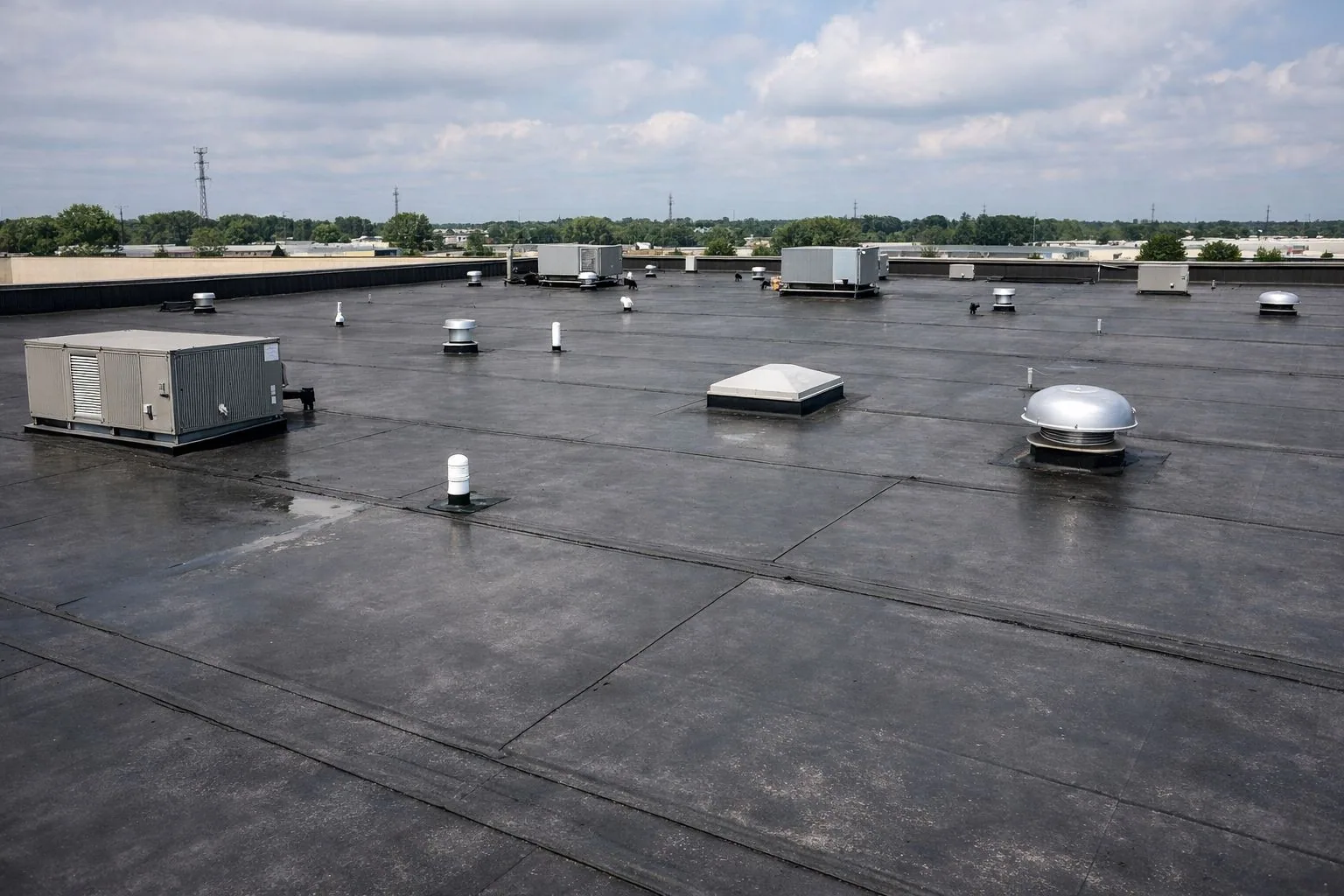
When damage stays within one flashing or a short run of open lap, a localized repair may be the sensible first phase. If multiple layers are deteriorated or moisture reaches insulation, a surface treatment can hide conditions without resolving them. We review available test cuts, repair records, and current field evidence. The report states which layers were confirmed and which areas would require opening before a final quantity is reliable.
Restoration, selective replacement, and tear-off should be compared against the same map of conditions. A coating may protect a suitable surface, but its use depends on adhesion, drainage, and system requirements. A roof restoration review can set out those prerequisites, while a replacement alternative can address broader layer failure. Each proposal should identify disposal, temporary dry-in, and how transitions will be completed at the end of a shift.
Coordinate the roof with building use
Material handling and work hours affect any occupied property. We coordinate lift access, rooftop units, staging, debris removal, and protection for areas below the repair. New Haven’s economy spans manufacturing, health, education, and office services, so the access window depends on the building’s operations. The schedule should name the work zone and the people who need a route around it instead of relying on a generic note about minimal disruption.
Before installation, identify inspection hold points and how the crew will protect the roof if weather interrupts the shift. At closeout, record each SOPREMA product used, the detail repaired, and photos of the finished transition. A phased occupied-building plan can organize work around active spaces. A New Haven roof file should identify the assembly, repaired transitions, and closeout photos for future maintenance.
Maintain a useful project record
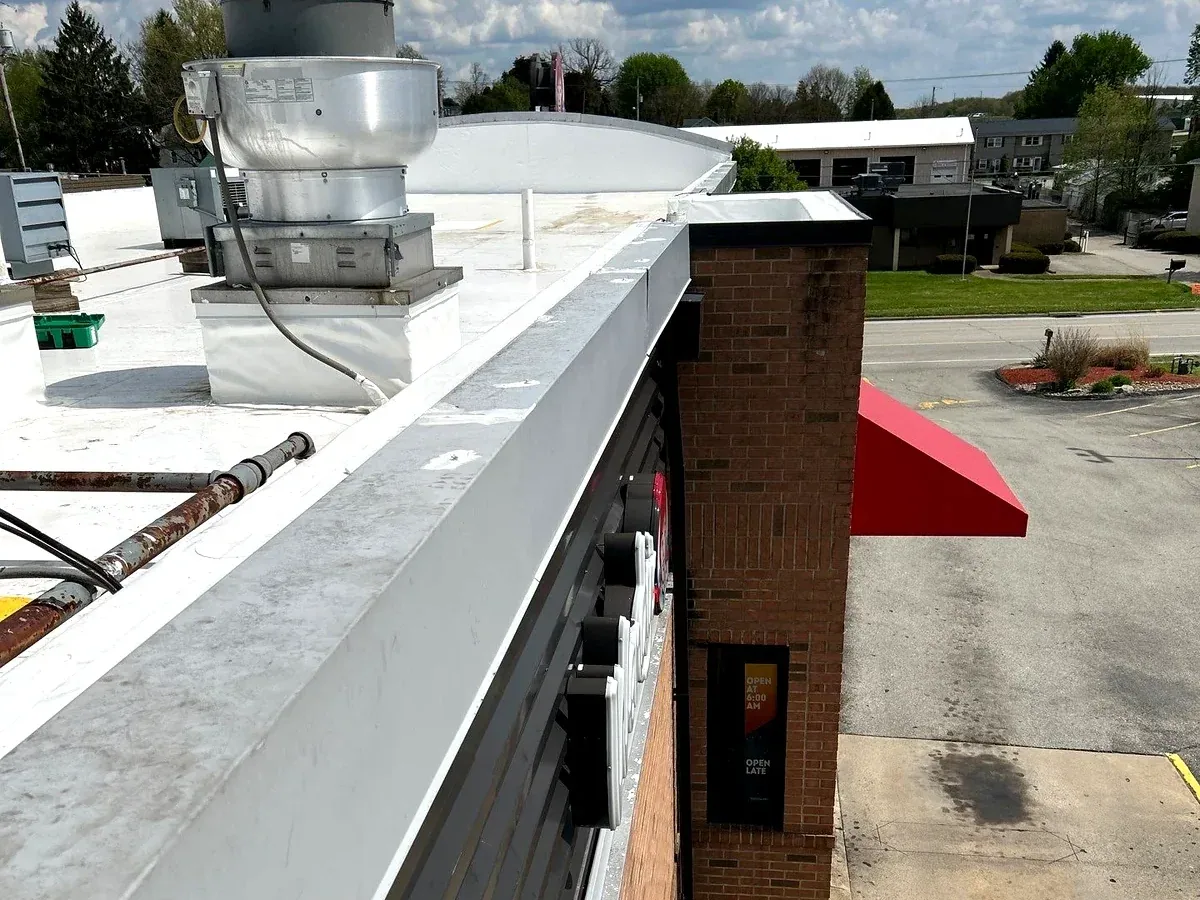
Bid comparisons often differ because one includes a reinforcement or drain correction while another lists only the surface treatment. We align scope descriptions, quantities, substrate assumptions, access, disposal, and temporary protection before comparing offers. When an allowance depends on concealed conditions, identify the trigger and the documentation needed to approve a change. This gives the general contractor a practical way to reconcile proposals and keep the schedule tied to a known phase boundary.
Future roof work benefits from the same record. Add inspection dates, repair locations, product labels, and later service penetrations. The maintenance file can show whether a treated detail remains stable or needs another review. A maintenance program can track seasonal drainage and surface changes before they become an interior leak. Keep photos with the roof-zone name and a short description, so a later team can find the prior work without repeating the investigation. Record who approved a change and why, then retain the final invoice beside the photos and material notes. That history helps the next reviewer distinguish the original condition from work added later. When the roof is divided into phases, label each section on the plan and identify the treatment used there.
Questions Owners Ask
What is the difference between modified bitumen and liquid flashing?
Modified bitumen forms a sheet assembly across the roof field; liquid flashing is a detail material for selected transitions. We identify where each fits and make the substrate requirements explicit.
Can a coating go over an existing SOPREMA roof?
The surface condition, adhesion, drainage, and system requirements determine whether restoration is suitable. We inspect those factors and define any cleaning, testing, or repair needed first.
How do you handle concealed moisture?
We review prior test information and visible signs, then identify where a test cut or opening would resolve the question. The scope states what is known and what could change after removal.
What details should be checked after the work?
Review the repaired lap or flashing, the nearby drain path, and any tie-in with metal or equipment. Closeout photos and product records make later inspections more useful.