
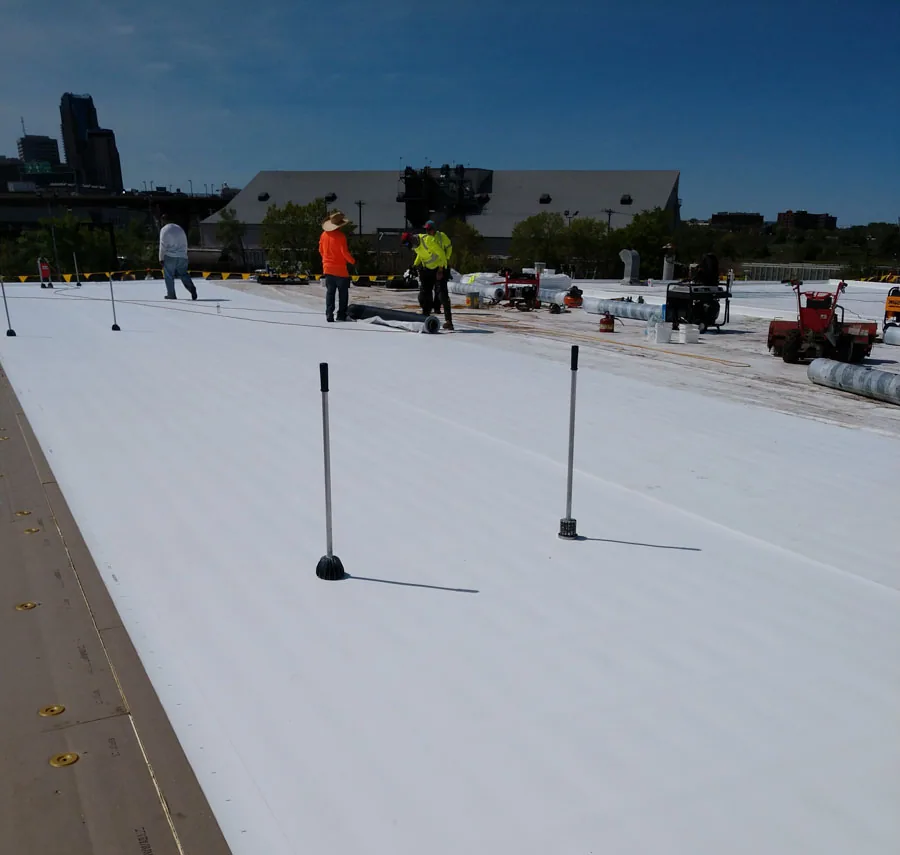
GAF Commercial Roofing in New Haven, CT
GAF Commercial Roofing
Review GAF membrane repair and replacement choices in New Haven, CT. Match roof condition, drainage details, access, and phasing before work begins.
A New Haven winter can move a roof from frozen nights to thawing afternoons in the same week. That cycle makes membrane seams, drains, and edge transitions useful points to inspect before a GAF repair or replacement is priced. We identify the assembly, compare it with the available roof history, and record what is visible at the work area. A membrane name is a starting point, not a condition report. The building’s use and access window also shape the sequence, especially where manufacturing, health, education, or business operations continue below. Bring prior reports and bid scopes to a commercial roof inspection, then compare the field condition with compatible TPO roofing options before fixing the scope.
EverGuard membrane choices
GAF’s EverGuard commercial lines include TPO and PVC membranes. Both are thermoplastic sheets with heat-welded seams, though their formulations and accessory requirements differ. A detail that suits one membrane may not transfer to another without a designed transition. We confirm the existing material through records and field checks, then identify the compatible flashing, cover strip, and attachment method for the work under review.
The membrane field is only one part of an assembly. Insulation, cover board, vapor control, deck, perimeter securement, and drainage can change the recommendation. An older roof may also contain patches from several repair periods. We map those layers as far as records and visible conditions allow. Where confirmation requires a core or a test weld, the proposal names that step so it does not disappear inside a broad allowance. A clear Carlisle system comparison can help align material alternatives with the same substrate and detail assumptions.
Water movement through winter
For New Haven, the 1991 to 2020 normals average 102.3 days per year with low temperatures at freezing or colder, plus 18.3 days when the high never rises above 32°F. That pattern puts drains, low seams, curb corners, and wall transitions on the inspection list. We connect observed ponding to a repair or drainage decision.
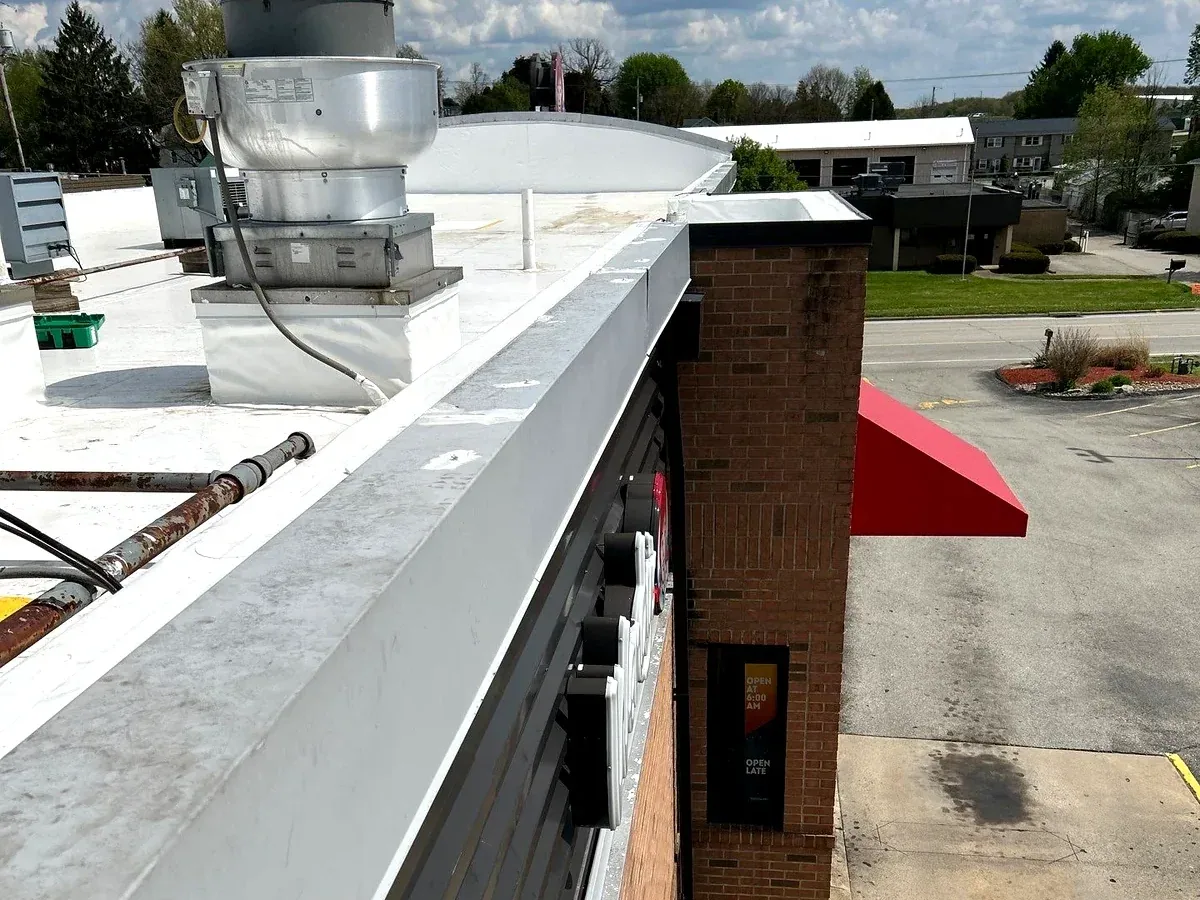
A seam repair closes a membrane opening; it does not change a low area or clear an obstructed drain. When water remains after rainfall, the scope should distinguish the entry point from the flow problem. We photograph both, note the path toward the outlet, and list any correction separately from membrane work. A coordinated drain and scupper review helps establish whether the proposed GAF detail addresses the failure or whether drainage work belongs in the same phase.
Seams, flashings, and edge restraint
Thermoplastic seams depend on a clean surface, suitable temperature, and a consistent weld. We look for separation, fish mouths, contamination, and patches that change the lap geometry. At penetrations, the review follows the membrane up the curb and under the counterflashing, rather than stopping at a visible bead. At roof edges, it follows the sheet into the termination and metal assembly. These transitions concentrate movement and wind exposure, so they need a defined repair detail. A comparison with Johns Manville membrane systems can clarify which assumptions are material-specific and which apply to the existing roof.
Madison's Sandy event registered an 85 mph gust on October 29, 2012, giving New Haven County a local wind reference for perimeter review. We document corners, edge metal, and securement where accessible and base repair quantities on what is present. If replacement is on the table, a replacement scope should state how perimeter details, curbs, and roof access are handled, not leave them implied by the membrane square footage.
Repair boundaries and assembly condition
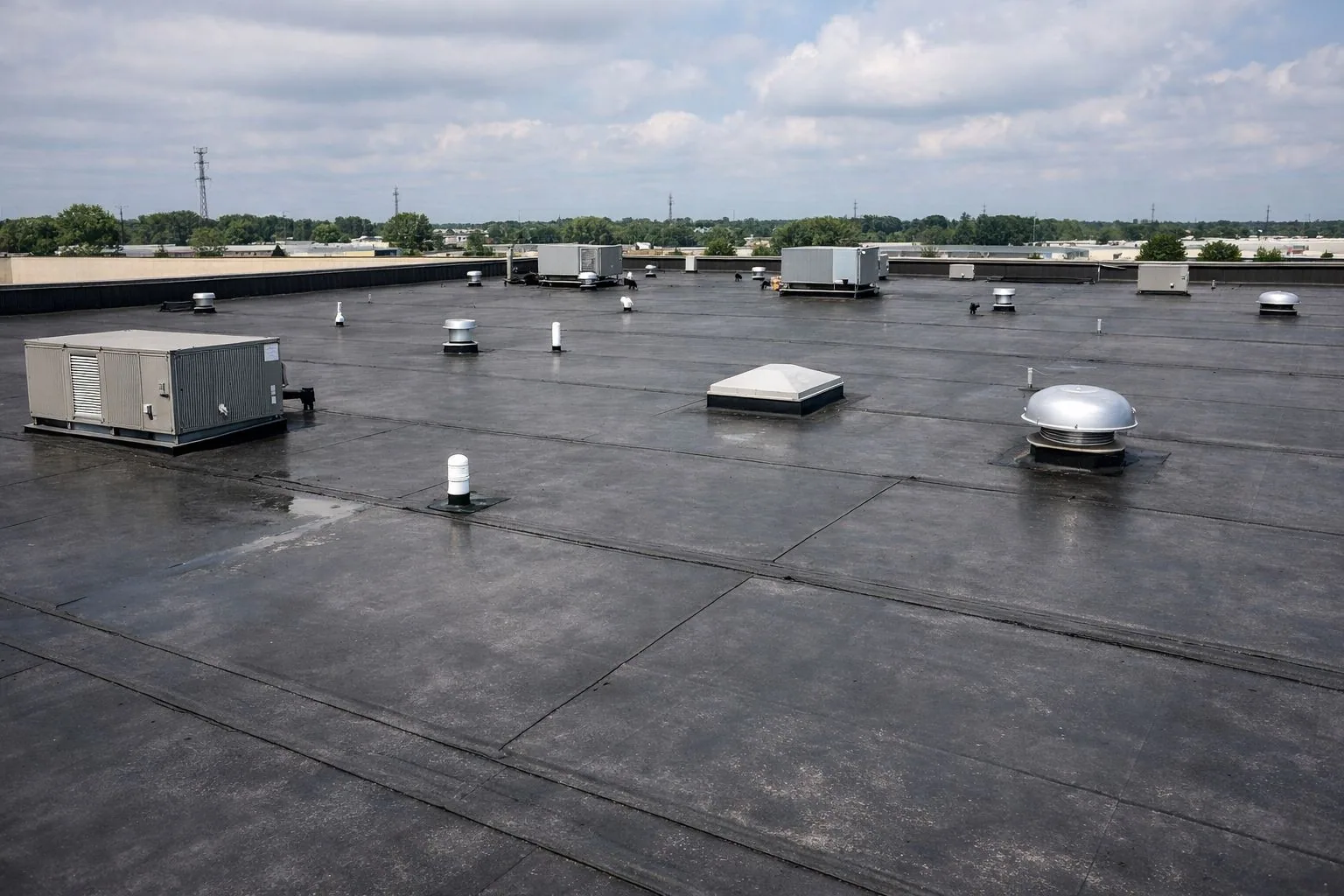
A localized repair can make sense when a defect is bounded and the surrounding assembly remains serviceable. We inspect the reported location and adjacent seams, review prior repairs, and note whether the substrate appears firm and dry. If leaks recur across separate details or moisture is suspected below the sheet, the scope may need investigation before a surface repair is selected. The condition record identifies what was observed and what remains unknown. That distinction lets a general contractor compare a repair allowance with a replacement alternative on the same assumptions.
GAF TPO or PVC material should be matched to the roof that exists, including its attachment and flashing details. If field evidence points to wet insulation, damaged deck, or widespread seam issues, simply adding a new layer can carry those conditions forward. We describe the options in practical terms: repair the isolated detail, open and replace affected layers, or plan a larger tear-off. A roof condition report keeps photos, observations, and phase limits together so the next bid review starts from a usable record.
Work around active operations
Access decisions affect labor, material handling, and daily protection. Before work starts, we identify how crews reach the roof, where material can be staged, which equipment must stay available, and how debris leaves the building. A manufacturing line or clinical operation may call for a different work window than an office suite. The local commercial mix includes all of these uses, so a schedule should be built from the specific property’s operating constraints rather than a generic duration.
For phased work, each zone needs a clear start and stop condition. We set out what can be opened, how the roof will be made watertight at shift end, and which inspection occurs before new material covers the assembly. An occupied-building sequence can separate disruptive tasks and protect access to rooftop equipment. The contractor and building contact can then coordinate hoisting, tenant notices, and other trades against a defined area instead of an open-ended roof scope.
Bid alignment after installation
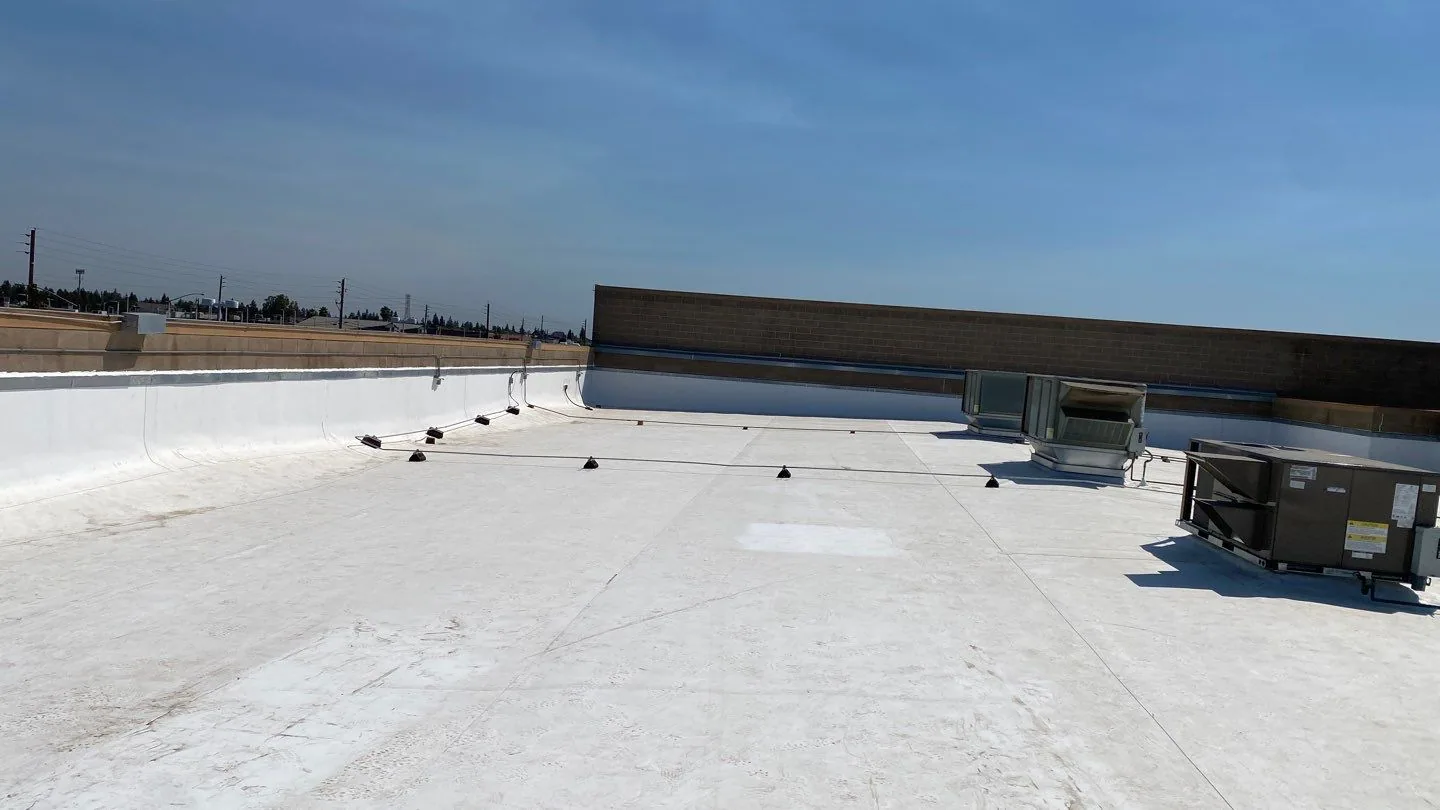
Bid comparison works best when each proposal describes the same assembly and boundary. We check whether substrate repairs, cover board, insulation, perimeter metal, flashing, demolition, and temporary dry-in appear in each scope. Quantities should be traceable to roof areas or details, and exclusions should identify the condition that would change the price or sequence. Product procurement and delivery timing also belong in the project discussion. A material substitution can affect accessories and attachment, so it needs review before the schedule is fixed.
After installation, inspection notes can track rooftop service work, debris, new penetrations, and any later patch. Those records help keep future repairs compatible with the GAF membrane and preserve the basis for maintenance decisions. A preventive maintenance visit can document emerging issues before water reaches interior finishes. A New Haven commercial roof needs its own access plan and condition record before a repair recommendation is finalized. Keep dated photos with the area identifier and work performed.
Questions Owners Ask
How do you confirm which GAF membrane is installed?
We compare roof records with visible markings, seam construction, flashing, and repair materials. If those clues do not confirm the assembly, the scope calls for a test or opening before the repair detail is finalized.
Can a GAF TPO repair be made during cold weather?
Temperature and surface conditions affect hot-air welding, so the repair window depends on the actual weather and the manufacturer’s installation requirements. We plan a suitable work period and protect the roof if conditions change.
What should a bid say about drainage?
It should identify observed ponding, outlet condition, and any separate correction. A membrane patch can close a defect, while a drain or slope issue needs its own scope and quantity.
When should replacement be compared with repair?
The extent of seam and flashing failures, moisture below the sheet, and deck condition shape that decision. We document those findings and compare a bounded repair with the cost and phasing of broader work.