Johns Manville Commercial Roofing in New Haven, CT
Johns Manville Commercial Roofing
Plan Johns Manville roof work in New Haven, CT with an assembly review, repair boundary, and phased bid scope tied to observed conditions.
A Johns Manville roof can be a thermoplastic membrane, EPDM, or an asphaltic assembly, and each calls for a different repair detail. In New Haven, seasonal freezing gives owners a reason to record how drains and transitions handle water before choosing that detail. We use the available roof history and a field inspection to identify the installed layers, their condition, and any limits on the recommendation. Manufacturing, health, education, and office uses around the city make access planning part of the same decision. Bring drawings and repair records to a roof condition inspection and compare the findings with the correct modified-bitumen assembly or membrane system.
Identify the assembly before pricing
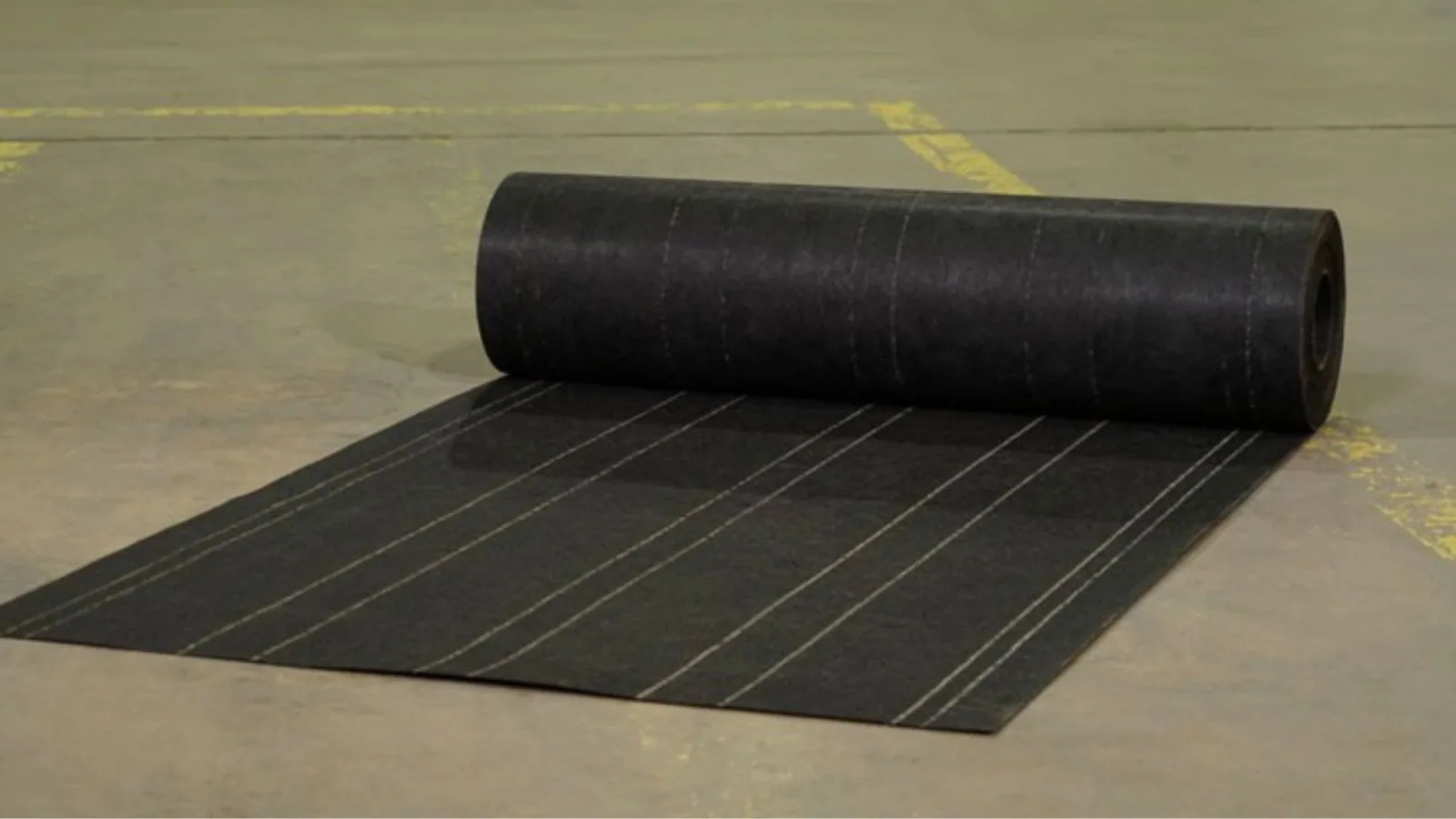
Johns Manville manufactures commercial roofing materials across several system types, including TPO, PVC, EPDM, and modified bitumen. The choice affects seam construction, flashing, adhesives, and how a repair bonds to the existing surface. A family name in an invoice helps, but does not confirm later replacements or patches. We look for labels and detail clues, then match them with closeout documents, warranty records if supplied, and previous service notes. If the layers remain uncertain, the scope should say what must be opened or tested.
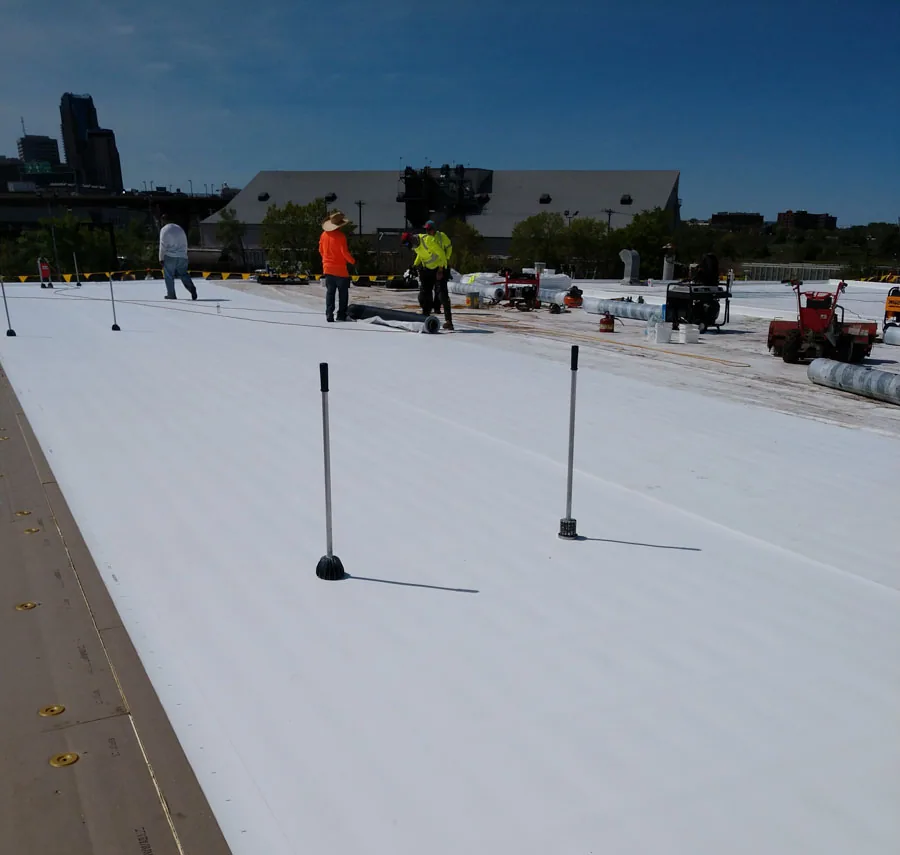
Modified-bitumen sheets are built in reinforced asphaltic layers, while single-ply membranes rely on their respective lap methods. That difference matters at curbs, drains, walls, and transitions between roof sections. We describe the proposed repair material, preparation, and flashing method instead of writing only “manufacturer-compatible.” A review of Carlisle SynTec membrane families and GAF thermoplastic systems can help compare alternatives when a replacement is being evaluated, provided the bid includes the same attachment, insulation, and perimeter work. Where the roof is accessible and conditions permit, a test weld or sample seam check can help confirm preparation assumptions before production work begins.
What the maintenance file can establish
Repair logs often reveal whether a leak returns to the same point or moves between unrelated details. We organize those reports by roof zone and compare them with current stains, seam condition, and drain locations. A call history is useful evidence, but a water mark does not show the roof entry point on its own. The site review traces the likely path and records competing conditions where the evidence does not isolate one cause. That gives the general contractor a better basis for a repair allowance.
New Haven’s building mix includes industrial, institutional, and service properties, so records may be held by different facility teams or contractors. We gather what is available and list gaps that could affect scope. Photos should show a location marker, the nearby detail, and a wider view so later reviewers can find it. A roof asset record can preserve those details across budget cycles, while a repair plan remains tied to the exact location observed.
Freeze and thaw at low details
The local climate normal includes over one hundred annual nights at or below freezing. For a roof, that makes the route from a high point to each drain worth documenting, particularly where water crosses a seam or gathers beside a curb. We check strainers, leaders visible from the roof, scuppers, and low areas, then note whether debris or a damaged component restricts flow. A freeze-thaw pattern is regional context, not proof that a particular assembly has failed.
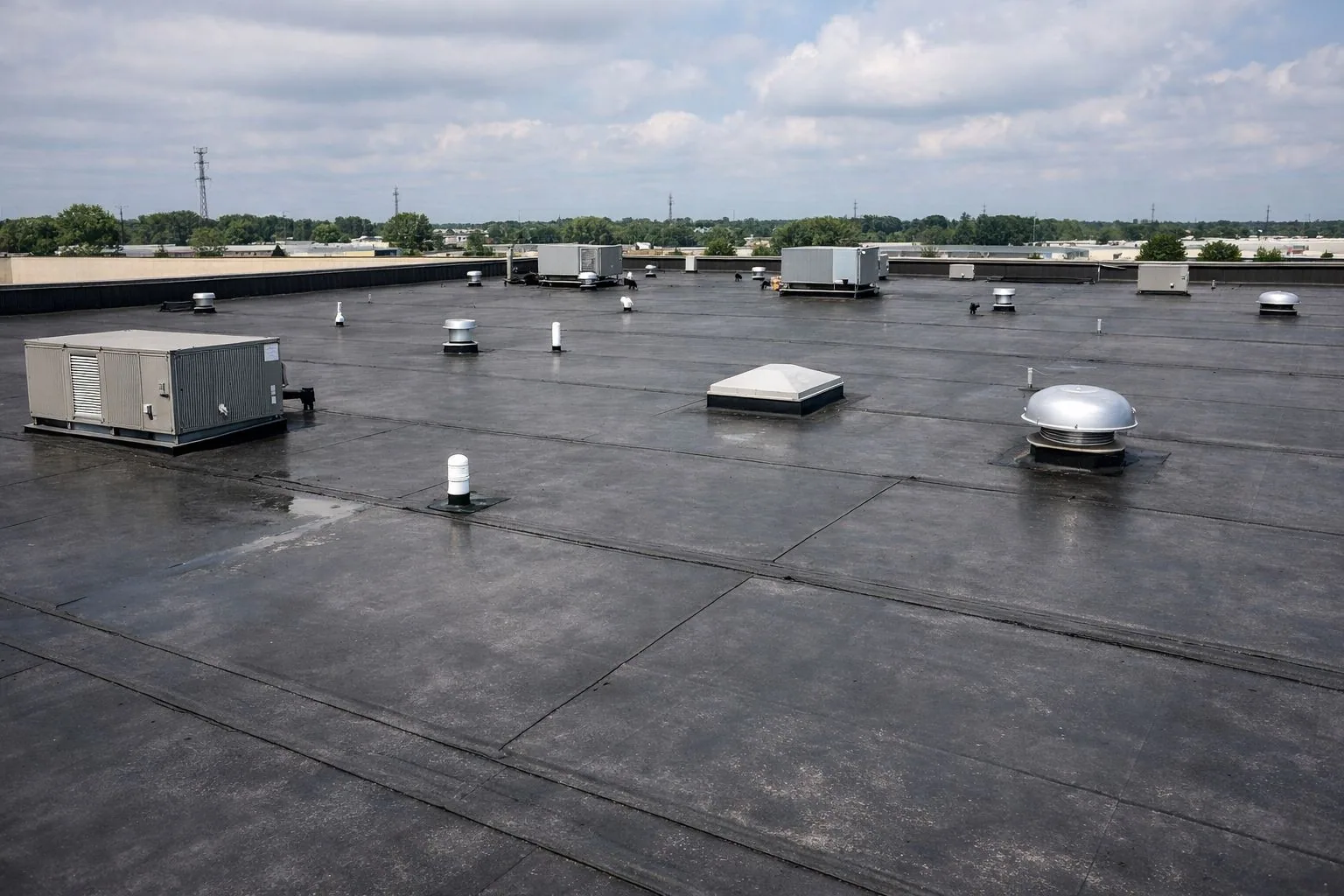
At a membrane joint, surface water can expose an open lap or degraded flashing. At a low area, the same ponding may call for drainage review rather than additional membrane patching. We separate those findings and explain which one affects the reported leak. The estimate can then show the repair quantity and any drain work as distinct items. Use a drainage scope review when an outlet or flow path is part of the issue, and identify the sequence that keeps the opening protected during work.
Edges and transitions in wind
Madison’s recorded Sandy gust keeps corners, metal edges, and membrane terminations on the regional inspection list after severe weather. We examine each detail and record the component, condition, and repair boundary. A loose coping cleat, lifted flashing, or failed lap has a different repair method. The report identifies which component is affected and where the boundary ends.
On a replacement project, edge metal and membrane termination need to work as one assembly. We verify what can be retained, what needs replacement, and how transitions will be closed at shift end. A perimeter-metal scope should state gauges or profiles only when the design calls for them, and should identify the substrate and attachment assumption. Photos before and after work give the property team a record of the edge condition and the repair completed. The repair plan also identifies who reviews field changes before the final tie-in is concealed.
Repair limits and capital choices
A localized repair is easier to defend when the surrounding membrane is stable and the supporting layers are dry. Where there are repeated failures, soft areas, or evidence of moisture below the roof surface, the recommendation may shift toward an opening, selective replacement, or a larger capital project. We state what was visible and what would need investigation. That keeps an unknown concealed condition from becoming an unsupported assumption in the bid.
Any recover option must account for the weight, attachment, drainage, and compatibility of the existing assembly. We compare that possibility with tear-off or replacement using the actual condition and sequencing constraints. A recover feasibility review can clarify whether an additional layer is appropriate. If the project proceeds in stages, identify the area, temporary protection, and inspection hold point for each stage so future work can connect to a known boundary.
Plan access, then preserve the result
Work on an occupied property requires a specific path for people, materials, and equipment. We coordinate lift dates, roof access, active rooftop units, delivery zones, and temporary protection with the general contractor. A manufacturing schedule may restrict noisy work, while a health or education building may require protected entrances and clear emergency access. The crew sequence should name these limits instead of relying on a general statement that the building remains open.
After the work, record the material installed, the repair detail, and any conditions left for a later phase. A scheduled maintenance inspection can revisit those areas and note new penetrations or service traffic. In New Haven, winter and coastal exposure make dated roof photos and closeout notes useful to the next reviewer. Keep the final scope, substitutions, and dated images in one project file. Keep the file organized by section and work date.
Questions Owners Ask
What information helps identify a Johns Manville roof?
Installation records, labels, seam style, flashing materials, and prior repair notes provide useful clues. We compare them with field conditions and identify any test or opening needed to confirm the layers.
Why does membrane type affect the repair estimate?
Welded seams, EPDM tapes, and asphaltic laps require different preparation and accessories. A clear estimate names the assembly and the repair method so quantities and labor can be compared fairly.
Will a new membrane solve recurring leaks?
Only if the cause is within the scope being replaced. We trace the reported path, review drains and penetrations, and note substrate or deck conditions that could continue to affect the roof.
What should be documented before phased roofing begins?
Mark the phase boundary, access route, temporary protection, hold points, and any roof sections that remain in service. The closeout file should connect those notes to photos and installed materials.