Holcim Elevate Roofing in New Haven, CT
Holcim Elevate Roofing
Review Holcim Elevate membrane options in New Haven, CT. Confirm the installed system, inspect drainage and securement, and compare repair phases.
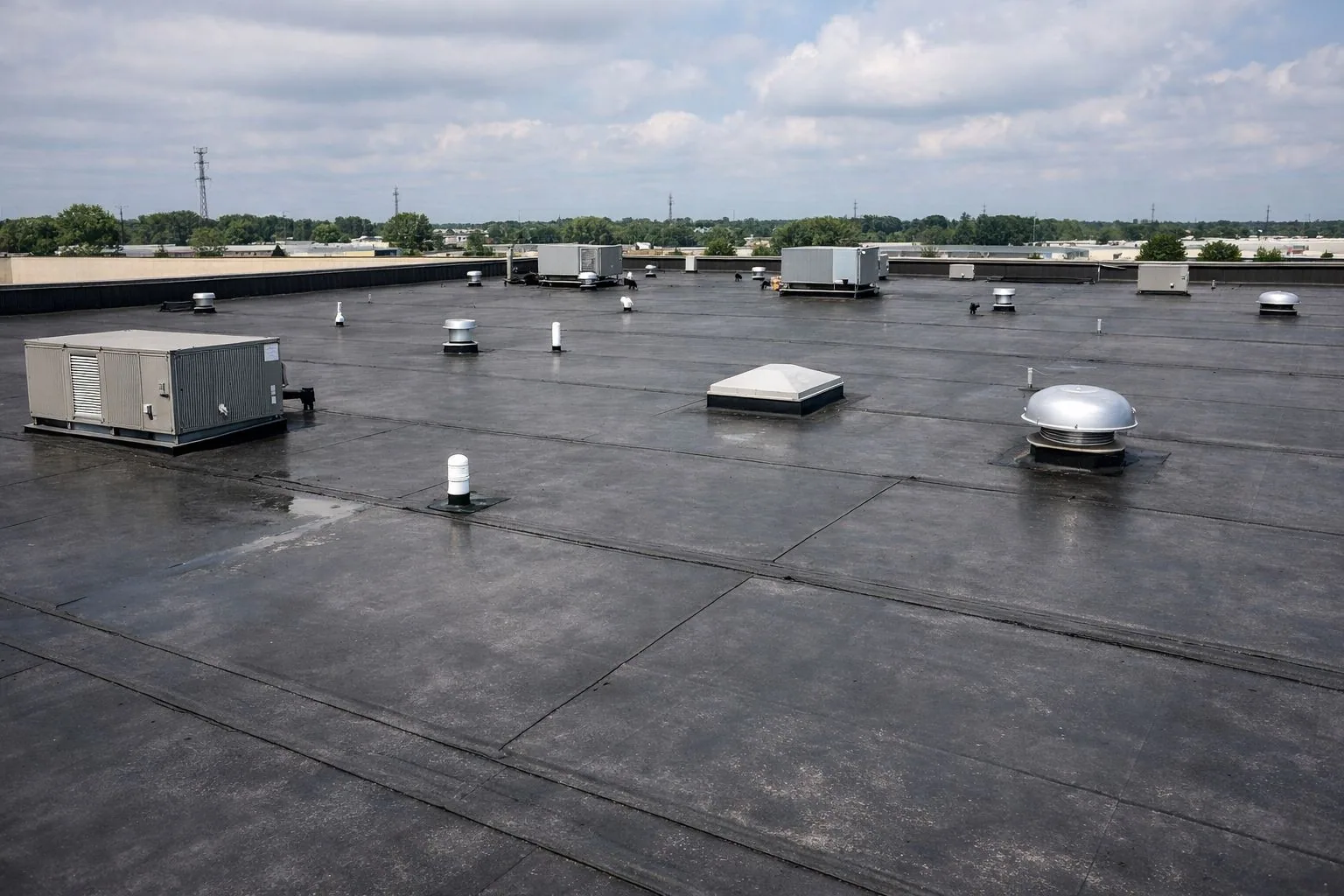
A Holcim Elevate roof file may refer to UltraPly TPO or RubberGard EPDM, two systems with different seam and flashing methods. New Haven’s repeated winter freezing makes drainage and low transitions useful items to record before a repair is designed. We identify the material at the building, review earlier work, and note which conditions are confirmed. That protects a general contractor from pricing an accessory or lap treatment for the wrong assembly. The city’s manufacturing, health, education, and office uses also bring varied access windows. Bring drawings and service history to a roof inspection, then compare the field findings with EPDM details or TPO seam requirements.
TPO and EPDM are not interchangeable
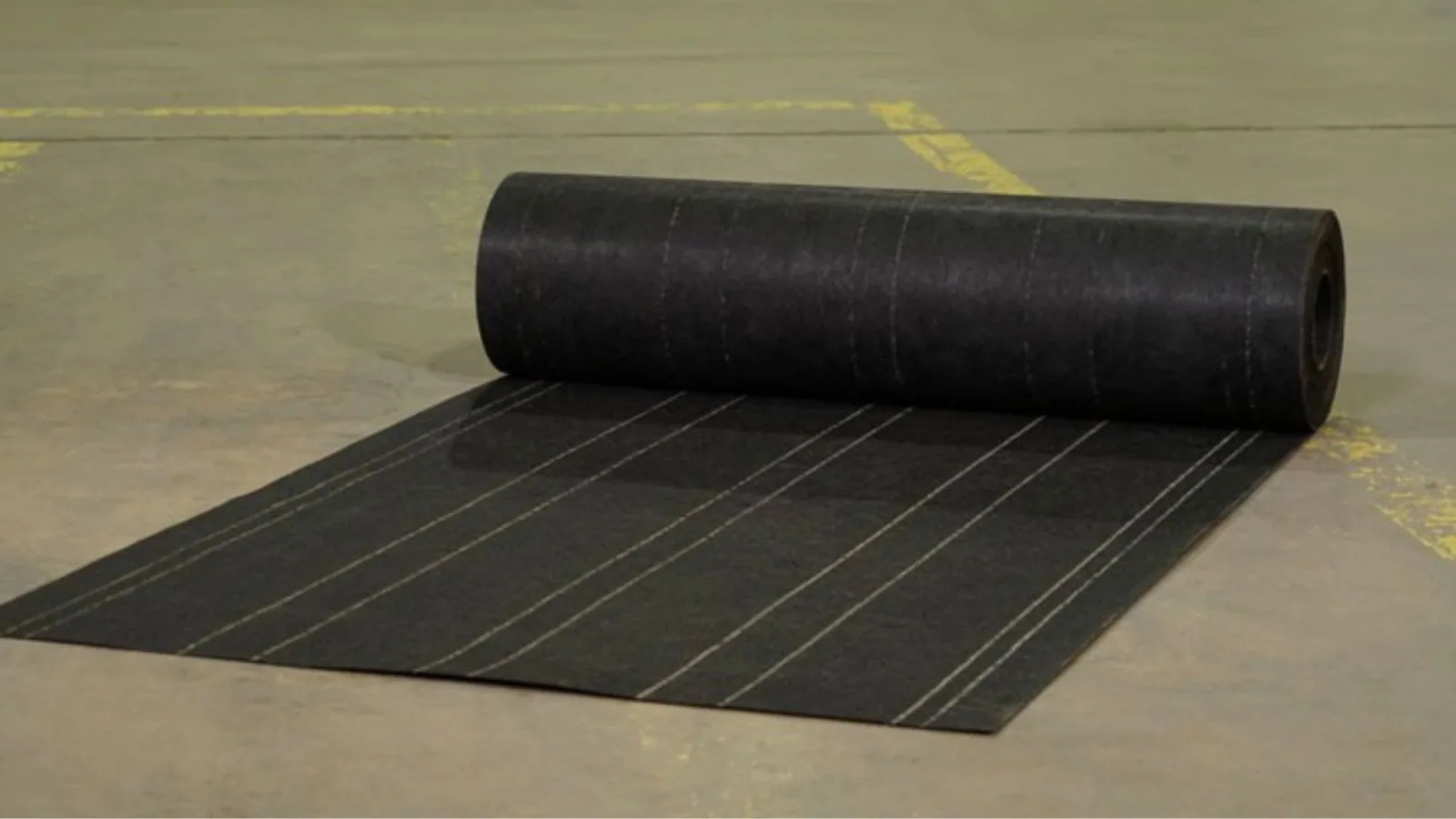
UltraPly TPO is a thermoplastic membrane with heat-welded laps. RubberGard EPDM is a synthetic rubber system whose seams and flashings rely on compatible primers, tapes, and accessories. The repair procedure follows the material already on the roof and the condition of its surface. We check installation records, visible seams, patches, and flashing details before recommending a product. If a section has been changed during earlier work, it may need a transition rather than a simple patch.
We inspect the deck, attachment, insulation, and moisture before matching a repair detail to a Holcim Elevate product. Those layers affect whether repair, recover, or removal is suitable. A comparison with Carlisle SynTec system families and GAF commercial membranes can be useful when the owner is weighing alternatives. Keep each comparison on the same roof section and include edge metal, drains, and rooftop penetrations, so the material choice is evaluated within a complete assembly rather than as a standalone sheet. If an installation record lists only a brand, confirm product and system details with closeout documents before ordering accessories or setting a repair method.
Record the condition under the surface
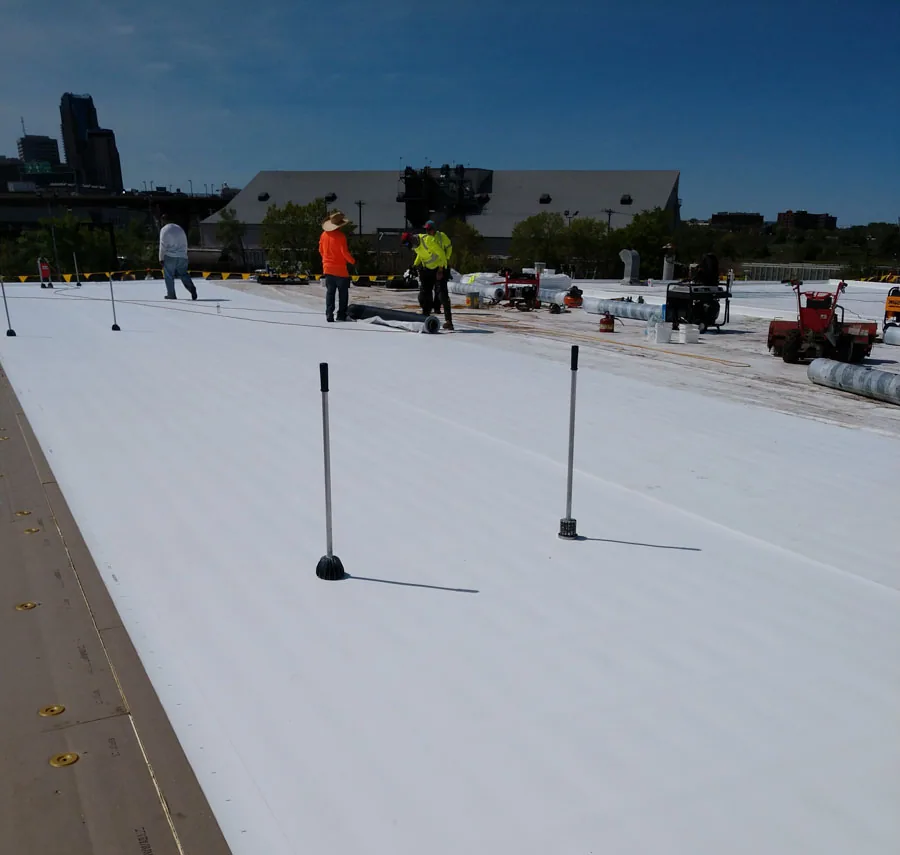
Surface wear can be visible while insulation and deck condition remain uncertain. We review leak history, prior core information, and repair notes, then inspect accessible seams and transitions. Softness, recurring moisture, or movement at a fastener line may call for an opening before a final quantity is established. The condition record identifies the area examined, photographs the details, and notes any limit on what could be confirmed without removal.
A localized EPDM seam issue and a broad TPO attachment concern lead to different work plans. We separate those findings in the estimate and explain whether the proposal includes only surface work or also underlying layers. A photo-backed roof condition report can preserve the inspected zone and open questions for a later phase. That record helps the GC compare a repair allowance with selective removal or a full replacement using similar assumptions. Include the date, roof section, and nearby detail in each image, then note which result would alter the proposed phase if a test opening finds moisture.
Follow runoff before selecting repair
New Haven’s normal includes more than one hundred nights each year at or below freezing. When runoff pauses at a seam or drain before temperatures drop, the area may cycle through freezing and thawing. We trace the drainage path and document standing water, debris, and outlet condition. New Haven records minimum temperatures at or below freezing on 102.3 days per year; we inspect drains and runoff before setting a product-specific repair scope. Current observations and roof records determine the scope.
Water can enter at a membrane defect while a nearby low point keeps the surface wet. Closing the defect does not remove the ponding condition. We list a compatible membrane repair separately from a drain correction, slope review, or scupper work. A drain and scupper evaluation can show whether the outlet remains clear and the path is open. The estimate should also describe how the open area stays watertight if work spans more than one shift.
Secure terminations at exposed edges
Madison experienced a severe wind gust during Sandy, evidence that strong coastal wind can affect New Haven County. Sandy produced an 85 mph gust in Madison. We inspect roof corners, perimeter bars, and membrane turns when wind exposure is part of the repair review. We inspect accessible corners, perimeter bars, metal edges, and membrane turns to see how the assembly is held at its boundary. At a termination, a gap or loose component can admit water even when the field looks intact. Photos should include the defect and enough surrounding roof to identify its location.
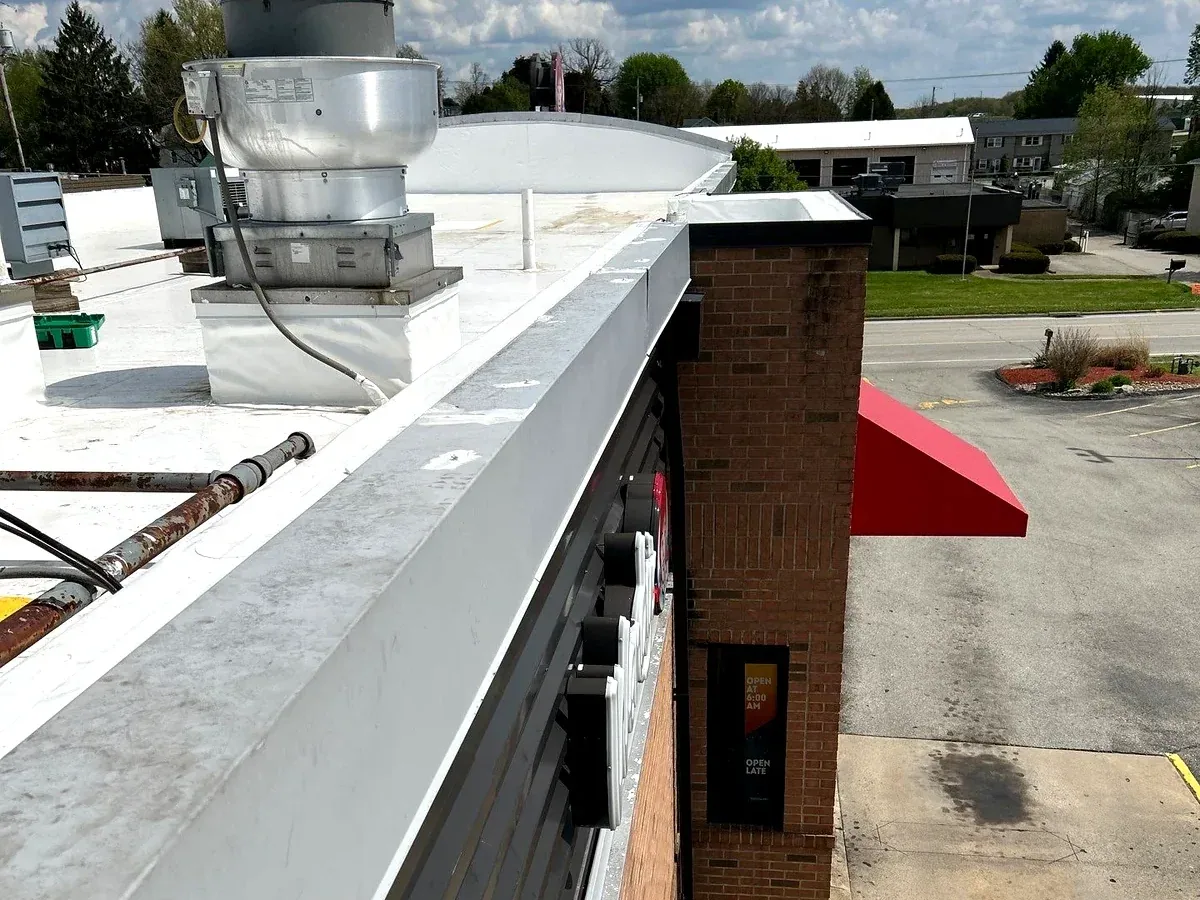
Holcim Elevate flashings and accessories must suit the membrane chemistry and detail. We document whether the existing metal can remain, where attachment needs correction, and whether curb work intersects the repair. On a replacement, a coping and gutter scope should coordinate the roof edge with the membrane termination. This is especially useful where multiple trades touch the parapet or drainage system, because sequencing must preserve a continuous water path at closeout.
Keep access and phasing explicit
A roofing phase on an active property needs a defined material route, staging area, and temporary protection plan. We coordinate rooftop equipment, lift access, occupied areas, and other work with the general contractor. A service building may need clear access to mechanical units; a production space may have a narrow shutdown window. The local economy includes both types of use, but only the property team can confirm its daily operating limits.
Set inspection hold points before insulation or flashing becomes concealed. The daily plan should state where the crew will stop, how the roof will be sealed for weather, and who receives a closeout photo. An occupied-roof phasing plan can separate noisy tasks, delivery lifts, and other trades. If the roof has more than one membrane section, mark the boundaries so crews stage the right materials and close each detail with the matching accessory.
Compare equal work scopes
Before choosing a proposal, check whether each bid includes tear-off, insulation, cover board, fasteners, flashing, edge metal, disposal, testing, and temporary dry-in. A lower figure may reflect a smaller work boundary or a different assumption about substrate condition. We align quantities with the inspection record and flag allowances that could change once the roof is opened. If procurement timing affects a phase, identify the material and expected delivery before setting a mobilization date. Confirm who supplies temporary protection and who records the daily condition when a roof area remains open overnight.
Keep the selected membrane family and repair history with the final photos. Later service work can then use the appropriate primer, tape, weld settings, or flashing accessory. A maintenance visit can document debris, foot traffic, and new penetrations before they complicate future repairs. For a property in the New Haven service area, roof records identify which areas need attention and when; field observations set the work boundary.
Questions Owners Ask
How do UltraPly TPO and RubberGard EPDM repairs differ?
TPO repairs use compatible thermoplastic material and a prepared heat weld; EPDM work uses system-matched primers, tapes, or adhesives. We identify the installed membrane before pricing the detail.
Should the roof be tested before replacement?
Testing can help where the available records do not establish moisture or attachment conditions. We identify the question the test will answer and use its result to adjust the scope.
Does a manufacturer name confirm warranty coverage?
No. Coverage depends on the actual project documents, system details, and applicable terms. We review records provided for the building and define roofing work from observed conditions.
How can repairs be phased without leaving an opening?
The sequence sets a daily stop line, temporary dry-in method, and inspection before covering. We coordinate that plan with access, forecast conditions, and other trades.