
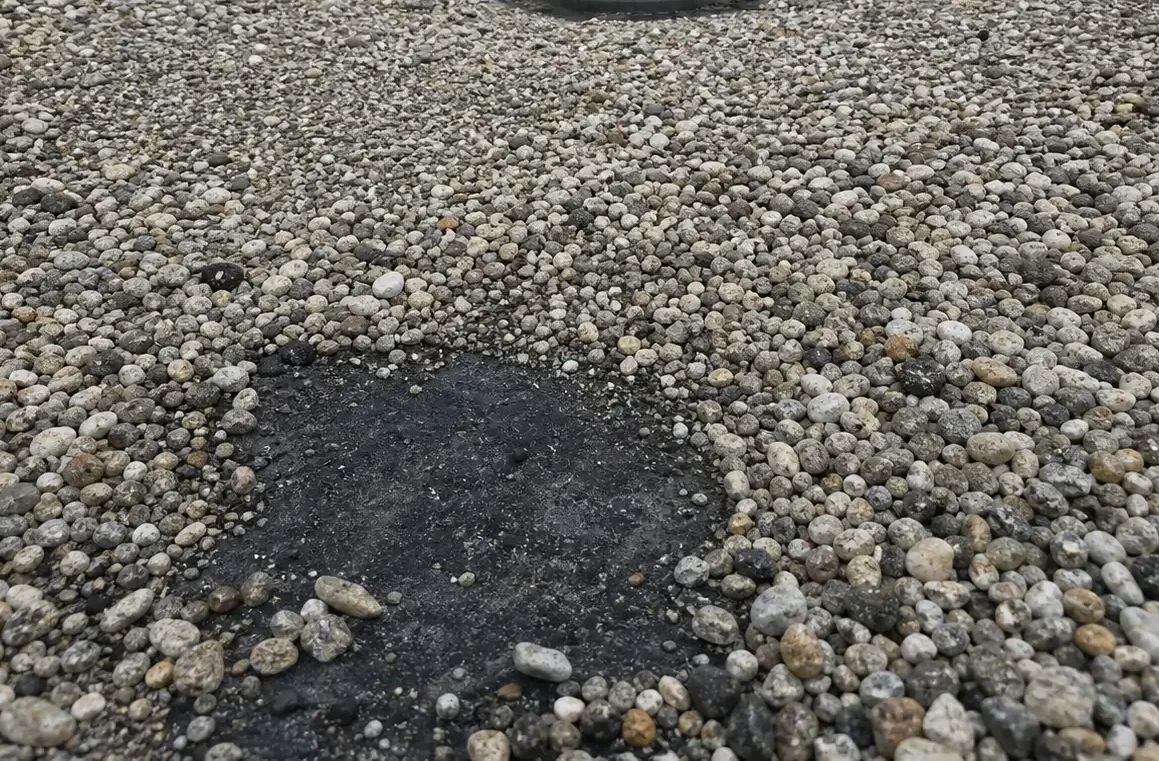
Commercial Snow and Ice Roof Damage Repair in New Haven, CT
Commercial Snow and Ice Roof Damage Repair
Repair snow and ice damage on New Haven commercial roofs by checking drains, edges, membrane movement, and safe removal limits before work begins.
The New Haven 1991 to 2020 climate normal counts 102.3 days with overnight minima at freezing or lower; we schedule drain work and winter access around that seasonal pattern. Snow and ice can hold water against edges, load a roof unevenly, or hide a damaged detail. We inspect safely, record what is visible, and separate immediate protection from repair decisions that need a closer look.
Wallingford's commercial mix includes manufacturing in metals, plastics, and hardware, while Hamden includes fabricated metal, cable, concrete equipment, and business services. These local uses add context for roof access and equipment coordination, but they do not establish a specific snow-load condition or roof design.
Set safe inspection limits
Snow-covered roofs can conceal drains, skylights, weak deck areas, and existing openings. We confirm safe access and any restrictions with the facility team before sending personnel onto the roof. When a roof walk is unsafe, we photograph visible conditions from an approved vantage, mark the hidden zones on the roof plan, and schedule a closer check when access is safe.
Snow removal is not automatically the first step. The owner and qualified structural professionals assess any load concern, while we identify roofing details that may need protection or repair. A condition inspection can record accessible areas. We also trace meltwater toward drains and scuppers, since blocked outlets can leave water at seams after the snow clears.
Before work is scheduled, we ask whether snow has drifted against parapets, gathered behind rooftop equipment, or collected in a lower roof bay. Those patterns guide what can be checked from safe positions and which areas need engineering review. A clear roof plan helps identify drains, expansion joints, curbs, and access paths that may disappear under a uniform cover. We record the limits of each observation so a hidden area is not treated as a confirmed defect or as proof that no damage exists.
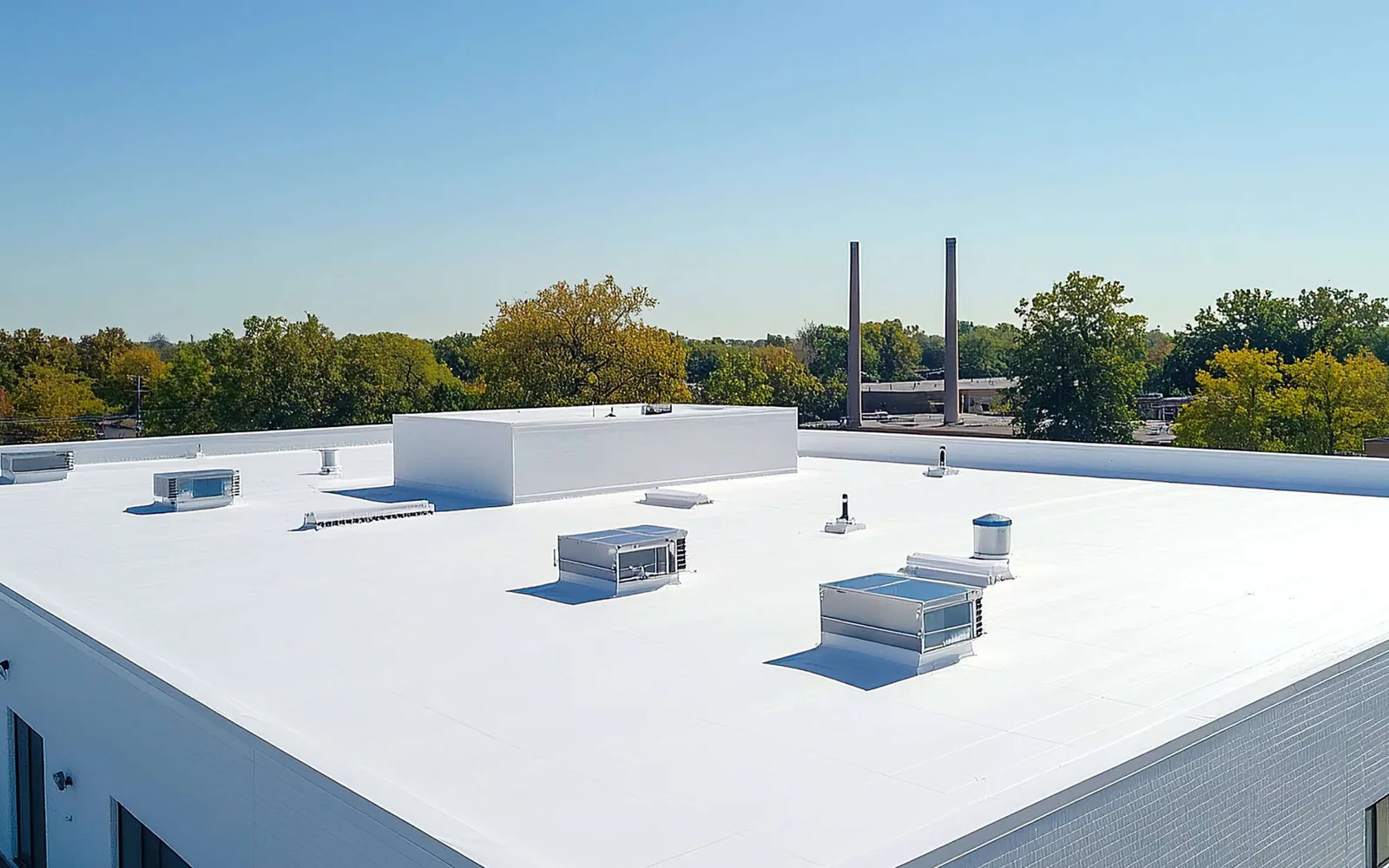
Track meltwater and drainage
Melting snow can send water toward drains, scuppers, gutters, and low transitions. If an outlet is blocked by ice or debris, water may back up against a seam or parapet. We inspect the discharge path when conditions permit and record any ponding, overflow, or membrane stress rather than assuming that every winter leak began at the roof edge.
Freeze-thaw cycles can move water through a small opening and then leave it hidden as temperatures change. We compare interior reports with the roof layout and photograph the likely path. A ponding-water review can distinguish drainage from a membrane defect, while a drain assessment can address a confirmed outlet problem.
Interior staining may appear after thaw, so discovery can lag behind the entry of water. We compare room locations and reported temperature changes with the roof drainage map. Water near a column or wall can travel through insulation or along deck before becoming visible below. When several rooms report moisture, we look for a shared roof zone or outlet path instead of assigning each ceiling mark a separate patch. This helps define which areas need testing after the surface is accessible and what can be protected in the meantime.
Inspect ice at edges and transitions
Ice near an eave, parapet, or wall can signal a drainage or insulation question, but it does not by itself establish an ice dam or roof failure. We check the membrane termination, coping, flashing, and visible water route. If interior heat loss or ventilation may contribute, the facility team can coordinate a building-envelope or mechanical review alongside roofing work.
New Haven's seasonal freezing is a reason to review these details before repeated cycles worsen a small opening. We note any split flashing, lifted membrane, or displaced edge metal that is actually present. A flashing repair may address a confirmed transition. At an edge, we also check whether water exits at a scupper or travels toward a lower section, since visible ice may be downstream from the opening that admitted it.
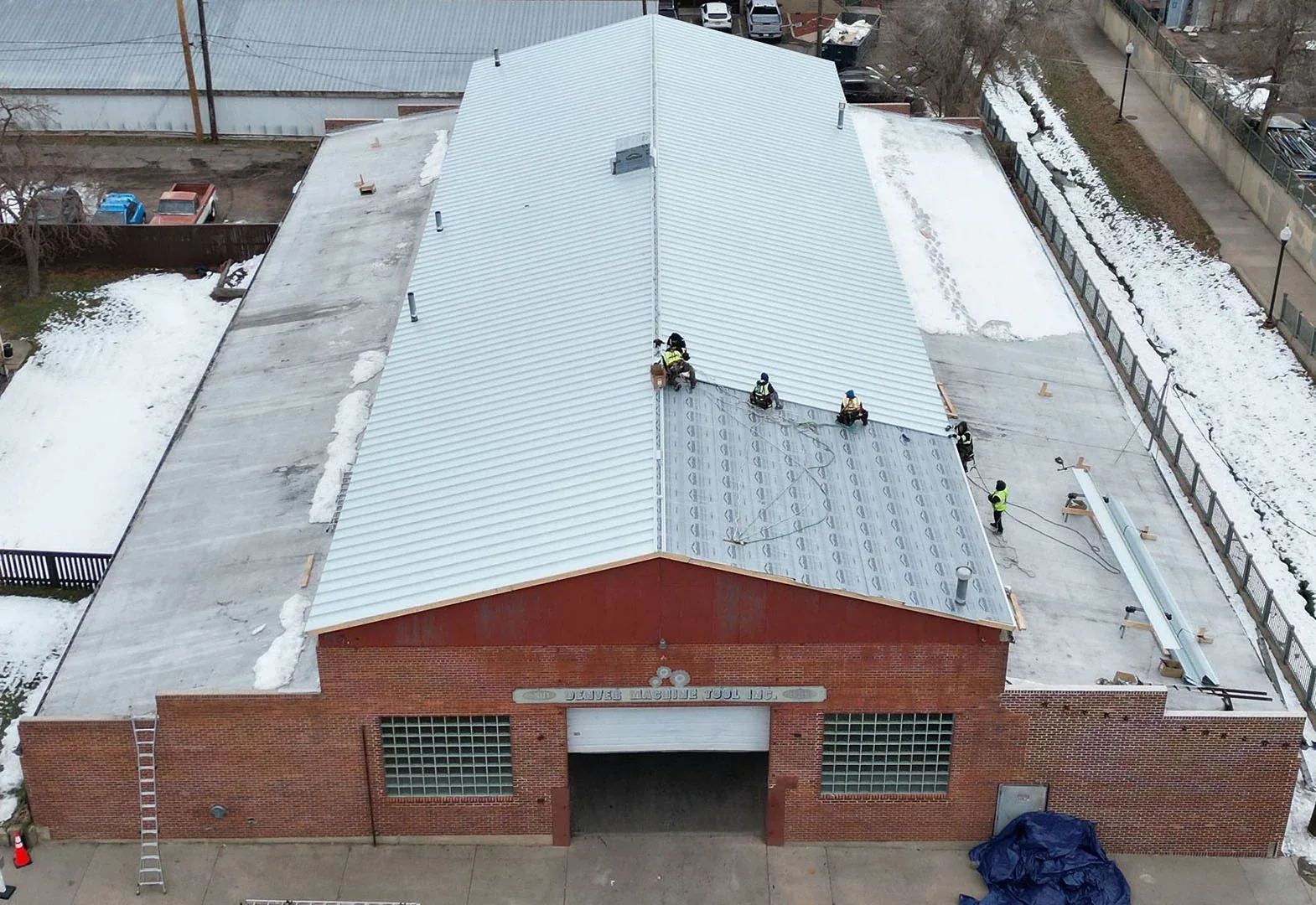
Repair damage after conditions clear
Once the roof is safe to reach, we identify whether damage affects only a surface detail or extends into insulation and deck. Repair methods follow the system: membrane patches need compatible material and preparation, and metal work may require panel, fastener, or edge replacement. The proposal records each roof zone and any interior work that remains outside the roofing scope.
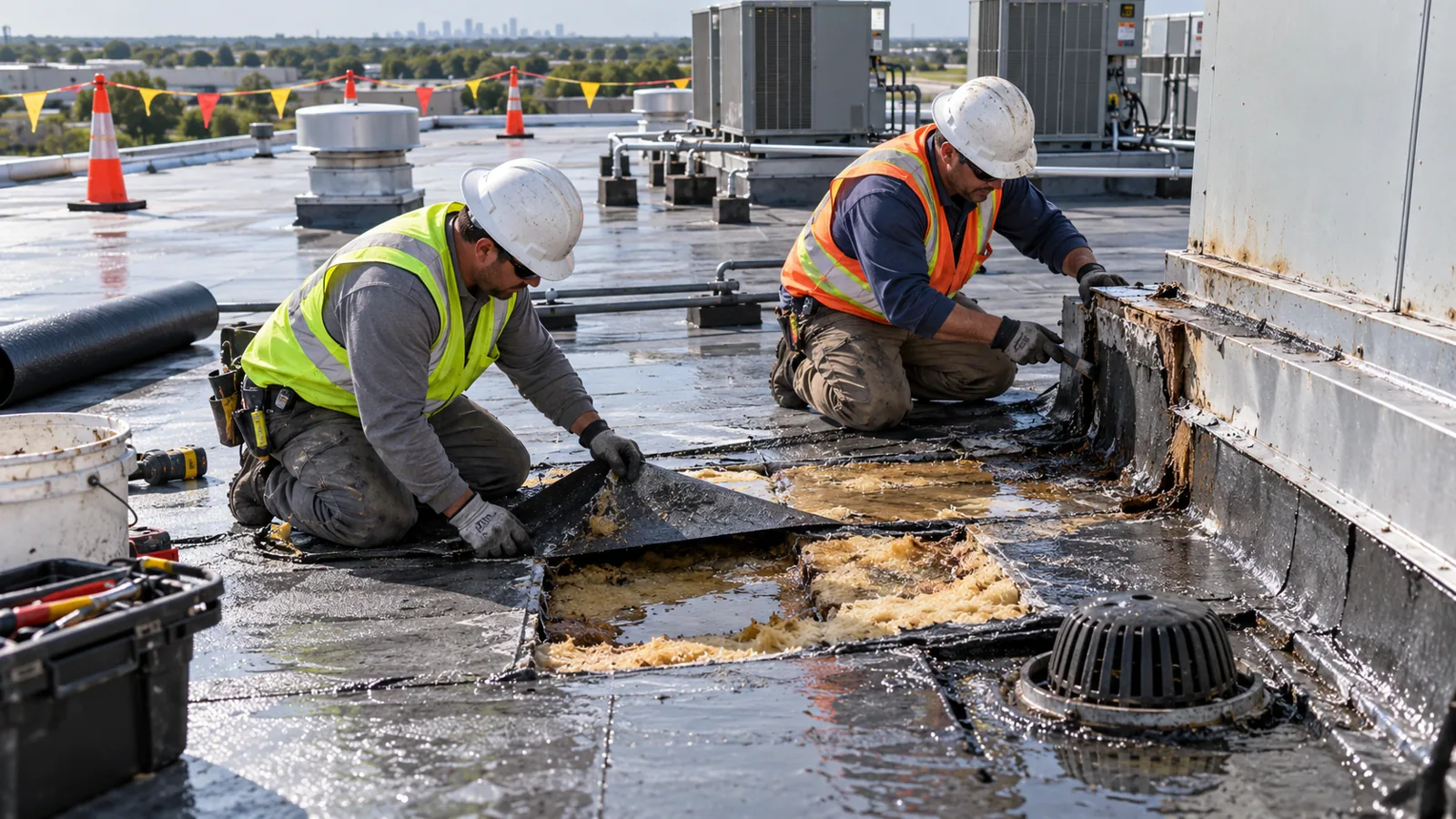
If water entered during thaw, we identify where testing is needed before closing the assembly. A moisture survey can help locate areas for confirmation, while a membrane puncture repair handles a confirmed cut or opening. The resulting scope should state what material is removed, replaced, or left for monitoring.
Temporary protection may be needed if an opening remains while snow or ice is present. We select a method that does not trap water or overload the affected area, then record its limits and return timing. If a repair cannot proceed safely, the report explains the access condition that must change first.
Access can involve lifts, roof hatches, walkway pads, or snow-clear routes approved by the facility. We identify any area that must remain free for emergency egress and coordinate staging with the site contact. That planning can affect labor and schedule even when the damaged roof area itself is small.
Cold-weather work also changes how a repair is prepared and checked. We verify that the surface is dry enough for the selected material, that temporary covers will remain secure, and that a permanent patch can be completed without sealing moisture into the assembly. The work record should identify the repaired location, the material used, and any follow-up observation needed after a thaw. If the roof cannot accept a durable repair during the current weather window, we explain what protection is in place and when the area should be revisited.
Determine whether repair or broader work fits
An isolated leak at a sound roof can often be repaired after the area is cleared and dry enough for compatible installation. Repeated winter leaks, wet insulation across a larger zone, or deteriorated drainage may call for a broader restoration or replacement review. We compare current findings with repair history and state what evidence would change the recommendation.
A recover assessment or replacement proposal can account for edge details, insulation, drainage, and seasonal staging. Wallingford roof work can involve delivery planning for the area's manufacturing activity, while Hamden's industrial uses also make access coordination relevant. We confirm routes and staging at each property. Bring snow-season leak notes, photographs, roof plans, and maintenance records for a documented scope review.
Questions Owners Ask
Should snow be removed before a roofer inspects the roof?
We first confirm safe access and who is authorized to assess loading. Snow can conceal outlets and openings, so removal is coordinated rather than assumed. We inspect only when the route is safe and document areas that remain hidden.
Can ice at an edge confirm an ice dam?
Ice is a clue to review drainage, insulation, and the roof-to-wall transition, but it does not identify the cause by itself. We look for the water route and any membrane or flashing damage. If interior conditions may contribute, another building-envelope review can be coordinated.
How do you investigate a winter leak?
We compare the reported room with roof drains, low points, seams, curbs, and previous repairs. Thaw water may travel below the surface before appearing indoors. The report shows confirmed defects and notes testing required where snow or concealed layers limit inspection.
Can a roof be repaired in freezing weather?
The repair method and material requirements determine the safe window. We check surface, moisture, temperature, and access before installation. If conditions prevent a permanent repair, temporary protection is recorded and a return visit is planned for suitable weather.
When does winter roof damage require replacement planning?
Repeated leaks, moisture across several areas, or an assembly that cannot be repaired safely may broaden the decision. We inspect the roof after access is available and compare its condition with prior repair records. The recommendation follows the evidence, not the season alone.