
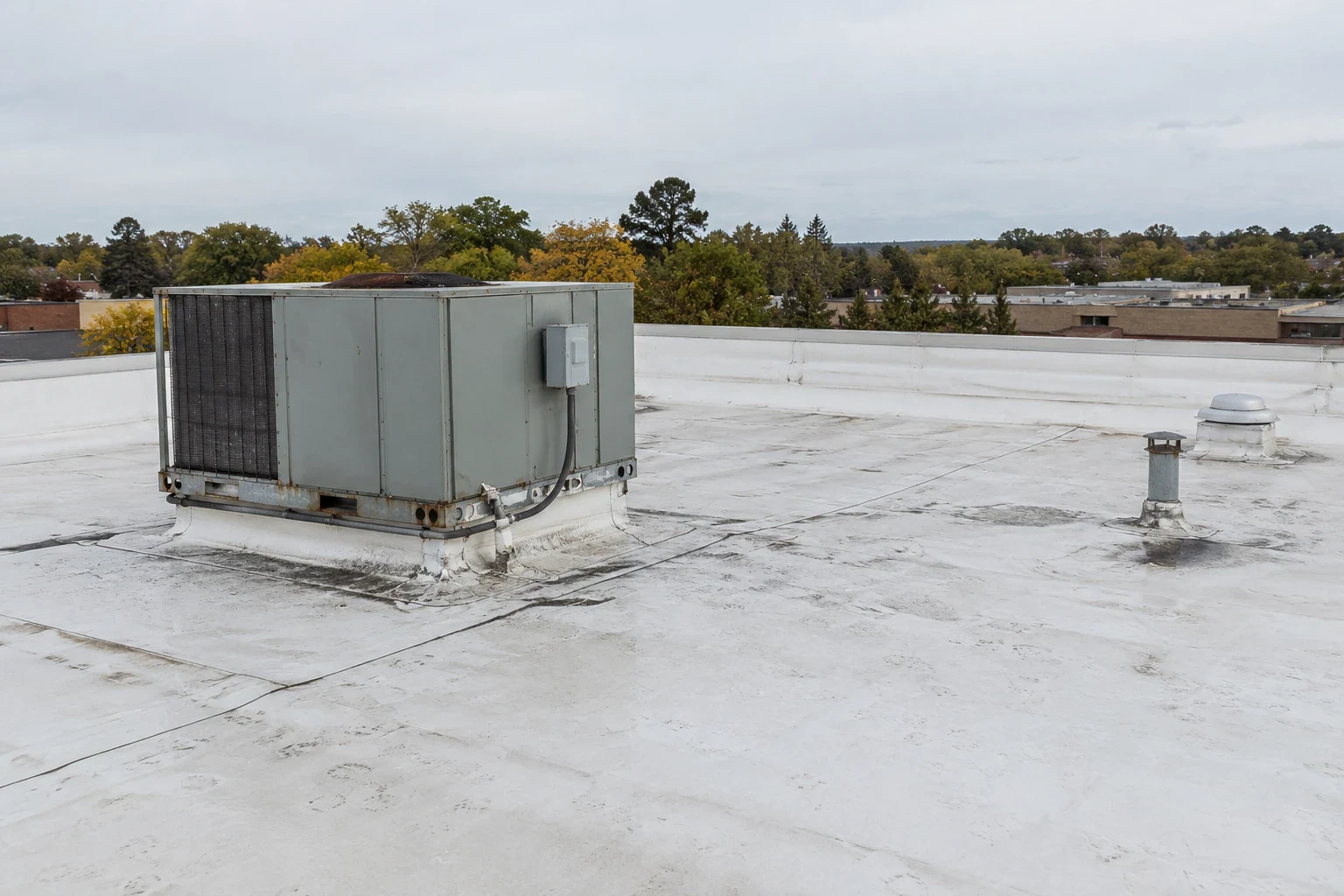
Cool Roof Installation in New Haven, CT
Cool Roof Installation
Compare reflective roofing options in New Haven by reviewing existing conditions, drainage, membrane choice, access, and how the roof handles seasonal heat.
July’s mean temperature in New Haven is about 74 degrees, a useful point of reference when reviewing summer roof exposure. A reflective finish can reduce solar gain at the roof surface, yet the assembly below and its condition still govern the installation scope. We examine drainage, membrane, insulation, and transitions before comparing a cool-roof installation with restoration or replacement.
Health, education, manufacturing, and business services make up part of the local commercial mix. Rooftop changes may need to fit occupied spaces, equipment access, and operating schedules. The proposal connects roof performance goals with preparation, material selection, and the work sequence so the general contractor can review both system fit and project timing.
Reflectance beside roof condition
A reflective surface is one part of a complete roof assembly. We inspect the existing membrane, seams, flashings, insulation, and drainage to determine what can remain and what must be corrected first. A bright finish over wet insulation or an open termination does not resolve that underlying condition. The evaluation separates the surface choice from the repairs that make installation viable.
Roof color, material, slope, rooftop equipment, and exposure affect the system comparison. We review product requirements, substrate compatibility, and how the proposed work connects to walls, curbs, and edges. A roof condition examination can establish the baseline, while a moisture survey may help when the record does not clarify whether insulation can remain.
In Branford, manufacturing, bioscience, healthcare, and retail contribute to commercial activity. Those varied uses may place different operating limits on roof work, but they do not determine a property’s roof assembly. We use the building’s own observations, drawings, and access rules to set the installation plan.
Choosing a reflective system
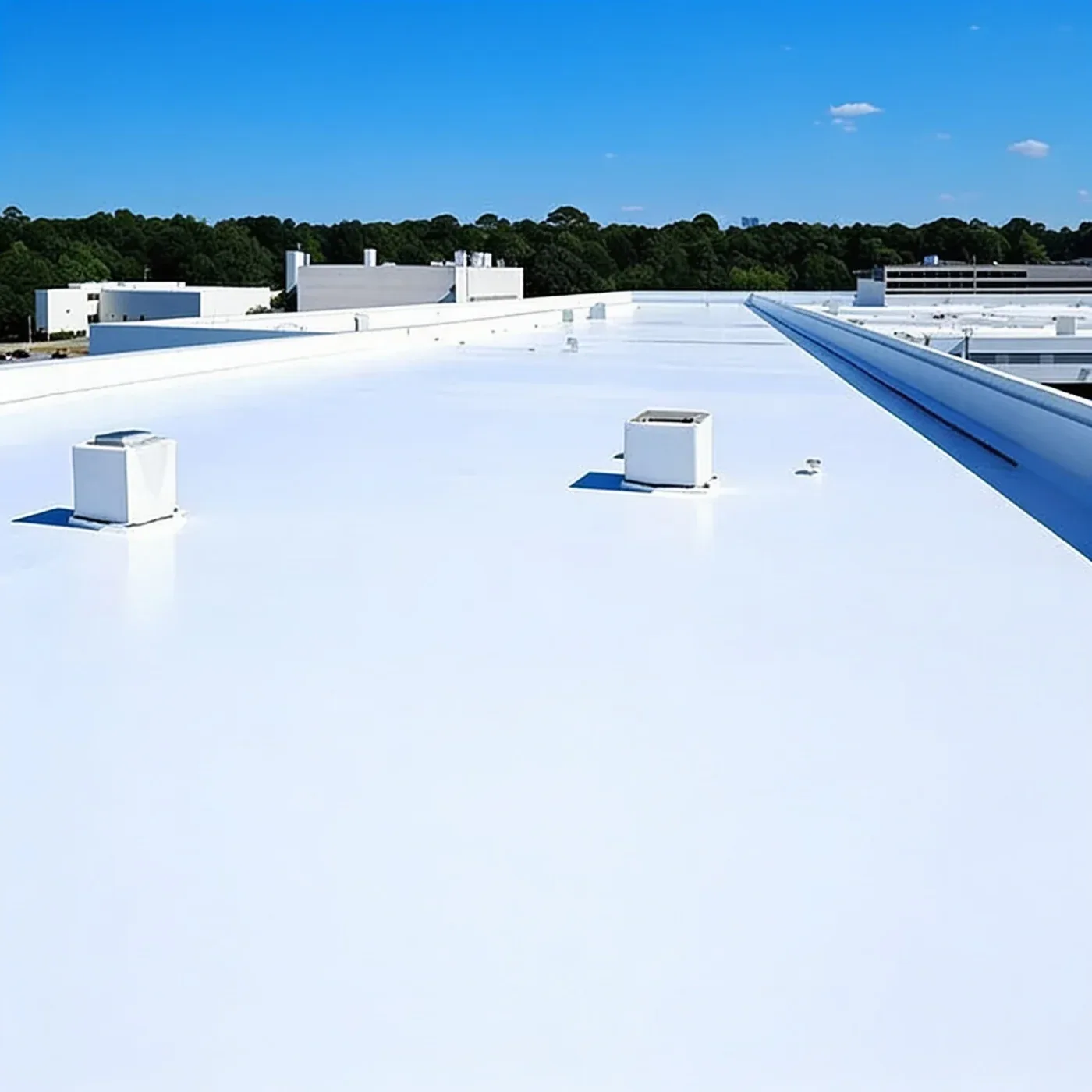
Some roofs can use a reflective membrane as the primary weathering layer; others may qualify for a compatible coating restoration. We compare the existing surface, repair history, adhesion requirements, and likely maintenance needs before naming an approach. A coating candidate must have a suitable substrate and corrected details. A new membrane scope may be preferable when the current assembly has broader defects or moisture.
New Haven’s seasonal cycle combines summer warmth with winter freezing. The system must perform at seams and transitions across both conditions. We review edge restraint, flashing height, drain details, and attachment alongside the field material, because reflective performance does not replace sound perimeter construction.
A silicone coating system or acrylic coating system can be compared where surface and drainage conditions support restoration. For a new membrane, we review assembly options in relation to substrate and project requirements rather than selecting from color alone. The bid states preparation, repairs, coverage, and closeout requirements.
Heat load and building use
Lower surface temperature can be relevant to roof heat gain, but whole-building energy use depends on insulation, air movement, equipment efficiency, controls, and occupancy. We avoid promising a fixed utility reduction from roof color alone. The project team can compare existing energy observations, planned insulation work, and the selected roof assembly when evaluating expected performance. Surface reflectance and thermal resistance solve related but separate problems. Reflectance affects solar energy reaching the roof surface; insulation slows heat transfer through the assembly. If an owner wants to address both, we list the membrane or coating and insulation changes separately, then check parapets, curbs, and perimeter heights against the revised build-up. That keeps a surface choice distinct from an insulation upgrade.
For office or production areas, rooftop equipment and service access can interrupt the reflective field if curbs and penetrations are left unresolved. We coordinate mechanical work and define the membrane tie-ins before installation. Where the roof needs additional thermal layers, an insulation and cover-board scope can be compared with the reflective surface proposal.
A roof with recurring wear may instead need an assessment of coating restoration or broader replacement. We set the repair threshold using observed conditions, then tie the option to the owner’s capital timing. The recommendation should identify which performance goal the system addresses and which roof conditions remain outside that goal.
Preparation, weather, and access
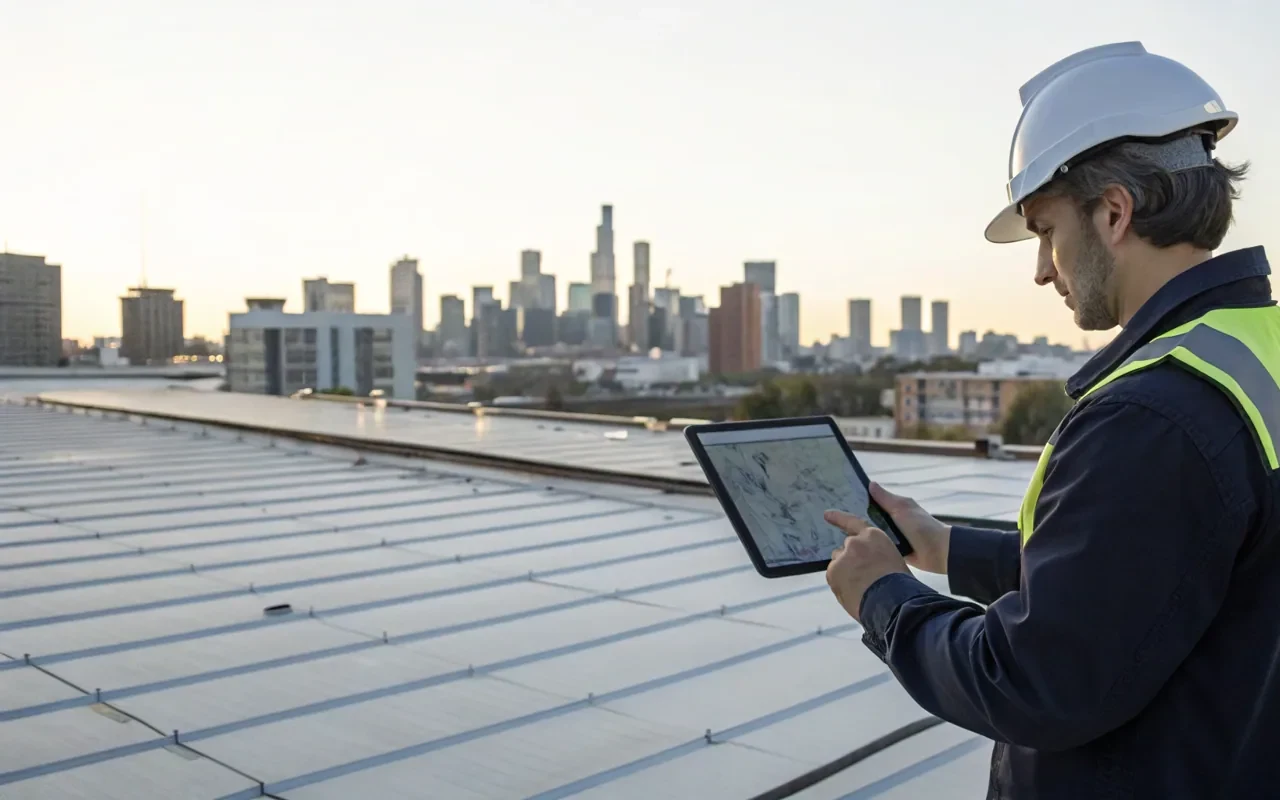
Installation quality starts with surface preparation and dry, stable substrate. We specify cleaning, removal of loose material, seam repair, flashing correction, and primer requirements before the reflective layer is applied. The work area is divided so the crew can complete and protect each section within the planned shift. Forecast changes and curing requirements affect the sequence.
Occupied properties need controls for noise, deliveries, staging, and rooftop service calls. We align these with the building operator and general contractor before materials arrive. In Hamden, computer products, cable, concrete equipment, and fabricated metals are part of the commercial mix; nearby properties may have distinct equipment schedules and access routes, so we document the actual operating constraints.
Emergency response remains available day and night, including holidays, if active water entry requires immediate stabilization while a planned installation is underway. Temporary protection is recorded separately. Once the permanent work proceeds, we close each transition, maintain drainage, and photograph completed details before moving to the next area.
A bid that explains the whole assembly
Cool-roof bids should show the same roof areas and assumptions. We identify removal limits, insulation, cover board, reflective membrane or coating, edge details, drain work, equipment transitions, temporary protection, and disposal. Any excluded component should be visible so the owner can compare cost drivers without mistaking a different scope for a material discount.
For properties across New Haven and Branford, capital plans can compare repair, restoration, and replacement while preserving each roof’s condition record. A capital planning review can map those options to phased budgets. The exact assembly remains a building-specific decision based on examination and project constraints.
Bring roof history, reports, energy observations, bid scopes, and access requirements to a reflective roof scope review. We can compare the proposed system with drainage, insulation, and operating demands before the schedule and approvals are set.

Questions Owners Ask
Does a reflective roof automatically lower energy bills?
No fixed savings follow from roof color alone. Insulation, equipment, building controls, and occupancy all affect energy use. We can define the roof assembly and compare it with available building observations, while avoiding a utility claim that the roof scope cannot support.
Can an existing roof be coated to make it reflective?
A coating may suit a sound, compatible surface after cleaning and repairs. We check moisture, adhesion, drainage, flashing, and edge condition before setting that option. If the assembly has broader defects, a new membrane or replacement scope may be more appropriate.
What does New Haven’s summer climate mean for roof selection?
The local July temperature normal provides seasonal context for evaluating surface exposure, while winter freeze-thaw conditions remain part of the same assembly review. We compare the selected system across both seasons and document which details require attention. Actual energy performance depends on the whole building.
Can reflective roofing be installed around active equipment?
The work can be sequenced by area when access, service clearances, and temporary protection are coordinated. We identify equipment shutdowns, roof penetrations, delivery routes, and daily closure points with the general contractor. Each curb and flashing transition is included or listed as a separate trade item.
What should be included in a cool-roof comparison?
Compare substrate preparation, insulation, membrane or coating type, repairs, drains, perimeter details, equipment tie-ins, access, and closeout. We also state exclusions and weather assumptions. This makes the reflective layer one part of a comparable assembly rather than the entire bid description.