
Commercial Roof Insulation and Cover Board in New Haven, CT
Commercial Roof Insulation and Cover Board
Plan New Haven roof insulation and cover-board work around moisture, slope, membrane attachment, transitions, and the operating needs of the building.
New Haven’s winter temperature cycle makes the insulation layer part of the roof condition review, not a hidden assumption in a membrane bid. We examine moisture, slope, attachment, and transitions before recommending added insulation or cover board. That record shows the general contractor whether the work belongs in a repair, recover, or replacement package.
Health, education, manufacturing, and business services are part of the city’s commercial mix. A roof assembly above occupied rooms, equipment, or production space needs a sequence that protects operations while layers are opened. We identify access limits, daily tie-ins, and the details that could change the finished elevation before installation begins.
What the insulation layer tells us
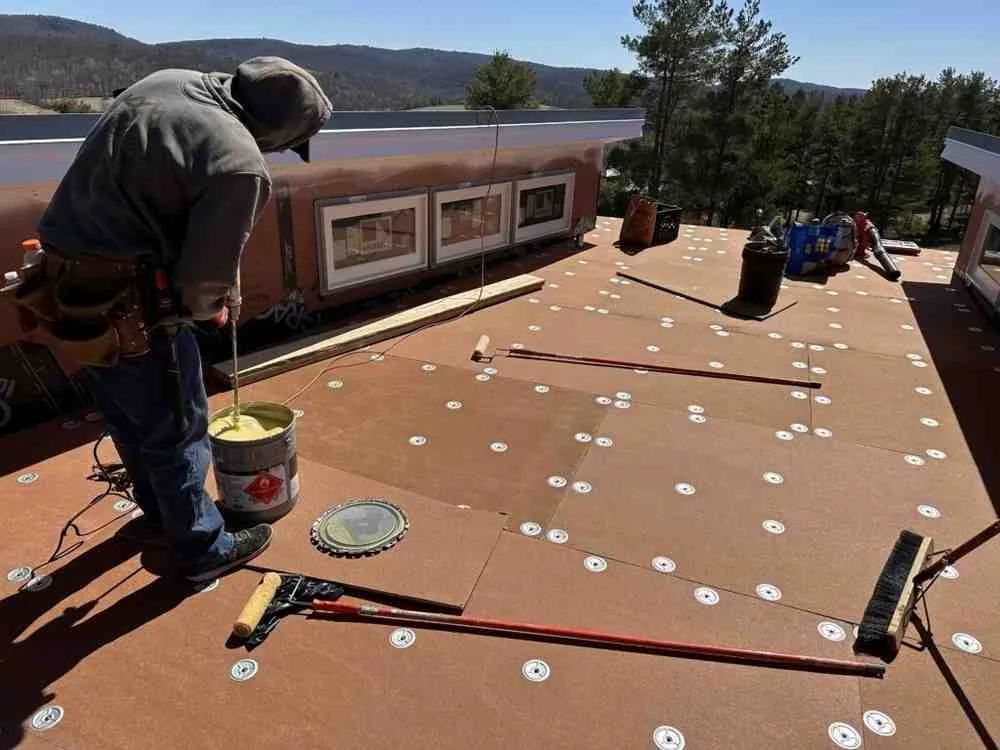
Roof insulation influences thermal performance, slope, membrane support, and the way water reaches drains. Cover board creates a firm surface above insulation and can help protect the membrane from traffic or other impacts. The appropriate assembly depends on deck condition, existing layers, attachment, rooftop equipment, and the roof system selected for the project.
We review available drawings and roof history, then inspect exposed or accessible areas for wet insulation, compression, movement, and uneven transitions. Infrared readings may help locate suspect areas, but they require interpretation alongside roof openings, moisture history, and visible conditions. A moisture survey can support the examination when it answers a specific scope question. The report distinguishes observed damage from areas that still need confirmation.
In East Haven, wholesale distribution, warehousing, electronic components, castings, and welding are among the commercial activities. We confirm insulation layout and equipment interfaces from available plans and field inspection before setting quantities. We document the actual deck, assembly, and operating constraints before setting replacement quantities. Hamden’s computer, cable, concrete, and metalworking uses form another part of the regional building mix, with each roof requiring its own measurement and transition plan.
Wet layers and the repair line
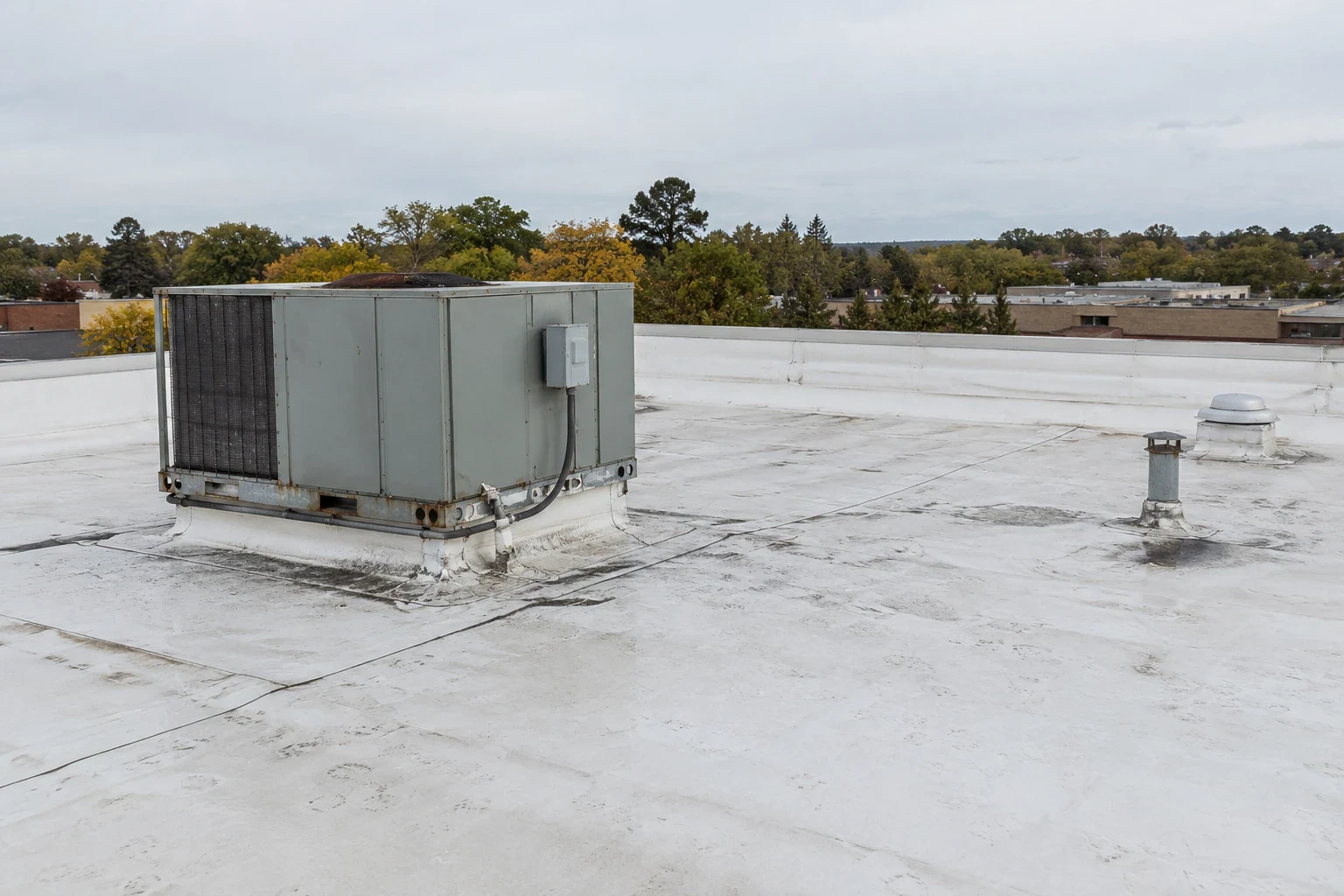
Adding insulation over trapped moisture can leave the underlying cause in place. We compare moisture findings with membrane seams, drains, penetrations, and prior repairs to locate a likely water path. Where confirmation requires a test cut, we define its position and restoration method with the project team before opening the roof.
Dry, stable sections may remain while wet or damaged areas are removed, if the assembly and applicable requirements allow that boundary. We photograph each opening, record layer condition, and identify where the new work will tie to existing materials. The scope should state whether insulation replacement, cover board, membrane repair, and flashing adjustments are included or carried as separate items.
A localized roof repair can address a limited failed area. More extensive wet material or inconsistent attachment may shift the decision toward a replacement scope. A recover option is considered only after the existing layers and moisture condition are understood, not as a way to conceal a problem that remains active.
Tapered layouts and drainage
Tapered insulation can direct water toward drains or scuppers, but the layout must account for existing roof elevations. We map the high and low points, outlets, curbs, door thresholds, and equipment supports before finalizing thicknesses. A slope adjustment that creates a conflict at an edge or curb can complicate flashing and should be resolved in the drawings.
New Haven’s winter includes repeated freezing overnight and periods of all-day freezing. Water at a low area can freeze against roof details and make drainage correction more urgent before winter. We compare the intended flow path with the existing outlet locations and identify whether drain work belongs in the same package. A drainage correction review can coordinate tapered design with sump and scupper conditions.
Cover board selection also depends on attachment and the membrane above it. We specify board type and fastening or adhesive assumptions with the selected roof system. For a TPO assembly or modified-bitumen assembly, the project team should compare the full layer sequence, including transitions and perimeter details.
Sequencing layers without exposing the building
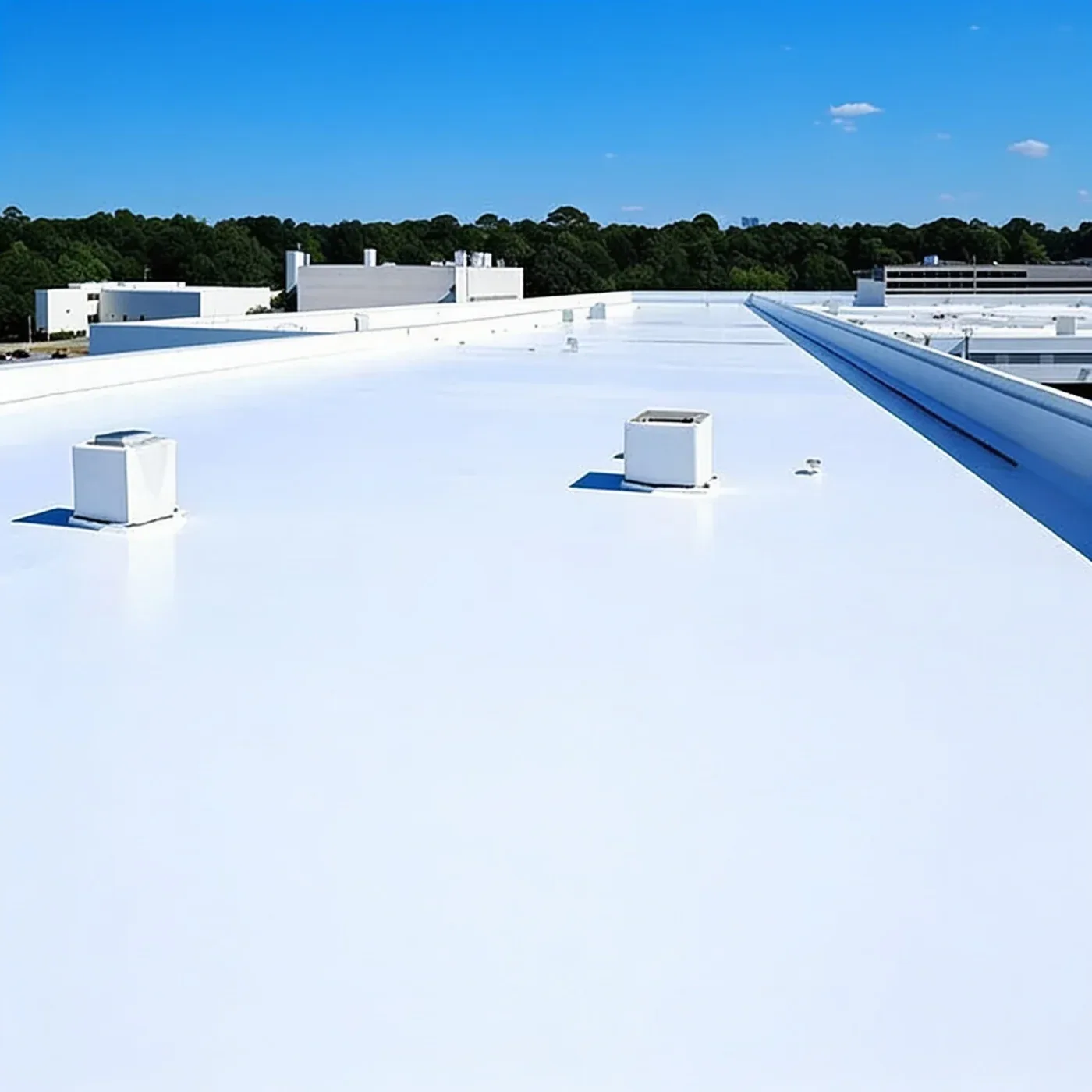
Insulation and cover-board work opens the roof in stages. We set daily limits based on crew access, forecast conditions, delivery timing, and how much membrane can be installed and closed. The plan identifies temporary protection, active drainage paths, rooftop equipment clearances, and which trades need to complete work before the next layer is installed.
Occupied properties require communication about noise, access, and potential interior effects. In North Haven, medical equipment, tools, machinery, distribution, and healthcare contribute to the local business mix. Those varied functions reinforce the need to coordinate service interruptions with each building’s operator. We plan staging and work hours around the actual site constraints, then document any field change that alters the sequence.
If a concealed deck or insulation condition changes quantities, we photograph the exposed layer and describe the proposed adjustment before proceeding. That gives the owner a decision point while the area remains protected. We keep the field record connected to the approved scope so added material, disposal, and tie-in work can be evaluated clearly.
Comparing assembly costs and closeout
Insulation bids can differ because they use different thicknesses, slopes, attachment methods, cover-board products, removal limits, and transition details. We identify each assumption so a lower amount does not hide a reduced area or missing drain correction. The estimate also notes equipment elevation changes, perimeter metal, disposal, and temporary protection where these affect the work.
At closeout, we photograph representative layers, tie-ins, drains, and finished transitions. The record helps the owner compare later moisture observations with the completed assembly. A photo-based condition report can connect those installation details with future maintenance and capital planning.
For work in North Haven and New Haven, access and delivery requirements can be planned across the regional schedule while roof quantities remain building-specific. Bring roof history, reports, bid scopes, and equipment or access constraints to an insulation scope review. We can compare the proposed layers with drainage, membrane selection, and operating requirements before pricing is finalized.

Questions Owners Ask
How can you tell whether insulation is wet?
Moisture readings, roof openings, visible surface conditions, and repair history are considered together. A single instrument reading does not define every removal limit. We document confirmed conditions and identify where additional examination is needed before the replacement quantity is set.
How does cover board protect the roof assembly?
It provides a stable layer above insulation and can protect the membrane from traffic or impact, depending on the specified board and attachment. We select it in relation to deck condition, roof system, and project requirements. The bid should state its type, thickness, and fastening assumptions.
Will tapered insulation eliminate every low area?
The layout can improve slope when the existing geometry and outlets allow a workable design. We compare elevations at drains, curbs, edges, and thresholds before setting the taper. Structural movement or a poorly located outlet may require another correction alongside the insulation package.
How does New Haven’s freeze-thaw cycle affect insulation work?
Winter water movement makes the drainage path and dry substrate important before new layers are installed. We review moisture and low areas, then schedule work around suitable conditions and daily closures. The roof examination determines whether the insulation can remain or needs replacement.
What should be compared across insulation bids?
Compare removal limits, insulation type and thickness, taper layout, cover board, attachment, membrane, drainage details, and perimeter transitions. Access, staging, disposal, and temporary protection should also be visible. We align these assumptions so the owner can identify meaningful scope differences.