
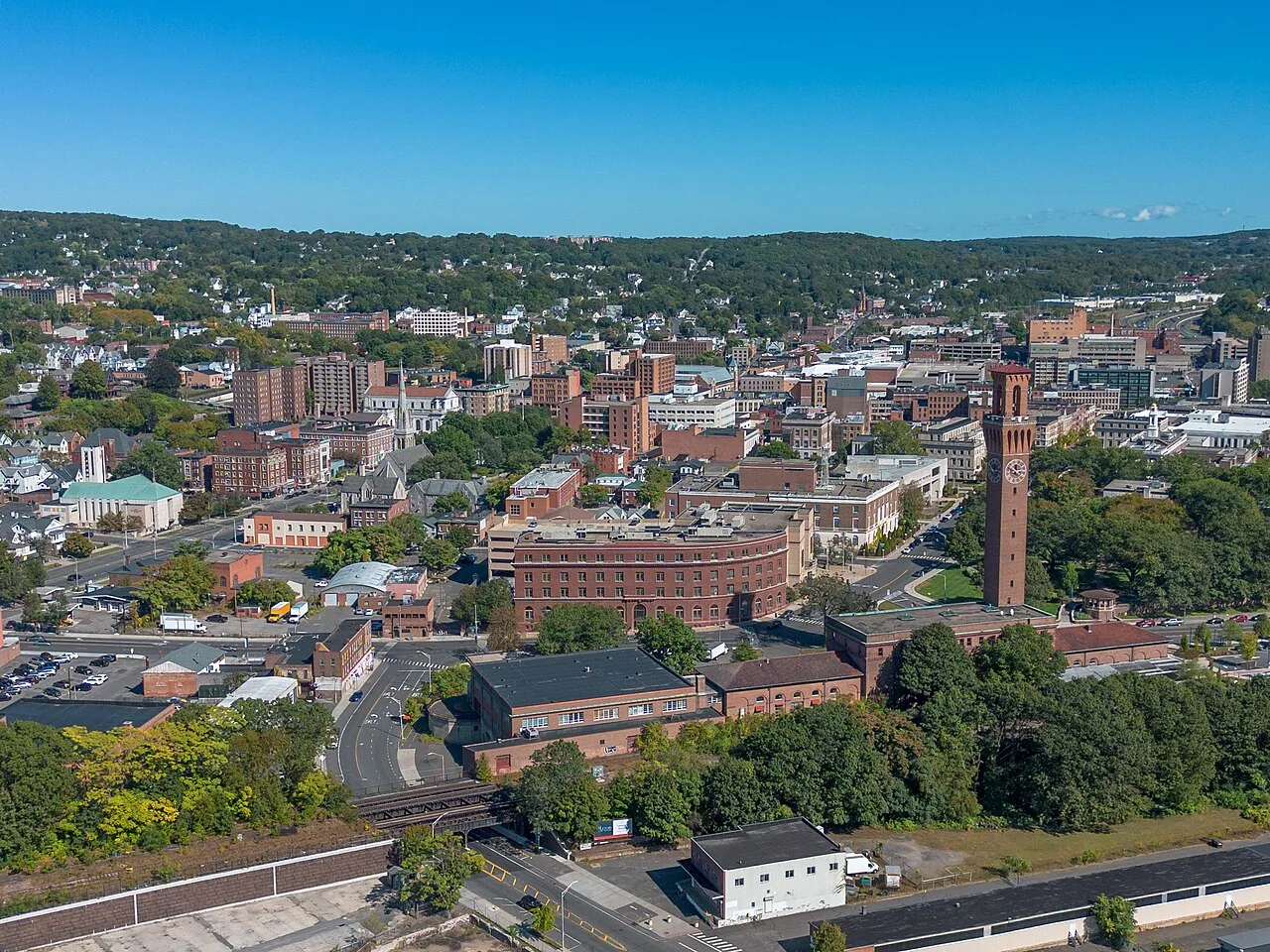
Commercial Roofing in Waterbury, CT
Waterbury
Commercial roofing in Waterbury for manufacturing and metalworking properties. Trace leaks, inspect roof transitions, and compare repair or renewal scopes.
Brass, copper, clocks, watches, and manufacturing appear in Waterbury, CT's commercial activity. Those sectors call for a roof review that identifies the actual system and its connections before material or quantities are named. We trace leaks, inspect penetrations and seams, and mark how each condition could affect equipment access or the work below. Waterbury's production facts guide the questions; the roof examination establishes the scope.
New Haven's climate normals record 102.3 days a year when overnight lows reach freezing. New Haven's freezing-day normal makes drainage and flashing useful winter checkpoints in the region; Waterbury's roof record defines the repair choice. Photos should show the system, repair boundary, and adjacent transition.
Metal roof details and movement
A metal panel system moves as temperatures change, so fasteners, side laps, end laps, and closures need room to perform without opening. We inspect for backed-out screws, split washers, sealant failure, and loose trim before choosing a repair method. A panel that has shifted can also strain a curb or wall transition. Photos and roof-zone labels let the general contractor compare each item against the roof plan.
Waterbury's brass and copper activity supplies regional commercial context; we confirm the roof system from building records and field review. We first establish whether the assembly is metal, membrane, or a combination, then document its attachment and edge conditions. A standing-seam review may address panel movement, while a metal retrofit assessment can compare an overlay with removal when the existing roof requires broader work.
On a membrane roof, the failure points differ. We check seam adhesion, patches, flashing turns, and the connection between roof and wall. A coating cannot correct loose substrate or trapped water, so any restoration discussion follows an assembly check rather than a product assumption.

Leak paths across more than one material
A stain inside a manufacturing or service space gives us a starting location, not a roof opening. We compare its position with drains, low areas, laps, curbs, and earlier repairs. Water may travel along insulation or a deck joint before reaching the ceiling. The report records the interior symptom and the roof features that need examination, then states whether testing could narrow the search.
Where a roof combines sheet metal with a membrane transition, we inspect the seam between them and the flashing that protects the change in plane. The repair needs to preserve movement in the panel while keeping water from entering behind the membrane. A commercial roof inspection can map that detail, and a flashing repair scope can define preparation and tie-in limits.
New Haven's regional freezing record makes a blocked outlet or low transition worth checking before winter. We follow the drainage path to its discharge and note where debris, a damaged strainer, or a failed membrane detail interrupts flow. A drain correction can address a confirmed outlet issue; concealed moisture may require a separate survey or test opening.
A repair threshold for recurring problems
One isolated seam or puncture may fit a bounded repair if the neighboring material and substrate remain sound. A repeat leak in the same zone, several unrelated failures, or moisture across a wider area can change the capital decision. We compare prior invoices and inspection notes with new photographs, then identify whether the next step is a test, a local repair, or broader removal.
For a repair, the estimate should name the preparation, tie-in, and follow-up observation. For replacement, it should state removal depth, deck assumptions, insulation scope, edge metal, drains, and equipment handling. A roof repair proposal and a replacement scope can then be compared by work boundary and risk allowance.
Cost changes with roof access, disposal, temporary closure, protection below, and the amount of material that testing finds wet. Schedule depends on weather windows, sequencing with other trades, and how long the building can support an open work zone. We separate confirmed quantities from allowances so the general contractor can see which unresolved condition could change the bid.

Production access and material handling
Waterbury has regional passenger bus service and motor-carrier connections. For a roofing project, those facts provide market context; the property manager still confirms the delivery entrance, lift location, hours, and loading restrictions. We record each rule before mobilization because a staging change can alter crew movement, roof access, and the number of phases.
When manufacturing operations sit below the work area, the site contact can identify sensitive processes, equipment shutdowns, and interior routes that need protection. The contact confirms process and equipment limits before the crew sequence is priced. The schedule names who authorizes a shutdown, who moves or reconnects equipment, and when the roof detail can be closed. A phased occupied-building plan can align those handoffs with daily dry-in.
Waterbury and New Haven can share report conventions across a regional portfolio, but each property receives its own condition record. A New Haven roof assessment can use the same photo key without transferring its findings. When a separate municipal job needs a consistent evidence standard, a Middletown roof review can use the same reporting method. When the roof remains serviceable, a maintenance program can keep seams, drains, and flashing on a scheduled review.
Records that protect the next decision
For an active production property, confirm equipment protection and staged access from the roof plan. A closeout record should make the roof work legible to both the project team and the person maintaining the property. We list the repaired zone, materials documented, photographs, any excluded area, and the item that should be checked on a later visit.
When a test opening reveals wet insulation or a damaged deck, we state the measured limit and the owner decision that followed. If access prevented inspection, the report names what equipment or opening would resolve that gap. These details help the next general contractor distinguish an observed roof condition from an allowance carried forward in the estimate.
Bring the roof plan, leak log, repair history, warranty files, prior photographs, and any equipment schedule. We can align those records with a repair, replacement, or maintenance decision and identify which assumption still needs confirmation. A capital planning review can tie the condition to a future budget window.
Questions Owners Ask
How do metalworking operations affect a Waterbury roof estimate?
They may influence equipment access, production windows, or interior protection. We confirm those details with the property contact, identify the roof system, and price the actual repair zone rather than infer a roof type from the industry.
What do you check on a metal roof with a reported leak?
We inspect panel laps, fasteners, closures, flashings, and transitions around penetrations. The interior report helps select a starting zone, while roof evidence determines whether the repair stays local or crosses adjacent panels.
Can a drain correction resolve recurring ponding?
A clear outlet may restore flow when debris or a damaged strainer is the cause. If the roof surface or insulation has settled, we document that separate condition and identify the test or correction needed.
Which roof history helps compare repair and replacement?
Prior leak locations, repair invoices, inspection photos, warranty documents, and roof plans show whether failures repeat. We compare that record with current conditions and list the evidence behind each option.
What should be agreed before a crew enters a production area?
The property contact should confirm access, shutdown approval, delivery hours, lift placement, and interior protection. We place those items in the sequence and assign the trade handoff before opening the roof.