
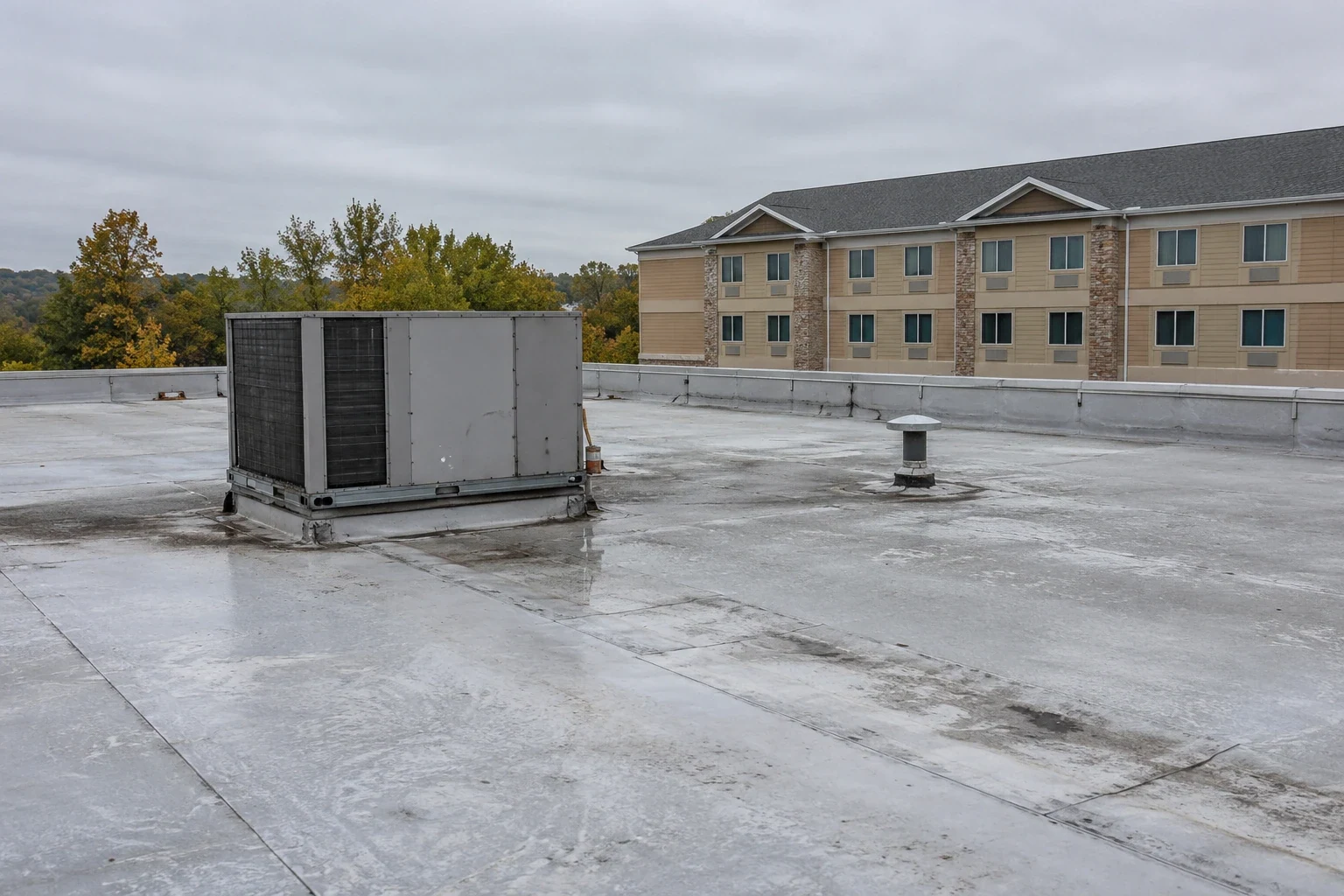
Commercial Roofing for Hospitality Groups in New Haven, CT
Hospitality Groups
Coordinate hospitality roof work in New Haven around guest stays, event schedules, building systems, and repair records across properties.
A guest-facing property cannot treat the roof schedule as separate from arrivals, meals, and event commitments. New Haven's winter freezing makes drainage and exterior transitions useful review points before a project window is reserved. We document the roof condition, connect it to rooms and service areas below, and set access limits the operating team can communicate. For a group with several properties, each work plan stays tied to its building and calendar.
Milford's commercial mix includes lodging, healthcare, finance, and distribution. Branford combines retail with healthcare, while Hamden includes business services and construction. That range makes access and service windows a property-specific planning item; we map each hotel's roof zones and operating limits with management before setting the scope.
Operating calendars across properties
Guest rooms, food service, meeting space, and maintenance routes may follow different schedules at each location. We ask which areas can be released, when deliveries arrive, and whether a lift or debris container affects guest paths. The work plan names temporary entrance changes and identifies who can approve a shift. That gives the hotel team a practical notice window instead of a general project date.
Milford has lodging uses, while New Haven's economy spans health, education, and business services. Those markets can contain properties with different service patterns. A group-level roof inventory helps compare inspection status and open repairs, but the planned work must respect each site's occupancy calendar. A multi-property roofing program can track both without carrying one property's access assumptions into another.
Where a property includes kitchens, event rooms, or rooftop equipment, we record the sequence needed to preserve service. A retail and restaurant portfolio may use similar delivery planning, but its guest, dining, and room schedules differ. The manager's calendar determines which phase can proceed.
Guest paths and construction separation
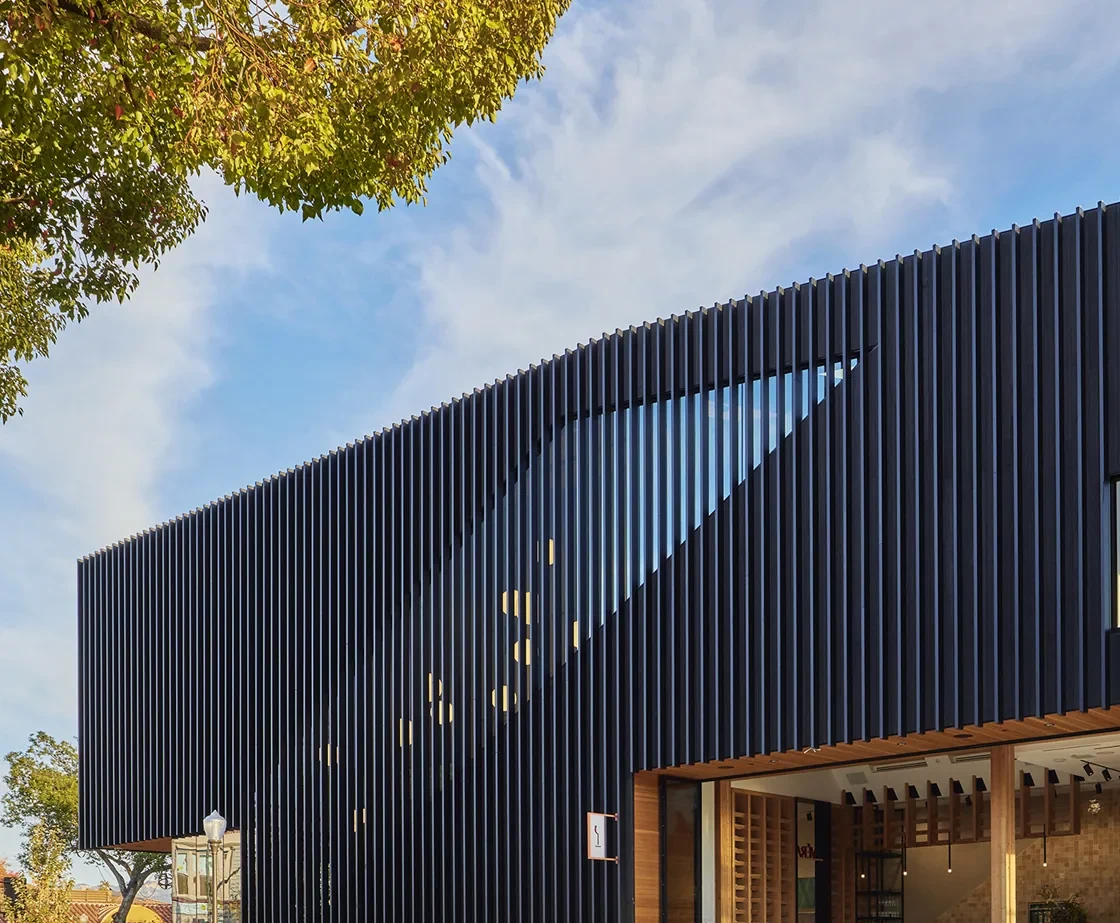
Roof access can run through service spaces that guests should not share with material handling. We map the hatch, loading path, staging point, lift reach, and route for debris. If a walkway or entrance needs a short closure, the schedule should state the alternate path and period. The property contact can then coordinate front desk, housekeeping, and event staff before work begins.
Interior protection depends on the roof area and task. We locate rooms or service spaces beneath an opening, define the daily closeout, and confirm that temporary coverage is secure before crews leave. For an occupied project, a phased hotel reroof can isolate zones while keeping other areas in use when the layout permits. Noise or odor limits should be assigned to particular work periods rather than assumed across the week.
Branford combines retail and healthcare, while Hamden has construction and business services. These nearby patterns make it useful to coordinate neighboring access, service vehicles, and work hours. We confirm the actual property route and restrictions with management rather than apply a standard hotel schedule.
Drainage, curbs, and rooftop service
Mechanical equipment, exhausts, pipes, and communications lines can interrupt the roof field. We record curbs, supports, flashing, and maintenance paths before a repair or replacement is priced. If another trade must move an air unit, the equipment handoff should precede membrane closure. A curb and support inspection can separate roofing work from the equipment contractor's responsibilities.
New Haven's winter freeze-thaw pattern makes drains and low areas useful checks before cold weather. We inspect bowls, strainers, overflows, scuppers, and the surfaces feeding them. A clear outlet with standing water may require review of roof slope or insulation. The drainage scope should name the affected basin and the correction being priced.
After coastal weather, we inspect edges, parapets, and wall transitions for visible separation or movement. We photograph each finding and record whether temporary protection is needed. Management can respond to the reported area while the permanent quantity stays tied to the observed condition.
Repair choices and capital timing
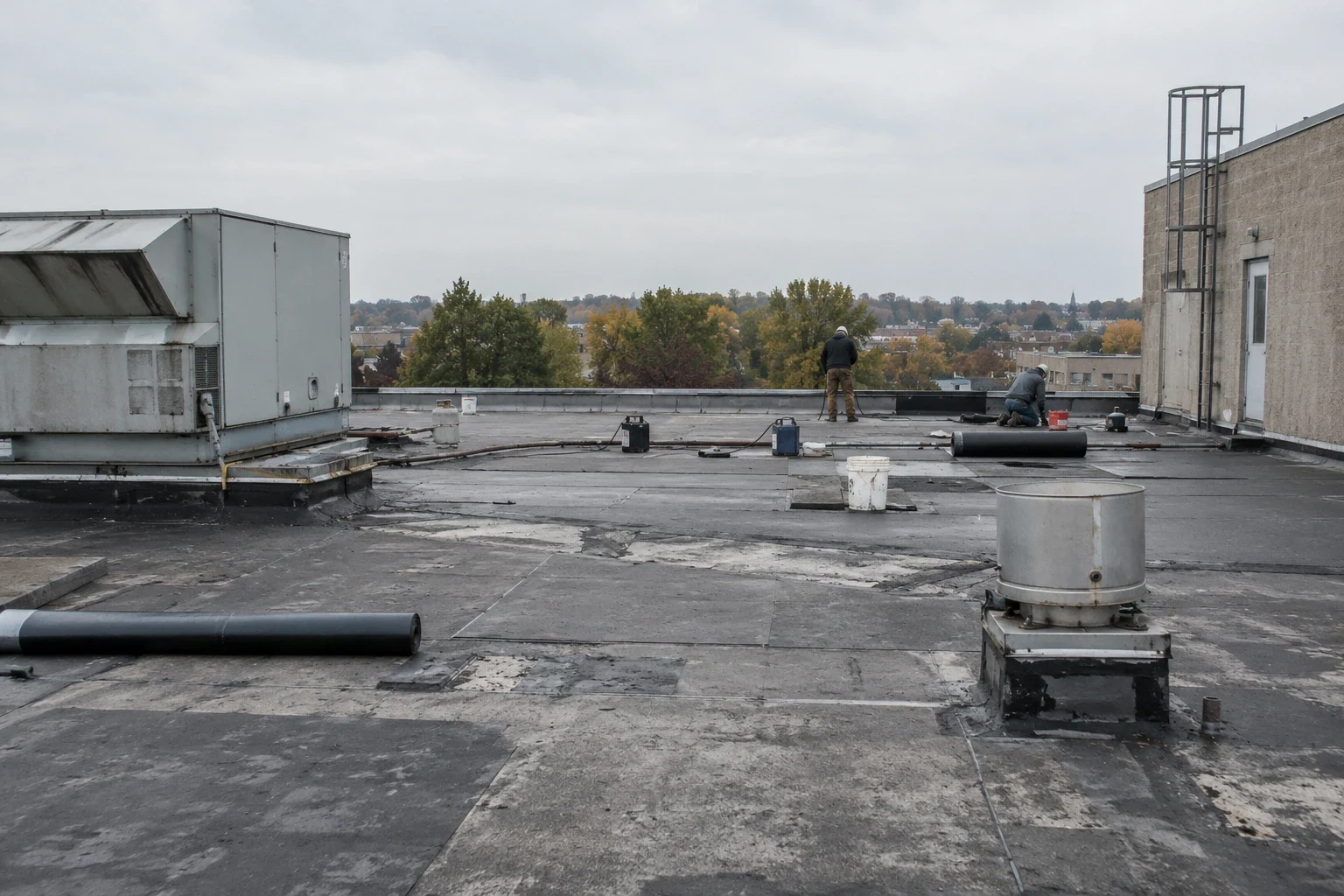
A local repair may fit when the defect is isolated and adjacent materials remain sound. We state the location, detail, compatible material, and any follow-up check. If several items share one roof zone, a planned repair scope can group them while preserving a separate quantity for each condition. That gives ownership a way to compare maintenance work with a wider project.
Replacement proposals should identify removal, substrate assumptions, insulation, drains, perimeter metal, equipment interfaces, disposal, and daily tie-ins. An overlay requires review of existing layers, moisture, attachment, deck, drainage height, and applicable requirements before it can be compared. We state what is confirmed and where an opening or test may change price. A replacement bid should also show the guest-protection and access assumptions.
Capital timing may align with renovation, seasonal demand, or an event calendar, but an active leak may need a separate near-term repair. We compare the roof record with the planned work date and identify what needs protection before that phase. A group can review multiple properties together while keeping each decision and schedule distinct.
Closeout for the next property team
Closeout should show repaired locations, photographs, materials, drainage observations, and any item left for monitoring. We record which areas were accessible and what another trade owns. A manager can keep that file with room, event, and maintenance records so a later report can be compared with the work already completed. If a detail remains under observation, we state the trigger for a return visit.
For hospitality roofing in New Haven, bring roof plans, guest calendars, service hours, equipment schedules, and repair history. A property manager may coordinate several ownership groups, while restoration work may need a separate record after a storm. We will identify the work boundary and approval point for each property.
Maintenance can compare current drains, edges, curbs, and seams with the prior season's photos. A group may use one reporting format, but inspection findings remain linked to specific buildings. This preserves continuity when staff change and helps ownership set the next access window or capital review from actual roof conditions.
Questions Owners Ask
How do you protect guests during roof work?
We map guest and service routes, identify the active roof zone, and set any temporary entrance or walkway restrictions. Daily protection and tie-in checks are part of the sequence. Management receives the period and alternate path needed to coordinate front-desk and housekeeping notices.
Can roof replacement happen during a busy season?
A phased plan may allow work while selected rooms or services remain available, depending on the roof layout and protection needs. We compare the access window with the operating calendar and state the zones affected. If the property cannot release that area, the sequence or date must change.
What should a group retain after a roof repair?
Keep the roof plan, photos, materials, work limits, access records, and outstanding observations with the property record. We state which detail was corrected and what remains outside the contract. That gives the next manager a location-specific reference for maintenance and future bid review.
How are rooftop equipment changes coordinated?
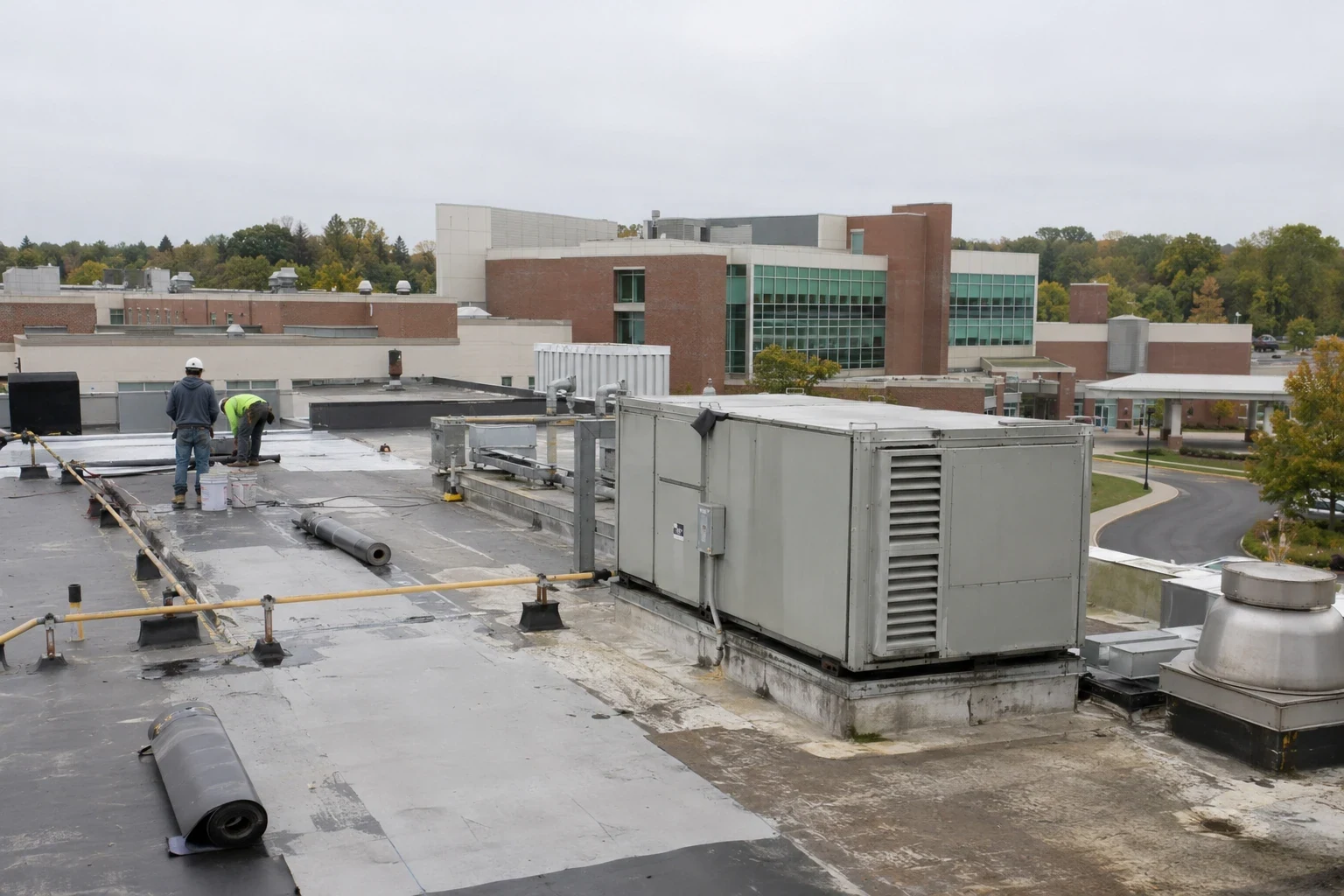
We identify each curb, support, service route, and trade owner before closing the membrane. If a unit moves, mechanical work and roofing flashing need a defined sequence. The proposal separates those responsibilities and states who approves a field adjustment.
What local factors affect New Haven hospitality roofs?
Winter freezing makes drainage and edge transitions sensible inspection items. Milford has lodging properties, and Branford combines retail with healthcare uses. Those local uses help frame property operations; the roof record and occupancy calendar determine the project.