Commercial Fire Damage Roof Repair in New Haven, CT
Commercial Fire Damage Roof Repair
Assess fire and smoke damage to New Haven commercial roofs with safe access, structural review, temporary protection, and documented repair options.
After a fire, roof work begins only when the incident team confirms safe access. Heat, smoke, debris, and suppression water can affect different parts of the assembly, so the visible opening may not show the full roof condition. We document accessible damage and coordinate the roofing review with the general contractor, building officials, and any structural or environmental specialists involved.
New Haven's industrial and institutional building mix includes health, education, manufacturing, and business services. Nearby West Haven includes manufacturing and medical research. Those regional uses can shape continuity and access needs, while the roof examination identifies the materials and damage at the affected property.
Wait for safe roof access and document the scene
Fire crews, building officials, or a structural professional may restrict the roof until hazards are cleared. We confirm the permitted route, required protective equipment, and any area that cannot be entered. Photographs from a safe vantage record the roof opening, damaged edge, equipment, and temporary cover without disturbing evidence needed by others.
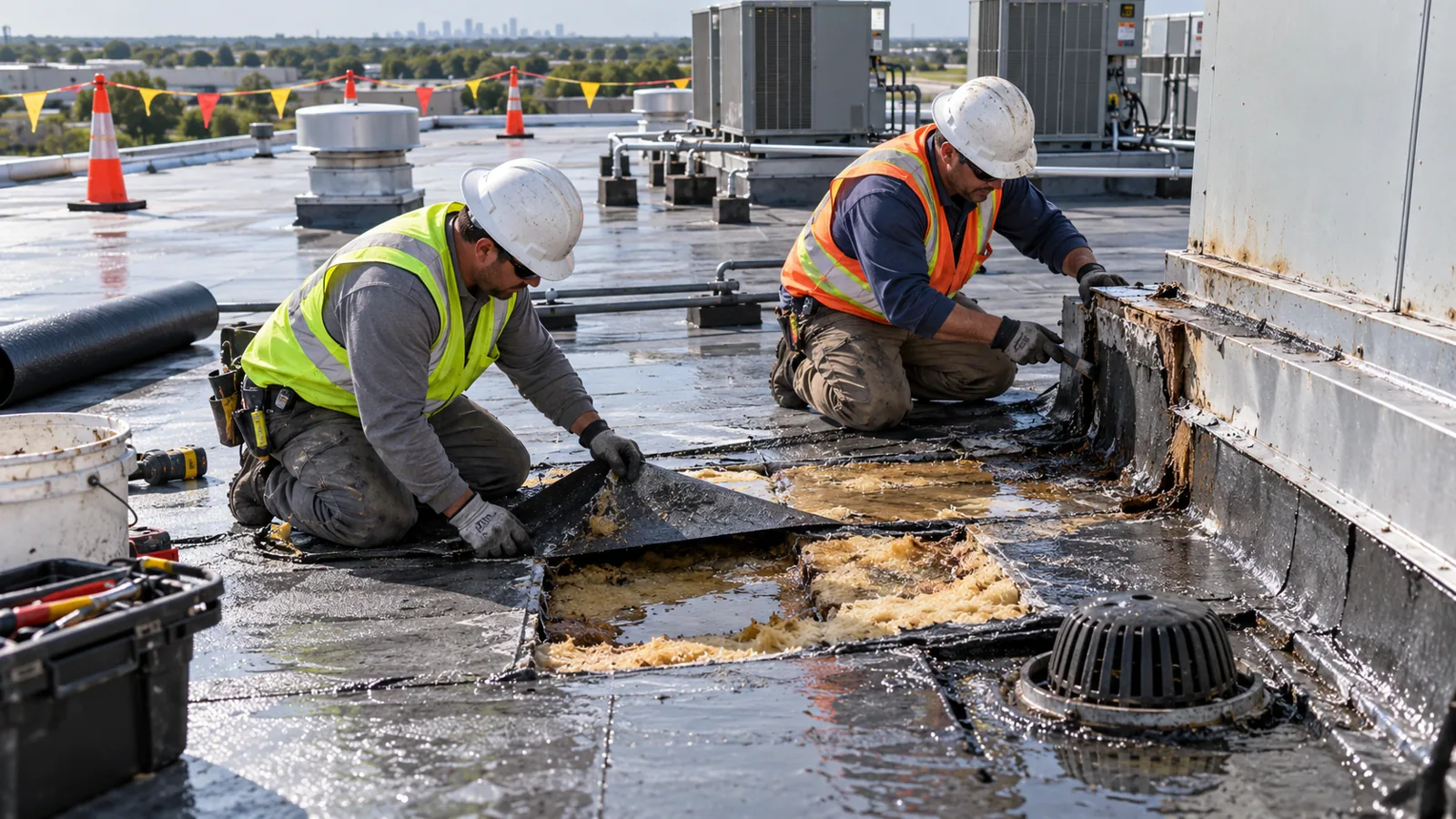
Suppression water can move through a roof assembly and appear beyond the burned area. We map interior reports against roof geometry, drains, curbs, and walls, while keeping water intrusion separate from direct heat damage. A roof condition review establishes what can be seen and what requires testing after access is approved.
Separate heat, smoke, and water effects
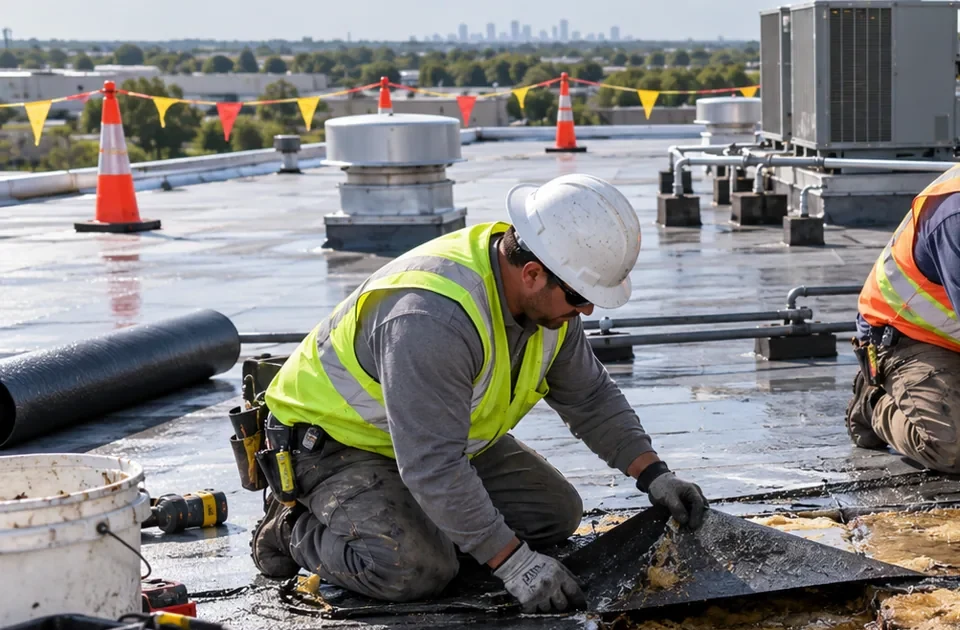
Heat may distort metal, weaken membrane, damage insulation, or affect the deck beneath the visible opening. Smoke and soot can coat surfaces without proving that the membrane has failed. We record the observed condition by roof area and identify where another trade must evaluate structural integrity, contamination, or equipment status.
Water from suppression may saturate insulation or collect at drains. We check the drainage path and note the boundary between burned material and areas affected by water. If a puncture or tear remains open, a membrane opening repair can be scoped separately from insulation removal or structural work. A drain review helps determine whether discharge is functioning after the incident.
Protect the building while the scope develops
A temporary cover should limit weather entry without creating an unsafe load or blocking drainage. We identify the method, attachment points, and portions of the roof that remain exposed, then state how long the protection is intended to stay in place. If access is still limited, the record names the next inspection condition rather than treating dry-in as permanent repair.
New Haven's winters include recurring freezing conditions, so an open area should be protected before water reaches insulation or deck edges and then freezes. We coordinate temporary measures with the incident lead and project team, then schedule permanent work after required inspection and approvals.
Emergency response is available around the clock, including holidays. We can limit further entry and then document permanent options once safe access is restored. The emergency response record separates temporary stabilization from completed roofing so the owner can track both scopes.
Set the boundary for replacement and repair
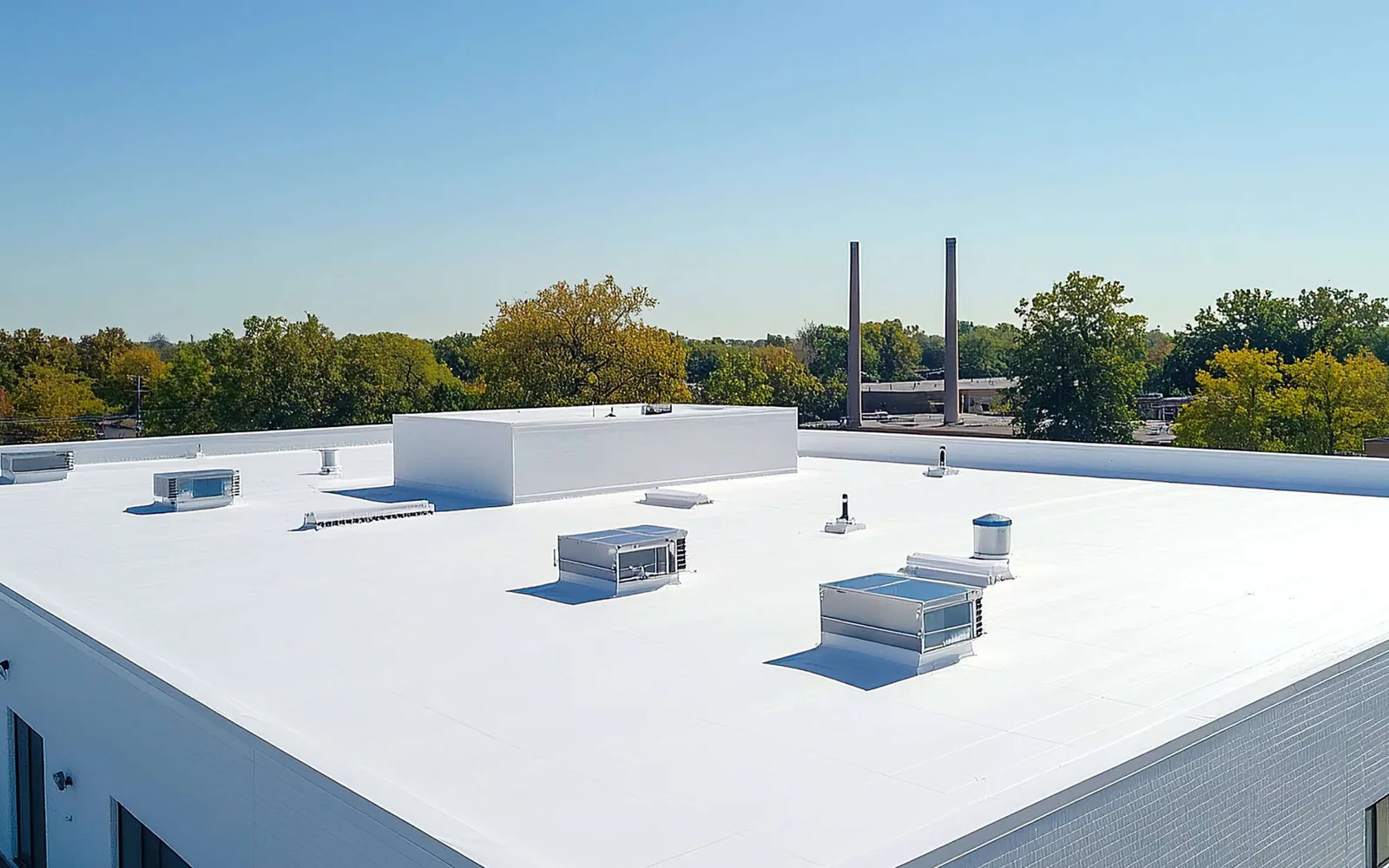
Roofing decisions should follow the condition of the membrane, insulation, deck, and supporting structure. A limited opening may be repaired if surrounding materials remain sound. Heat across multiple layers, widespread water saturation, or distorted support can require removal and replacement of a larger area. We identify what is confirmed and what needs a test or professional review.
For work requiring a permit filed from October 1, 2022 onward, Connecticut's adopted code includes the 2021 building and existing-building codes with state amendments. The project team should confirm the applicable requirements with the building official. We coordinate roof scope and documentation with that process without making code determinations from a visual inspection.
A replacement estimate can be compared with focused flashing repairs where the assembly permits both. The proposal identifies tear-off, substrate review, insulation replacement, perimeter work, staging, and temporary protection. A claim documentation scope can organize photos and repair findings for the owner's file, while coverage decisions remain with the carrier and policy.
Fire damage can affect fasteners, deck coatings, rooftop supports, and flashing beyond the portion where the roof membrane is visibly burned. We note these components and ask for the appropriate structural or mechanical review before they are enclosed. The scope can then separate roof replacement from deck repair, equipment replacement, and interior restoration instead of assigning an unverified combined allowance.
When several trades share the repair area, sequence matters. We identify when demolition exposes the assembly, when testing must occur, and when roofing can close the work. That coordination reduces the chance of new water entry while fire restoration, electrical work, or mechanical replacement remains underway.
Keep the fire repair record complete
We label photographs by roof location and note whether each surface was burned, smoke-exposed, wet, or not examined. The closeout lists materials removed and installed, open questions, temporary measures, and any follow-up required by another trade. That distinction supports a later review when the incident timeline and construction phases span several weeks.
New Haven's health, education, manufacturing, and business-service uses mean building operations may need a carefully phased return. West Haven's manufacturing and research activity adds a nearby regional context for properties that coordinate specialized equipment. West Haven roof planning depends on the site's operating constraints, while Branford's health, bioscience, and manufacturing uses add another area context. Bring incident photographs, roof plans, inspection notes, and temporary protection records to a scope review.
Nearby Branford may also have different delivery and site-access arrangements from a New Haven project. Branford service planning still depends on the affected property's approved route and work window. We use municipal context to plan access, then set each repair boundary from the incident record and roof examination.The work map assigns each open question to the trade responsible for resolving it.
Once the assembly is dry and access is available, we can compare repair quantities against the original roof layout. The resulting file identifies replaced sections, surviving transitions, and areas not opened for inspection. That makes later maintenance and warranty discussions easier to ground in what the project actually changed.
Questions Owners Ask
Can you inspect the roof while fire crews are still working?
We follow the incident lead's access restrictions and do not enter an area until it is released. From an approved vantage, we can record visible conditions and plan a later roof walk. The report identifies locations that remain unexamined so no one treats them as cleared.
Does smoke on a roof mean the membrane must be replaced?
Not by itself. We document soot, heat exposure, material distortion, and any opening separately. Testing or review by another specialist may be needed to determine whether a coated surface remains serviceable or whether concealed layers were affected.
Can suppression water damage roof insulation?
Water can travel beyond the fire area and become concealed in insulation or at a drain. We map the reported route and identify where moisture testing or a confirmation opening may help. The repair boundary follows the confirmed extent, not simply the visible ceiling mark.
What is included in temporary fire-damage dry-in?
The scope should identify the covered opening, attachment method, drainage path, duration, and follow-up access. We document the temporary condition and what remains for permanent work. Any structural or contamination concerns are assigned for review before the roofing assembly is closed.
Can the repair record support an insurance file?
We can provide dated photographs, location notes, observed damage, temporary measures, and the proposed roofing work. Those materials help organize the building file. Coverage and claim decisions remain subject to the policy and the insurer's review.