Metal Roof Retrofit in New Haven, CT
Metal Roof Retrofit
Evaluate exposed-fastener metal roof restoration in New Haven with panel, fastener, drainage, and framing checks before setting retrofit scope.
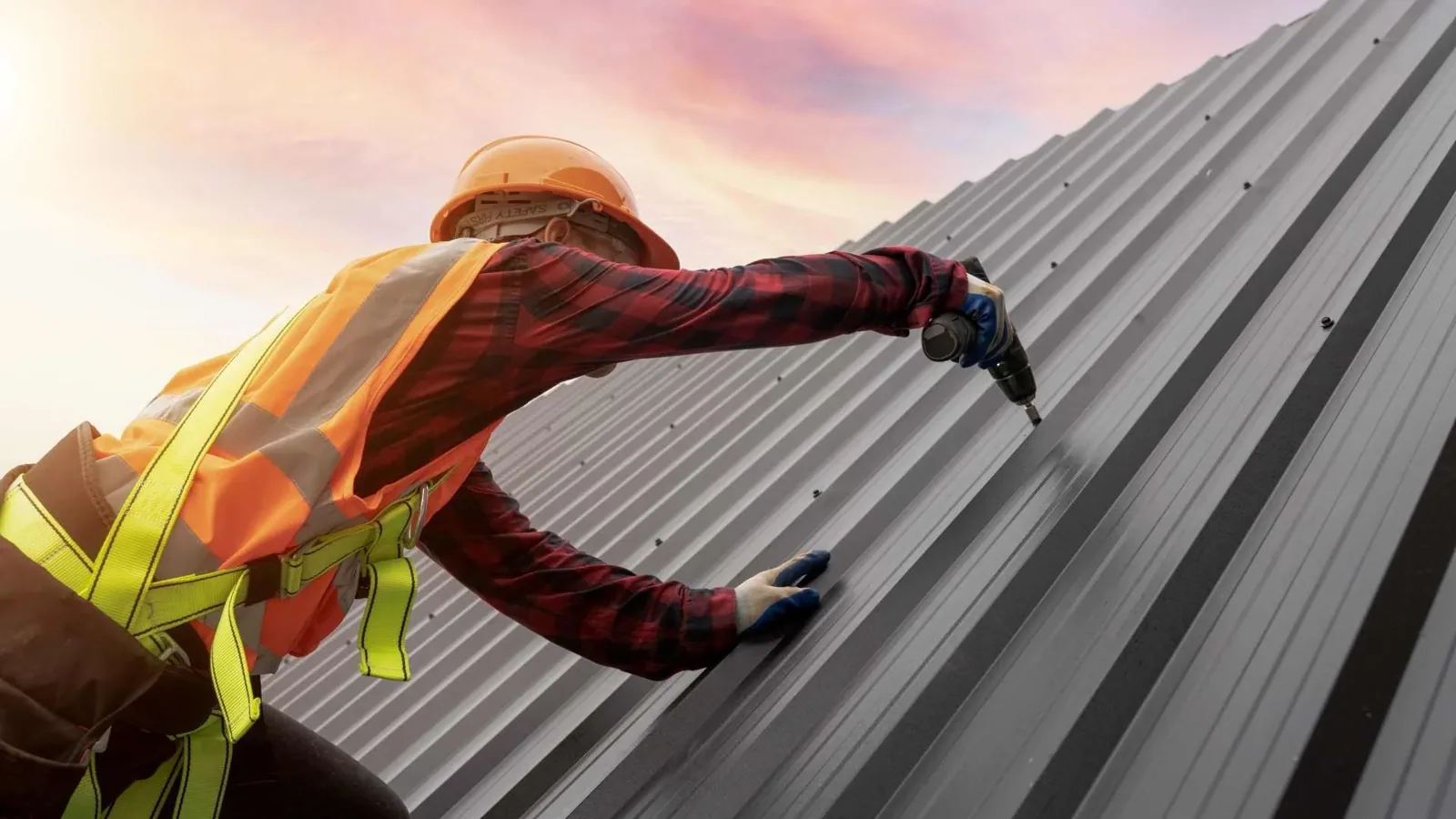
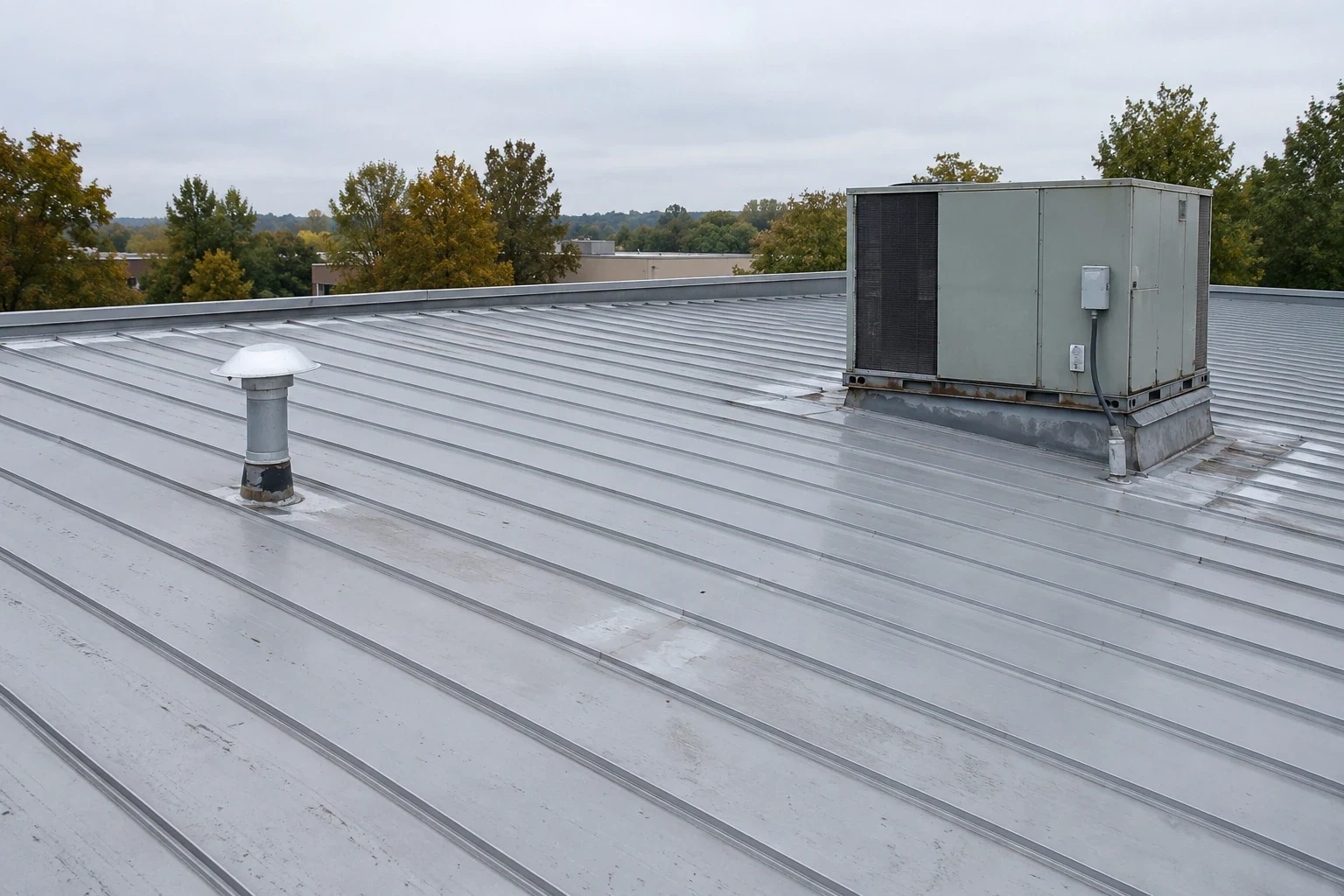
Exposed fasteners create a service point that deserves attention on metal roofs in New Haven, CT. Freeze-thaw movement can stress washers, laps, and flashing, while wind exposure makes attachment and edge conditions worth checking before a retrofit is priced. We examine the existing panels, supports, corrosion, and roof history to identify what can be retained and what needs correction. The general contractor receives a scope based on the current roof, not an assumption that every fastener or panel has failed.
New Haven's winter climate includes frequent freezing nights, and Branford's commercial mix includes manufacturing, bioscience, healthcare, and retail. Those facts can shape drainage priorities, equipment coordination, or staging, while the site examination sets the actual retrofit boundary. We document the difference between a maintenance item and a condition that affects the new assembly.
Fasteners, washers, and panel laps
We check fasteners for backing out, corrosion, damaged heads, and washers that no longer seal against the panel. A replacement screw must engage sound framing or purlin; tightening a fastener in a stripped hole can leave the connection unreliable. We map repeated failures by roof zone and inspect nearby laps, closures, and panel edges before treating each screw as an isolated repair.
Panel overlap and end laps can admit water where sealant has deteriorated or movement has opened a joint. We clean and examine the surrounding surface, then identify compatible repair materials and the preparation they require. If multiple laps leak in one area, the scope may require a broader panel or underlayment review. A repair assessment can document localized work, while a standing seam option offers a different panel and attachment design when replacement is under consideration.
Framing and retrofit feasibility
A retrofit system adds components above the existing roof, so support condition, attachment, and added height need review. We inspect visible framing and available drawings, note corrosion or movement, and identify where concealed conditions require confirmation. The building design team should verify structural capacity and applicable code requirements before a new support layout is approved.
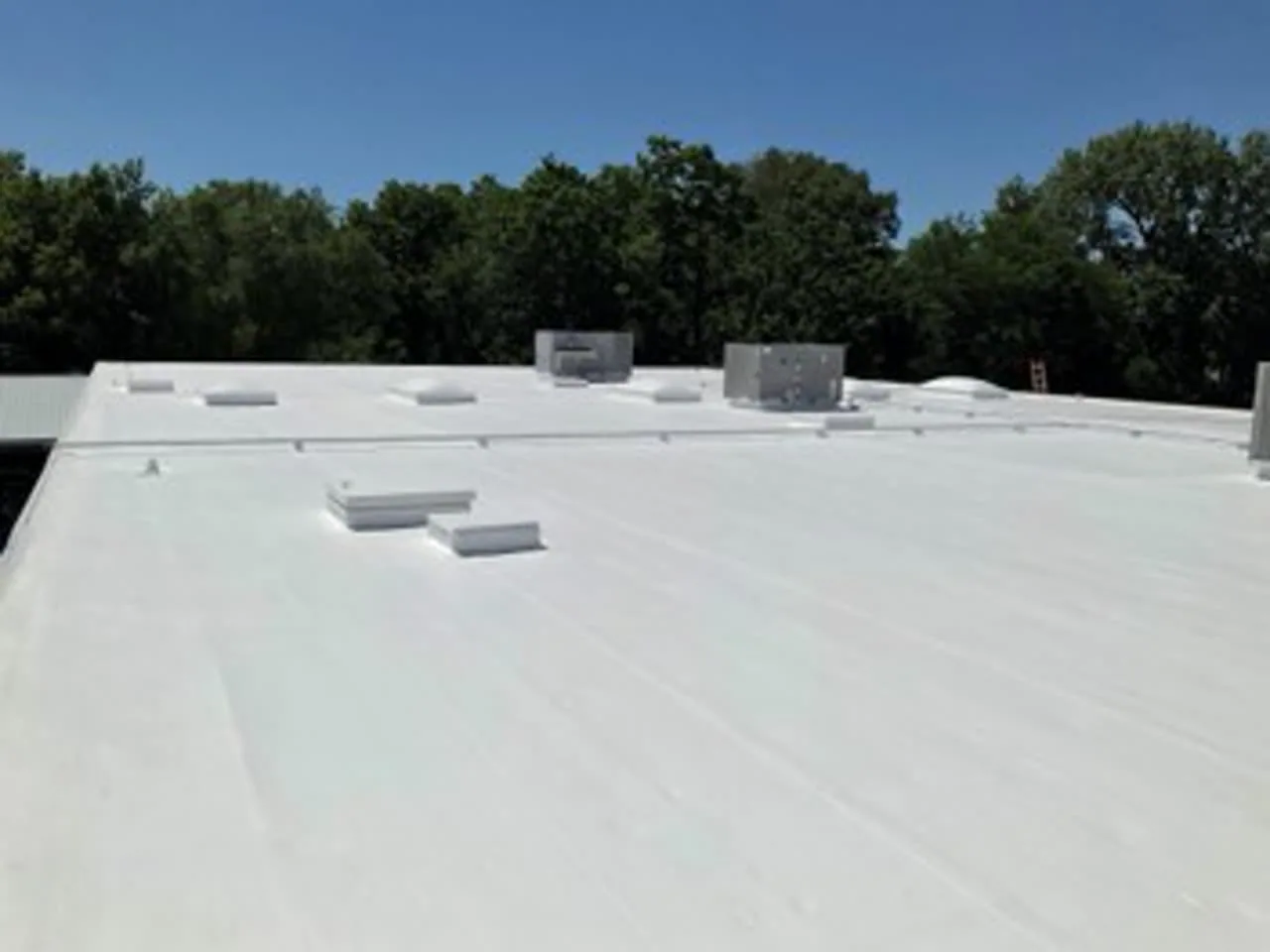
The retrofit scope also depends on panel profile, roof geometry, existing penetrations, and available drainage clearance. We identify where new framing may cross curbs or interfere with equipment service. If deteriorated metal must be removed or a deck repair is required, the proposal should define that work before the retrofit field is installed. A replacement evaluation can compare removal with an over-roof approach using the same condition map and concealed-work assumptions.
Changing the roof profile can alter the way the system handles water at ridges and wall lines. We note panel height, slope, adjacent material, and existing openings before comparing the retrofit design with a new roof. A detail drawn for one profile may not close against a different panel, so the proposal should show transitions in plan and elevation. If the current assembly is not a practical base, complete removal may leave a clearer substrate for another system.
The comparison should include the expected maintenance access and the location of future service work. A retrofit may preserve much of the existing roof, while a replacement can expose concealed layers for examination. The right scope follows deck and support findings, drainage, and the owner's capital timing. We can also compare an EPDM assembly where the project design calls for a flexible membrane instead of a metal over-roof.
Drainage, leaks, and winter exposure
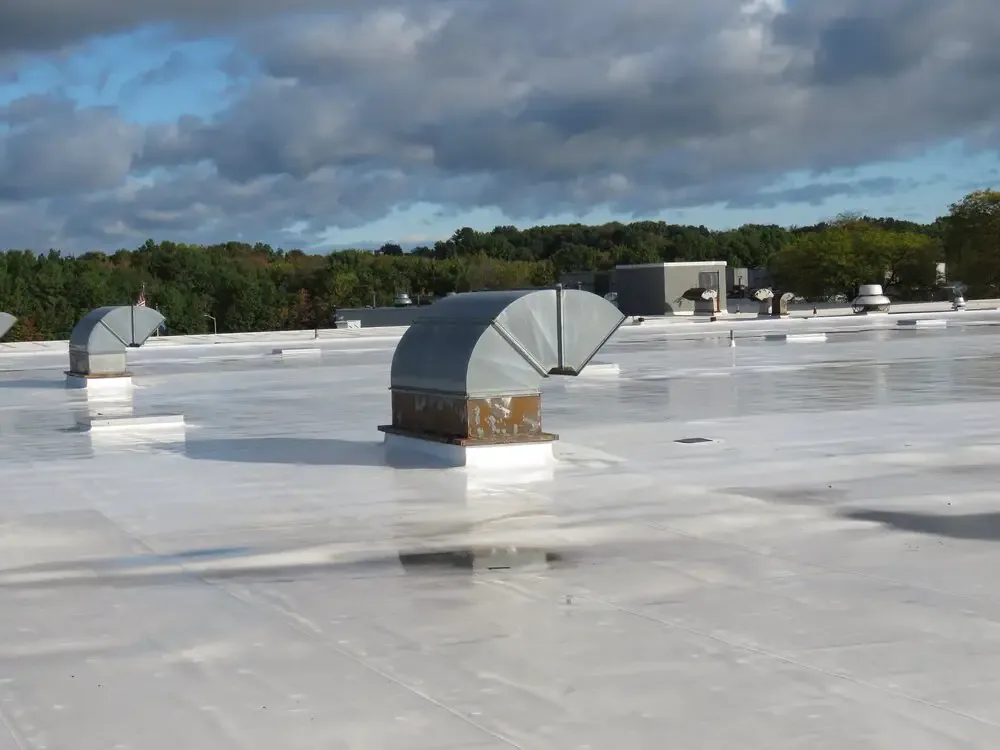
New Haven's freeze-thaw cycle puts drainage and water-shedding details on the review list. We trace runoff from the ridge or upper panel toward gutters, valleys, and lower transitions, then inspect points where water may back up against a lap. Debris, ice, or a failed outlet may contribute to a leak, but each condition calls for a different repair.
When moisture may be trapped below a panel, a targeted opening or moisture survey can help define the work. We document the test location, materials encountered, and restoration detail. If the interior report does not align with the roof opening, we compare framing, slope, and nearby penetrations before expanding scope. This protects sound panels from unnecessary removal while making the actual repair boundary visible to the contractor.
Wind exposure and connection details
During Sandy, a severe wind gust was recorded in Madison, New Haven County. That regional history makes it sensible to review perimeter connections and panel restraint, especially where corners, eaves, and gable edges are exposed. We check what the roof shows now, including lifted panels, loose closures, damaged trim, or fastener movement, and specify correction only where the condition supports it.
Branford and West Haven include manufacturing activity, so an active property may need its staging path coordinated with deliveries or equipment servicing. We identify the lift location, material route, and zones that can be taken out of service. Edge work should also identify the connection to perimeter metal and any adjacent flashing that must be rebuilt for the retrofit to close cleanly.
Sequence and maintenance record
A retrofit proposal should name retained panels, fastener replacement areas, new support components, insulation or cover layers, flashings, and drainage changes. It should also separate measured work from allowances for concealed framing or deck conditions. Those details let the estimator and general contractor compare a retrofit with full removal without hiding different assumptions in a single roof line.
We photograph the exposed-fastener condition before work, identify retrofit limits, and document tie-ins and closeout checks. The maintenance record should show which parts of the original roof remain and how future inspections can reach the details. We note any retained fastener rows and access points that should be checked after seasonal movement. The next crew can work from that baseline. A roof condition report can preserve that baseline. For a project in New Haven, bring roof plans, leak notes, prior repairs, and access restrictions to a retrofit scope review before material orders or phasing are finalized.
Questions Owners Ask
When can an exposed-fastener roof be retrofitted?
A retrofit can be considered when the existing panels, supports, and attachment can carry the proposed assembly and drainage remains workable. We inspect and identify structural or concealed conditions that need design confirmation before pricing. The proposal states what remains and what is replaced.
Should all screws be replaced during a metal retrofit?
Fasteners are reviewed by condition and engagement, not replaced by assumption. We map loose or corroded areas and check whether screws reach sound support. If repeated failure signals a larger panel or framing issue, that finding changes the scope beyond a washer replacement.
How does winter weather affect metal roof repair in New Haven?
Freezing nights make drainage, laps, washers, and flashing useful priorities. We examine the water path and record the current roof condition, then set a repair area based on evidence. Winter exposure keeps drainage, laps, washers, and flashing on the review list; the inspection record sets any repair boundary.
Can a retrofit hide wet insulation or a damaged deck?
Those conditions need to be investigated before the new assembly covers the existing roof. We identify likely test locations and explain what opening, scan, or structural review would resolve the question. Wet material or weak support can require removal or a revised design.
What should a retrofit bid include?
Panel repairs, fasteners, framing, added layers, perimeter details, drainage changes, access, and allowances should be listed separately. We also define work phases and closeout checks. That makes the proposal easier to compare with replacement and reduces open assumptions at mobilization.