
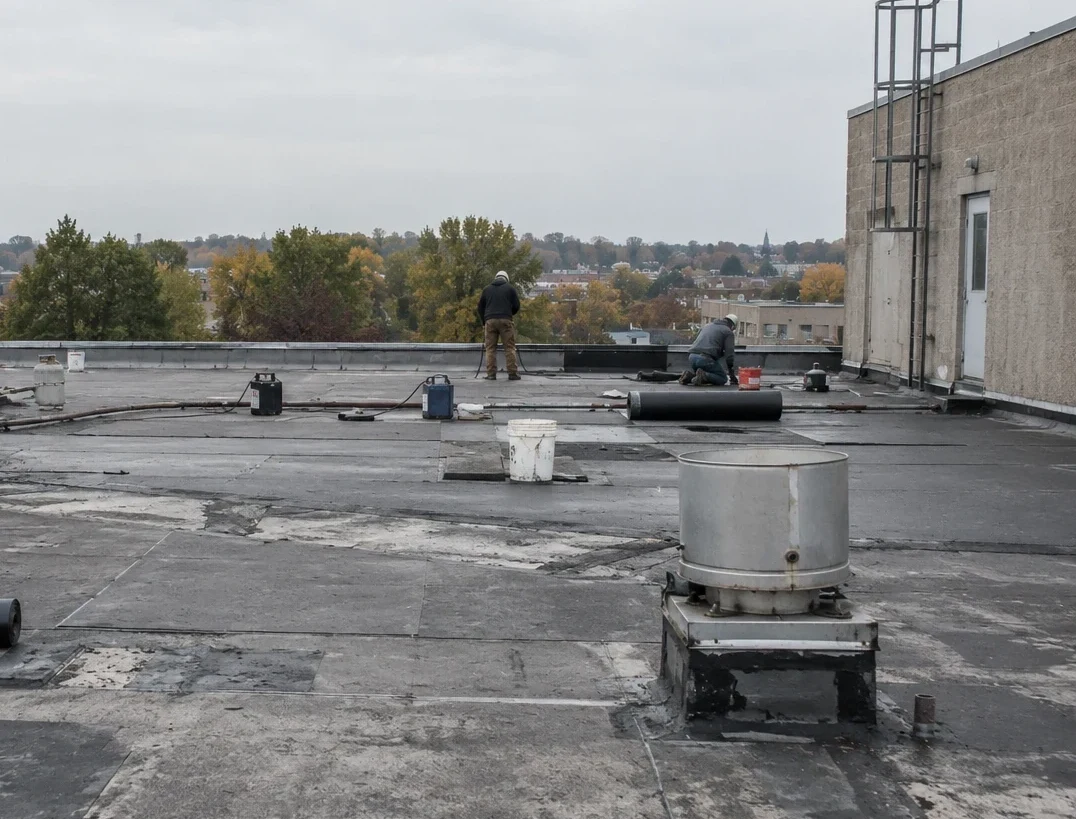
Big-Box Retail Roofing in New Haven, CT
Big-Box Retail Roofing
Plan big-box retail roofing in New Haven with clear delivery, customer-access, drainage, and interior-protection assumptions for repair or replacement.
A large sales floor can stay busy while a roof project advances over one defined work zone. In New Haven, repeated winter freezing makes outlet performance and flashing movement useful items to review before a retail work window is set. We connect the roof record to receiving hours, customer circulation, and interior protection, then separate confirmed repairs from decisions that need testing. The estimate should show how crews enter, where materials move, and what portion of the store remains available each day.
Hamden's commercial activity includes retail and construction, while East Haven includes warehousing and wholesale distribution. Those activities help frame delivery and receiving discussions. We conduct a condition inspection, identify equipment and drainage interfaces, and price a sequence that matches the property's actual operating constraints.
Receiving lanes and customer paths
Retail roof access often shares a site with delivery traffic, customer parking, and service doors. Before setting a start date, we map the loading approach, material staging area, lift reach, and protected path beneath the active roof zone. If a receiving lane must close briefly, the bid should name the time block and alternate route. That lets store operations coordinate deliveries without leaving the roofing crew to improvise around moving vehicles.
Inside, we identify merchandise, checkout, food, or office areas that sit below the work. Protection may involve a temporary ceiling barrier, a shifted work boundary, or a different sequence for opening the roof. The need depends on the assembly and the task. For a phased occupied-building project, we define daily closure points and check the tie-in before leaving.
Large roofs may need separate phases. We divide the plan by drainage basin or work zone, then release the next area after the prior one is closed and reviewed. This gives management a schedule the store can support.
Outlet performance across a broad field
A distant ceiling mark may sit well away from the opening that admitted water. We trace the roof slope, seams, equipment bases, and drainage route before drawing a repair boundary. New Haven's regular below-freezing days make slow outlets and shallow low areas worth recording before water can freeze and thaw at a weak transition. The work scope should name each affected basin and outlet rather than group an entire roof into one general drainage allowance.
We inspect strainers, bowls, scuppers, overflow paths, and nearby membrane for debris, compression, or separation. If an outlet is clear but water remains, we check slope and insulation geometry before recommending a correction. Photos and roof-plan references let the owner compare observed ponding with later maintenance visits. A drain and scupper repair may resolve an obstruction; a slope or insulation issue needs a different quantity.
Perimeter details matter on expansive roofs because corners, parapets, and metal edges can move differently from the field. We check laps, fastening, terminations, and transitions at changes in height. Coastal wind history provides regional context, but the examination establishes whether a particular edge needs work. The estimate should show which details are included and which remain outside the measured repair area.
Repair packages and replacement limits
A focused repair is a sound option when the defect is isolated and surrounding materials remain serviceable. We mark the affected seam or flashing, note nearby conditions, and state what inspection or test supports the limit. For separate leak zones, a planned repair visit can reduce repeat mobilization while keeping each location distinct. A written condition report gives operations and ownership the same reference when approving work.
A replacement scope needs clear limits for tear-off, substrate, insulation, drains, edge metal, equipment, disposal, and temporary protection. If an overlay is considered, existing layers, moisture, attachment, deck capacity, added height, and applicable code all need review before the assembly can be priced. An estimate should identify what remains in place and what finding would trigger a change order. This keeps store planning tied to an inspectable roof decision.
Some retail operators prefer work during a remodel or lower-volume season. We can compare that window with the condition record and explain which repairs should not wait for a capital project. A replacement phase can also be coordinated with lighting or mechanical work if equipment responsibilities are agreed first. The bid should separate roofing quantities from other trades, with a named approval path for concealed conditions.
Mechanical service without roof damage
Heating and cooling units, exhausts, signs, and utility runs can interrupt an otherwise open roof field. We record each curb, support, service path, and flashing interface before the crew begins. If another trade needs to move equipment, the work order should identify who disconnects, lifts, resets, and tests it. New roof flashing cannot remain reliable if a later equipment move tears or compresses the detail.
We check support pads and walk routes for wear where service technicians repeatedly cross the membrane. A protection walk can direct foot traffic without blocking drains or hiding inspection points. At curbs, we look for loose metal, sealant gaps, and membrane stress, then distinguish routine maintenance from a detail that needs rebuilding. The rooftop equipment scope can be priced separately when the mechanical contractor owns the unit and its connections.
Retail buildings may have several tenant or back-of-house zones beneath the same assembly. We correlate each roof observation with the interior use reported by management, but we do not infer concealed damage from the use alone. If access to a roof area is restricted, the report records that limit. An owner can then decide whether to authorize further testing before choosing repair or replacement.
A closeout tied to the store plan
At completion, the roof file shows the work area, repaired detail, material, photos, and items left for observation. We tie entries to the roof plan and note which drains, curbs, paths, or edges were included. The closeout supports later maintenance even if management changes.
For roofing in New Haven, bring leak reports, receiving calendars, roof plans, and access rules to the initial review. A distribution building may share delivery constraints, while a grocery roof adds temperature-sensitive interior zones. We will align the work boundary with the store's operating calendar and describe which approval can alter cost or timing. Regular maintenance can then compare current outlet and flashing observations with the last documented phase.
When storm reports arrive together, we record each observation and protect openings needing immediate attention. The list distinguishes temporary stabilization, repair, and capital work, helping ownership set priorities without pricing unconfirmed areas as completed work.
Questions Owners Ask
How do you keep receiving available during a roof project?
A delivery map and approved work window set the limits. We plan lifts, staging, lane protection, and daily tie-ins with store operations, then phase the roof so one active zone does not close every route. Any required interruption is identified before mobilization.
What belongs in a big-box roof inspection record?
The useful record locates drains, low areas, seams, rooftop units, edges, prior repairs, and access limits. Photos connect each observation to the roof plan. We separate confirmed defects from areas that need a test, giving ownership a basis for comparing the repair quantity with replacement assumptions.
Can a roof replacement happen during normal store hours?
It can be phased around open hours when material movement, overhead protection, noise, and temporary closures are resolved in advance. We set boundaries by roof zone and coordinate deliveries with the site contact. Weather or concealed deck conditions can change a phase, so the approval contact belongs in the plan.
When does a localized leak point to broader work?
Several unrelated openings, wet insulation beyond a patch, recurring seam failures, or weak attachment can justify a larger review. We map each condition against prior repairs and test results before recommending added scope. A clear limit lets the owner approve broader work on evidence rather than on a single interior stain.
What local conditions affect New Haven retail roof planning?
Winter freeze-thaw makes drainage outlets and metal transitions useful inspection points. Hamden includes retail and construction activity, and East Haven includes warehousing and wholesale distribution. Those patterns frame regional logistics, while the store's own roof and operating schedule determine the work.