
Commercial Hurricane Damage Roof Repair in New Haven, CT
Commercial Hurricane Damage Roof Repair
Repair hurricane-related commercial roof damage near New Haven with safe inspections, surge-aware documentation, drainage checks, and phased restoration.
Sandy's track along the Connecticut coast brought a severe storm-surge scenario to New Haven's harborfront and other low-lying shore areas. After a hurricane, roof repair needs to account for wind, rain, debris, and possible water exposure without assuming every roof experienced the same conditions. We inspect accessible areas, document what is visible, and separate emergency protection from permanent restoration.
Branford's commercial mix includes manufacturing, bioscience, healthcare, and retail, while New Haven connects buildings to regional passenger and freight routes. These local facts help frame access and project coordination. The roof record, site location, and incident timeline determine the actual scope.
Start with safe access and a condition record
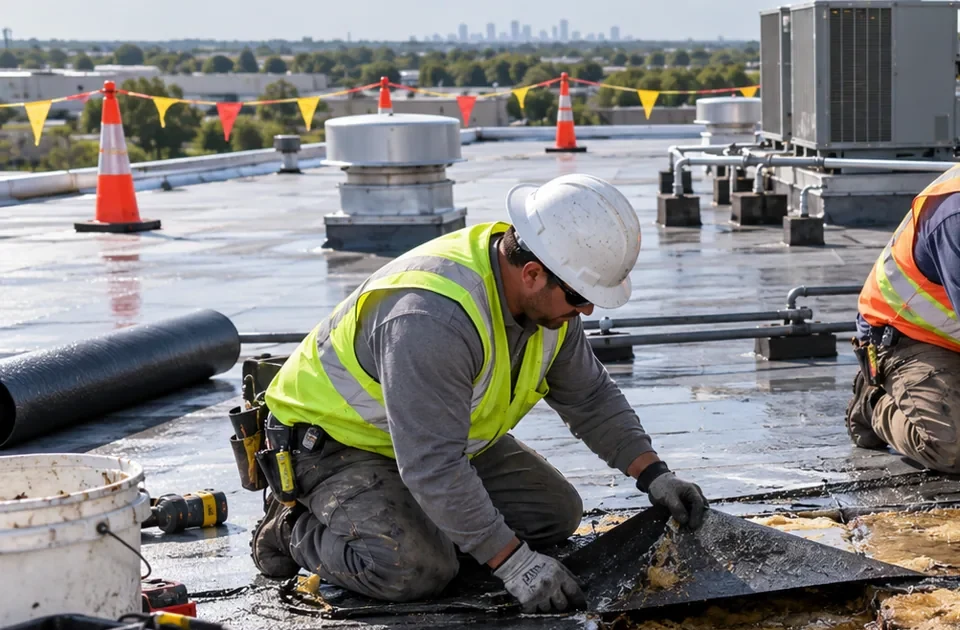
Before a roof walk, the facility team confirms that access is safe and that power, debris, and structural concerns have been addressed. We record open areas, loose metal, displaced equipment, water marks, and any section we cannot reach. Temporary coverings are photographed with their position and attachment so the next visit can distinguish protection from permanent work.
Water inside may come from roof damage, storm surge, plumbing, or another building system. We compare interior reports with roof slopes, drains, curbs, walls, and previous repair locations. A commercial roof inspection can document visible conditions, while a leak investigation follows the reported entry path before a repair boundary is selected.
Separate coastal water exposure from wind damage
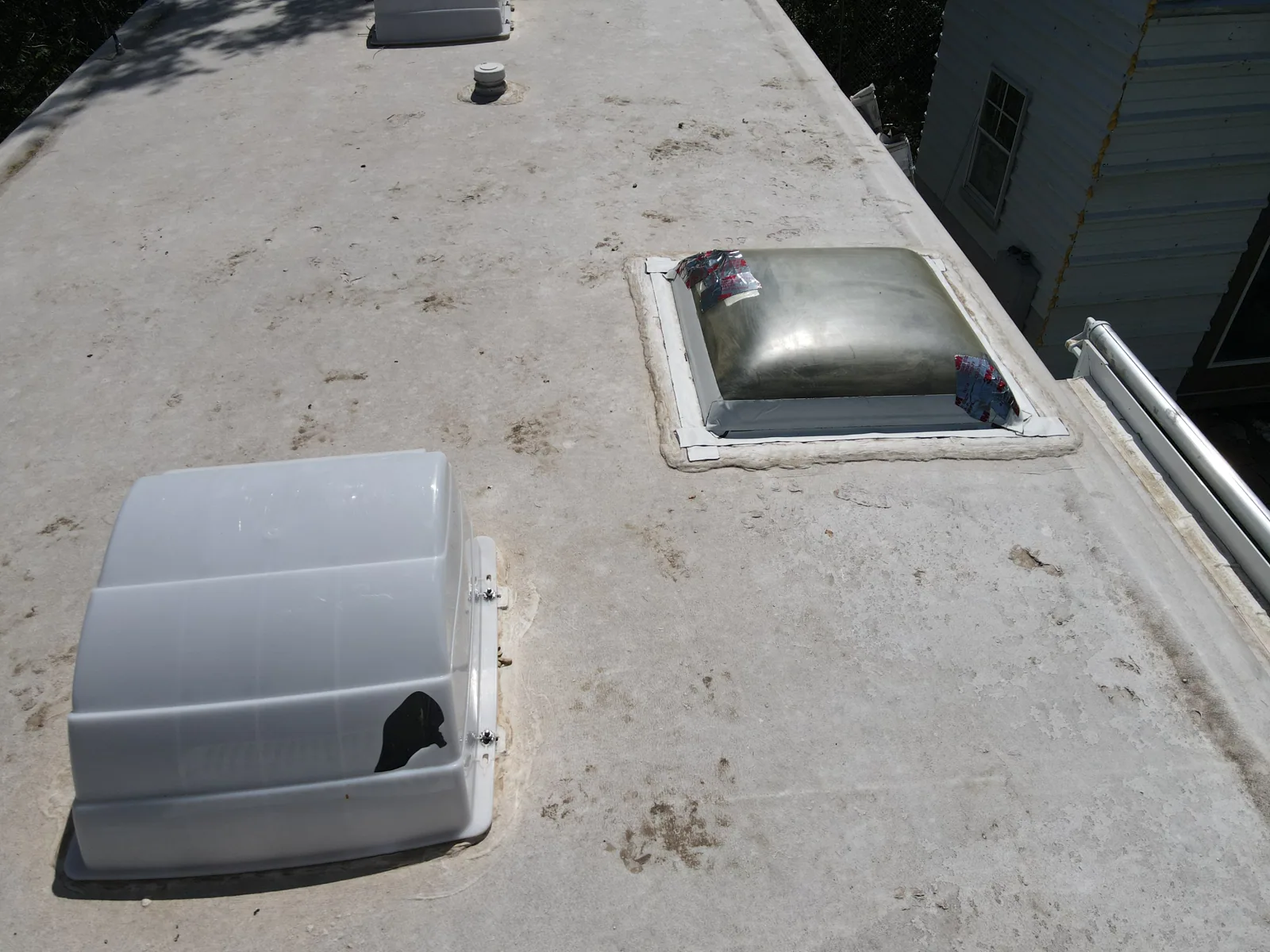
Low coastal sites may face water exposure beyond what wind-driven rain brings to the roof surface. We document visible water lines, contamination, displaced rooftop components, damaged metal, and affected drainage, then identify whether another assessment is needed below the membrane. We do not infer surge impact solely from a building's proximity to the shore.
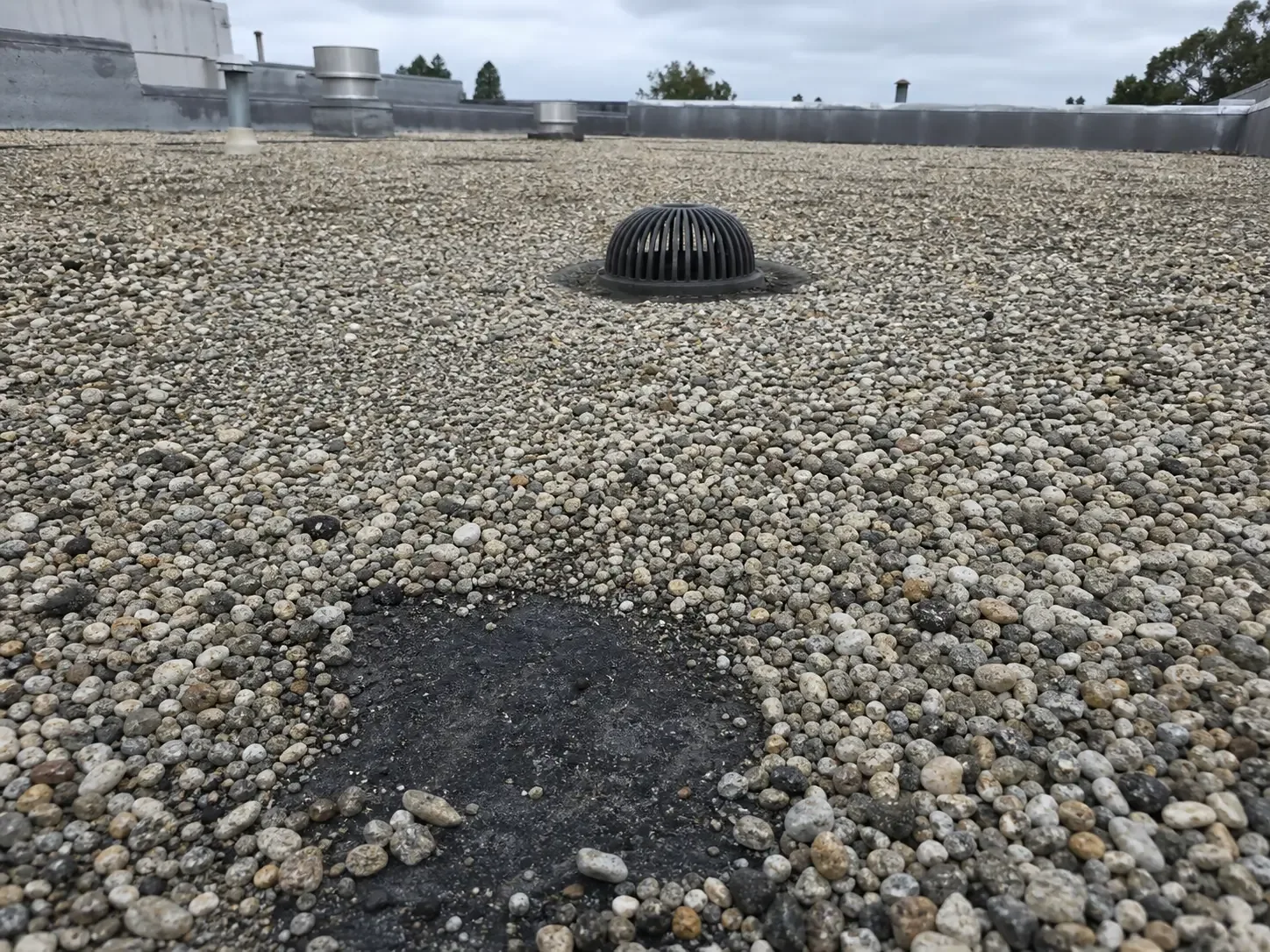
After a storm, inspect the entire discharge path: drains, scuppers, gutters, overflow points, and low transitions. Sediment or debris can block an outlet even where the membrane is intact. A ponding-water assessment can distinguish outlet obstruction from a slope problem, and drainage repair can address a confirmed component failure.
Water that reaches an interior space should be logged by room and time, then checked against the roof layout and the facility's plumbing or mechanical history. We note whether the condition is active or drying and photograph any material affected below. This chronology helps the owner distinguish a continuing roof opening from water that entered during the storm and has since stopped.
At a low roof edge, the path may continue from the membrane to a scupper, leader, or ground-level collection point. We record where our inspection ends and whether the receiving system needs a separate review. That handoff can prevent a repaired roof from being blamed for a blocked site drain or a downstream backup.
Inspect attachment, edges, and penetrations
Wind can lift coping, separate a termination, loosen panel fasteners, and open flashing at curbs or walls. We review corners and perimeters as part of one connected water-shedding system, then photograph each defect with a wider roof reference. The report identifies whether an observed issue is a loose component, a membrane opening, or a detail that needs closer testing.
Equipment supports and rooftop units may also move or lose covers. We mark any interface and coordinate with the mechanical team before equipment is disturbed. A wind damage review can document exposed edges, while flashing repair addresses a confirmed transition. The hurricane scope separates both from any damage caused by floodwater or interior systems.
Protect openings while restoration is planned
When a roof opening remains, temporary dry-in should direct water away from interior spaces without trapping it beneath the cover. We identify the protected area, attachment method, and conditions that limit its duration. The facility manager receives a follow-up requirement and the next access step before temporary protection is left in place.
Urgent stabilization can address active water entry; we then return for permanent work when the site is safe and materials are ready. An emergency roof response is recorded separately from the completed repair so project costs and decisions remain traceable.
Compare repair, recovery, and replacement
A limited area with sound surrounding material may be repaired. If the roof has repeated openings, widespread wet insulation, compromised attachment, or contamination that requires removal, a larger scope may be necessary. We compare field findings with the maintenance record and state which testing would change the recommendation.
Where the assembly allows alternatives, the owner can compare recover work with a replacement proposal, including edge details, drains, rooftop equipment, tear-off, and temporary protection. Claim photographs and repair findings can be organized for review, while coverage remains subject to the contract and insurer.
Storm work is easier to price when the estimate separates debris handling, temporary cover, removal of wet insulation, new membrane, and edge replacement. Each line item should identify the roof area and the evidence supporting it. We can list testing as an alternate where concealed moisture is uncertain, so the owner can resolve the question before authorizing a larger removal.
Some areas may be reopened before the full roof project is funded. We document those completed portions and identify any temporary tie-in between phases, then state the inspection needed before adjoining work begins. This keeps each phase watertight and gives ownership a clear view of unfinished boundaries.
Preserve storm findings for the next review
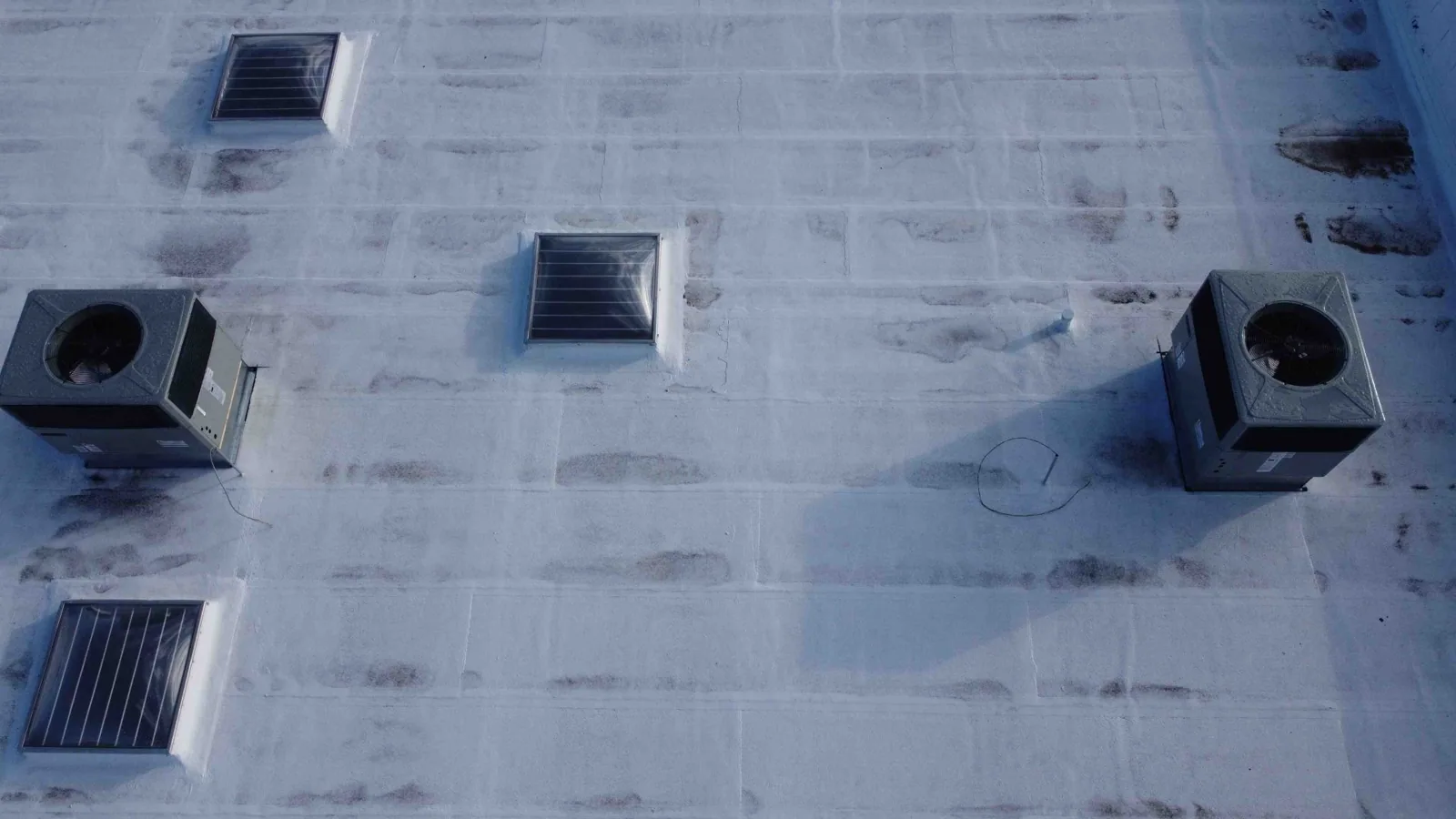
We label photographs by roof section, date, and observed condition, then note work completed and areas not examined. The closeout can separate wind damage, water exposure, debris removal, and pre-existing repairs where evidence supports those distinctions. That record helps a general contractor compare estimates and plan a phased return to normal operations.
Branford's healthcare, bioscience, retail, and manufacturing uses add regional context for occupied properties, but each project has its own staging and access rules. Branford roof planning should confirm delivery and site access. Bring storm photographs, roof plans, repair history, and claim deadlines for a records-first scope review.
Closeout should also record what was not opened or tested. That matters when water effects continue to dry after the roof is made secure. We label deferred areas and set a trigger for another check, such as a moisture reading or a follow-up after the next rainfall. This keeps the restoration decision connected to evidence gathered after the incident.
New Haven's passenger and freight connections can affect material delivery and contractor access during recovery. We still confirm each site's loading route and staging area instead of relying on regional transport context. If delivery restrictions change, the project schedule notes which phase moves and what temporary protection remains in place.
Questions Owners Ask
How soon should a commercial roof be checked after a hurricane?
Once the incident lead and facility contact clear safe access, a roof review can document openings, loose components, and drainage conditions. We record areas that remain inaccessible and identify temporary protection. A later inspection may be needed after debris or water is removed.
Can you tell whether damage came from wind or surge?
We record visible conditions and compare them with the incident timeline and site exposure, but a roof walk may not establish every cause. Water marks, debris, displaced components, and repair history can help separate conditions. The report identifies what evidence is confirmed and what remains uncertain.
Should the roof be replaced after hurricane damage?
Replacement depends on the affected area, moisture below the membrane, attachment, and the condition of the remaining assembly. We compare repair, recover, and replacement options after inspection and testing. A storm event alone does not determine the capital choice.
Can the building operate while permanent repairs are underway?
Facility staff set the operating limits, then we define which roof areas can remain open. We coordinate work zones and temporary protection around the systems that must remain active. If a section needs to close, the sequence identifies the closure and planned return point.
What should be kept for an insurance review?
Keep incident dates, photographs, temporary-protection notes, repair records, roof plans, and proposals together. We can provide location-based documentation of observed roofing conditions. The policy and insurer determine coverage, while the repair scope addresses the roof work.